Category Archives: Musings on Editing

Schoolhouse Crock

In the wake of my previous post on “taboo” words, I came to a horrifying realization: writers are going to put Lolly’s, Inc. from Schoolhouse Rock out of business!!!

A three-generation family business…I just don’t know if I can live with the guilt!

I therefore reemphasize what I said last time about still using the supposed no-no words like adverbs—just do so within reason—and I think dialogue or 1st-person narration deserves some leeway as well if it’s authentic to how a person would really speak.  So I guess I’ll still be unpacking my adjectives, too, but with discretion.

Working through this experience has introduced me to writer rules that *gasp!* I wasn’t necessarily teaching my high school students…when it came to dialogue tags, I confess I’d tell them that “said” is boring, so their characters should “exclaim” or “sneer” or even “smirk” something—I gave them a worksheet, in fact, that listed up to 50 different tags!  Gah!  And in looking at said worksheet, go figure the examples I used for dialogue punctuation:

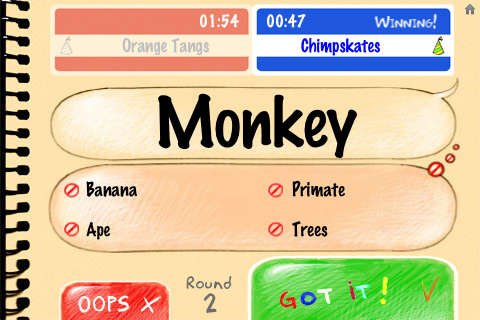
I asked, “Did you see the monkey fall out of tree?”
Did you just say, “The monkey fell out of the tree”?
I screamed, “The monkey is going to fall out of the tree!”
He had the nerve to ask me, “Why didn’t you catch the monkey when it fell?”!

I will say this in my defense (not of subjecting my students to endless monkeys in their grammar examples ;), but of how I taught descriptive language):

– First of all, children and adults alike who are not naturally expressive in their writing do benefit a great deal from first learning what vast options their language provides them so they can later practice restraint when making more sophisticated stylistic decisions.

– Second, I certainly wasn’t teaching them that more words are better, merely that each of the words they are using should pack a punch.  It’s not about being redundant, it’s—for example—saying that someone “saunters” rather than “walks” or that the fish in the garbage smells “putrid” rather than “bad.”  These one-to-one swaps are sufficient in themselves to strengthen a sentence.

Thus, in their revision workshops, I’d ask them to comb through their writing and seek out any general nouns, verbs, adjectives, or adverbs and replace them with more specific ones.  They were also to identify which senses their descriptions appealed to and strive to address all five at some point.

“Writers with style never just eat breakfast.  They munch on granola, wolf down hotcakes, savor Frosted Flakes, or gorge on jelly doughnuts.” – Art Peterson, The Writer’s Workout Book: 113 Stretches Toward Better Prose

I must say it’s very fun, let alone ironic, playing the pupil and trying to follow my own and others’ lessons, and I’m grateful for the new perspective I’ll eventually bring back to the classroom.  I’m not only strengthening as a writer, but also as a teacher.

The Telltale Taboos

“Substitute ‘damn’ every time you’re inclined to write ‘very;’ your editor will delete it and the writing will be just as it should be.” – Mark Twain

The revision continues, so this is just a quickie.  That’s right, I’m gonna just love ya then leave ya, blog-slut that I am…

I’ve done a once-over combing through my manuscript and trimmed out a few thousand words so far.  As I still contemplate how I’m going to tweak that damn ending—sorry, I mean “very” ending—no, I mean “damn” ending—no, I mean just “ending,” period ;)—I’m approaching another wave.  But before I do another complete read-through, I’m strategically using my Word application’s “Find” tool to seek out and evaluate the use of a few common culprits that threaten to weaken our writing.

While there are many ways to slice-and-dice revision (including eliminating those adverbs and “to be” verbs), here’s a sample of overused, taboo words to check for in your manuscript as a quick-fix:

very

always

really

when

then

that

suddenly

just

began / started (With these, don’t use it if whatever is “beginning/starting” doesn’t stop before the action is carried out. Oh my gaawwd, I can’t believe how many ‘began’s I’ve found…naughty Monkey!)

For what that’s worth.  It’s not to say we shouldn’t use these words at all, just not overly so—it’s worth a scan to become cognizant of our usage and determine whether there isn’t a more direct, active means of engaging our reader through other word choices/sentence structure.

Also [I’m adding this retroactively in response to Sharmon’s good point in the comment below], I personally reduced those words in my 3rd-person narration, but left most of them in my dialogue, as those words are likely overused in our writing because they’re what we use often when we speak!  So, it’s arguable from that standpoint that they contribute toward authentic dialogue, no?

What words would you add to the list?

[As an aside, can’t help but share that the Mark Twain quotation reminds me of a time from my consulting days when the guy in the cubicle across from mine started swearing, walked away, then promptly returned with a colleague.  “Fix it,” he said to the guy, pointing at his computer.  Our friend/coworker giggled as he did so.  Afterwards, I learned that the guy had tampered with my cubicle-mate’s Word settings such that every time he typed the word “the” in his client report, it auto-corrected to, well, a term for male genitalia.  Ah, Finance wasn’t always so boring…]


Writer Rules. I mean, Writers Rule!

I recently read a post on the Here Be Dragons blog entitled, “Are We Having Fun Yet?” in which the author, Agatha, shares a refreshing, honest rant over the agony that can be refining a manuscript into its final draft.  She references Stephen King’s book On Writing (which many keep recommending and my slack-ass has yet to read) and specifically addresses a few writing rules that are compounding her frustration, such as how to approach that infamous first chapter (i.e., beginning at the beginning of the action to hook the reader rather than leading in with too much description of setting) and the debatable requirement that there be tension on every single page.

This got me thinking about all the RULES we new writers are trying so diligently to follow to not only write that novel, but also craft it into something marketable so it has a shot at getting published.  We scour the blogosphere for the sage wisdom of literary agents and published authors, and we look to our most beloved books for guidance.  It goes without saying that the pressure this places on us is tremendous, especially when we look back to the precious first drafts we wrote from our hearts and realize they are violating rules left and right…

Suddenly the Adverb becomes our arch nemesis, and we’re playing Whack-a-Mole against any dialogue tags other than Said.

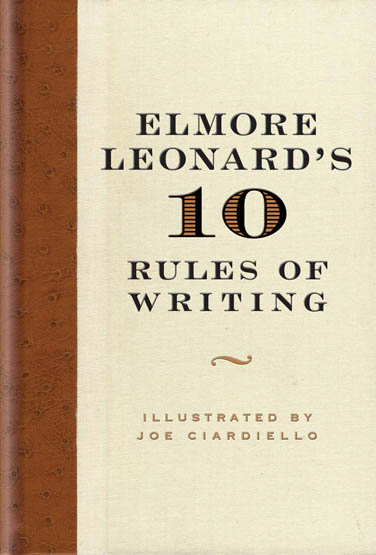
A few months back, The Guardian (inspired by Elmore Leonard’s The 10 Rules of Writing) published the article “Ten Rules for Writing Fiction,” in which they surveyed 29 renowned authors for their own list of dos and don’ts.  This was a fascinating read for me.  At first, it overwhelmed me, because of course as I scanned down the screen I was tripping over everything that I apparently do wrong…and yet, the more author lists that I read, the more I noticed how varied their perspectives were.  For being a list of “rules,” it if anything taught me there is no consistent formula set in stone.

While there are no doubt sound universal suggestions out there we should adhere to, I think we also need to find solace in the fact that there couldn’t possibly be a one-size-fits all approach to writing a good book.  We are all unique and have something different to bring to the table, and that’s something that should be celebrated in our writing as well.  I particularly like how Ollin Morales (Courage 2 Create blog) phrased it in his comment on Agatha’s post:

“I’d rather write a book that I love and everybody hates, than one that everybody loves and I hate.”

True dat.  And I also commend the truth Corra McFeydon just shared in her A Lit Major’s Notebook blog, a post appropriately titled, “The Truth.”  It is here that Corra, also in the process of writing a novel, admits that she does not desire to be a professional writer because, right now at least, it’s killing her spirit in what she loved about writing in the first place.  Seeking to break free from the rules and schedules that constrict her, she asserts:

“That’s why my novel will be written when the spirit hits me — as a product of my intensity, my laughter, and my free spirit — even though apparently that’s not how to be successful.”

I began this project for me, and if it remains just for myself after I’ve at least given it a shot at going elsewhere, so be it if I’m happy with the end product.  But even abiding by our own expectations entails discipline as we make time for our writing and edit it until it becomes the best version of itself.  I think most of the rules I’m opting to follow these days are self-imposed based on my own standards (which are quite high—I’m an English teacher after all, and grade myself constantly ;)).

That being said, one external rule I’m trying to stick to is the advised first-time-author word count of 100,000—not in my first draft that I’m wrapping up presently, but when I go back through to polish up.  Yet another blog post I recently read that I really appreciate for its straightforward guidance on how to cut, let’s say, 19,000 words for a final manuscript is, well, “How to Cut 19,000 Words” from the ‘Lethal Inheritance’ blog—Tahlia Newland tells us how she did just that when her agent asked her trim down her YA fantasy novel of same name.  I was at first absolutely psyched out that cutting words meant cutting entire paragraphs and chapters—and sometimes it does and perhaps will, but it’s reassuring to know that it can be achieved on a sentence/word level as well, an edit so subtle you’d hardly miss a thing.

I’m curious:  Which writing rules do YOU swear by?  And which rules do you think are totally bogus?

Argh.  Can you even imagine Jane Austen sweating it out like this?  I can’t imagine she was slapped in the face by rules at every turn, as we are at every page we flip and link we click.  But then again…