Category Archives: Writing Elements

The Natural State

“A lake is the landscape’s most beautiful and expressive feature. It is Earth’s eye; looking into which the beholder measures the depth of his own nature.”    – Henry David Thoreau, Walden

The Prompt:

Today I’m skipping to page 26 of Room to Write, which asks us to write about Nature—we can discuss it in terms of either the outdoors or our human nature.  Or, as a third alternative, write about both and connect them together.

Response:
Life finding a way.

Nature peeks in at my window from the flower box, offering a contrasting visual to the street traffic that I hear below.  The roof that I otherwise view out our flat’s front windows is gradually becoming obscured by the tree buds that are cracking open to unfurl their vibrant sources of shade.  While Autumn will always reign as my favorite season, there’s no question that Spring is the one that consistently unleashes the euphoria…in Chicago, it meant the cessation of the bitter cold with no more fear of a surprise snowstorm to dig your car out of as you curse into the winds; here in London, it means more gaps between the oppressive cloud-cover that has given me mole-eyes with extreme sensitivity to this golden, natural light we’re delighting in now.  As opposed to the droning hum of fluorescent lighting that dulls our pallor to that of corpses, the sunshine has slurped up the puddles for the time being and is grinning at all the people glad to scurry about in lighter jackets and exposed toenails.

But I don’t mean to make this about the weather, just the effect that it has on the human psyche, making us feel an urge to interact with it, be a part of it.  Nature expands our lungs, colors our cheeks, infuses us with a sparkle that we risk losing when all we may come into contact with day-to-day is the plastic of pens, kettle handles, or keyboards pushing against our fingertips along with the cool metal of doorknobs and pocket change.  Even the natural grain of our wooden furniture’s once living existence is separated from our skin with a layer of varnish, the embalming fluid of trees.

I once attended a series of debates at St. Paul’s Cathedral during which theologians and scientists discussed the nature of the soul (if interested, you can read the full transcript here).  While they went on to distinguish the soul from the spirit, one panel member (Keith Ward, Emeritus Regius Professor of Divinity, Oxford University) had this to say of both:

“[A]ll living things—all animals, even vegetables, potatoes and tomatoes—have souls.  They all have living principles.  So having a soul, for the Bible, isn’t what makes human beings special.”

“Every living thing has the breath of life, which is the spirit.”

Regardless of anyone’s religious beliefs—that is what made these debates so fascinating after all, as panel members across the series represented Christianity, Judaism, Agnosticism, and Atheism, and found more common ground than disparate, as far as I perceived—I think the above captures a sense that people can share universally.  It is that “living principle,” that “breath of life” that we share with Nature, and this is what binds us together no matter how much we try to distinguish ourselves by our intellect and emotion.  If this is a way that we humans are not special, that means we can commune with Nature as our brethren, giving and receiving energy from one another in much the same way we breath the oxygen plants give off only to expel the carbon dioxide they need to photosynthesize in return.

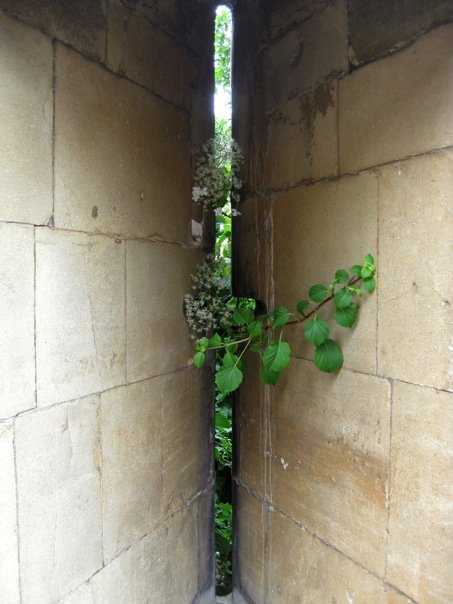
When I stand on a mountain or swim in the sea, there is something so gorgeous about the vision and experience of it that I could cry, for it taps into my own primal nature that remains embedded in my core, nonmalleable to societal influences that may otherwise shape me for better or worse.  Nature vs. Nurture is a whole other tangent on which I could take this topic, but I shall hold off on that other than to say I personally believe both factors are at play when it comes to who we are and who we become.  Our nature, however, is akin to that persistent vine that finds its way through the cracks of a stone wall; aspects of who we are at our roots are likewise things to be nourished so that they can flourish or perhaps be plucked like weeds when we recognize the bad that could come of them (the very duality addressed in my “Mad Me?” post and your comments).  Think about it; we constantly address ourselves in terms of vegetation:  early or late bloomers, budding, blossoming, being planted, rooted/uprooted, fertile, and so on.  This metaphorical language doesn’t come from nowhere; we draw comparisons of ourselves to images we somehow intuitively understand, and, in doing so, better understand ourselves.

Reflection:

On looking back at this entry, I see that I automatically addressed the gentler side of Nature.  This is the hopeful, inspiring aspect of the outdoors that we can embrace for a healthier mind, body, and soul.  Yet I would be remiss not to footnote here that I stand in awe of Nature in a fearful way as well.  It has a tremendous force that humbles us through what we term “natural disaster”:  earthquake, tsunami, hurricane, tornado, and most recently, volcanic eruption.  I literally just jumped out of my chair to look outside at the first sound of an airplane I’ve heard in days—sure enough, I just watched it fly past.  It’s been an experience directly observing the impact of the ash, leaving people stranded in a way that didn’t occur 200 years ago when Iceland’s volcano last erupted (and did so for a year!).  We take our air travel for granted and have felt practically paralyzed at being sent back to an earlier time when such was not an option.  Of course, though, our next escape routes became our trains, cars, and boats.

But envision if we did peel back the layers of technological innovation and retreated to our more basic, natural selves:

“If we assume man has been corrupted by an artificial civilization, what is the natural state?  The state of nature from which he has been removed?  Imagine wandering up and down the forest, without industry, without speech and without home.”    – Jean-Jacques Rousseau, Discourse on the Origin and Basis of Inequality Among Men

What are your thoughts on Nature (in any of its respects), and how do you think such contemplation impacts what and how we write?


Are YOU Talkin’ to ME?

We all have them.  Those heated exchanges (or ones that are on their way to becoming heated) when we bite our tongues rather than spew what we’d really like to say.  Well, I must say I’ve gotten much, much better at speaking my mind over the last decade, so it’s hard to think of any recent times I’ve muzzled myself (quite unfortunate for my husband)…but still, there are times when we’ll do it for whatever reason:  to be tactful, to spare feelings, or maybe just to save time until we can regroup and come back with a better debate strategy.

The Prompt:

Page 24 of Room to Write asks us to think back to an argument when we’ve held back.  Let it all out now, considering what you censored or reworded at the time.  Develop it as a dialogue in which you likewise speculate how the other person may have responded.

Response:

I’m going to cheat on this one.  I’ve been trying to dig up some great conflict from my youth, but it isn’t coming to me right now.  The first hot topic that does come to mind, however, is one that I addressed three years ago by writing a letter that I knew I would never end up sending.  The file name I’d saved it under was, “If I Ever Have the Nerve to Send it,” so I could at least have it at the ready if need be.  The act of writing it out was in itself therapeutic and, as of this year, perhaps financially rewarding.  I’m still waiting to hear the latest update, but as of March I signed a release to have the letter included in an anthology entitled Best of Unsent Letters (I’m doubting the intended recipients would discover it under my pen name). We’ll see.  Maybe publication is delayed.  Maybe they forgot about me.  At any rate, until I know, I can’t share it here, but if it gets posted on their corresponding blog, I’ll retroactively add the link so you can see what spiteful things I have to say when someone crosses my family. “NOBODY puts Baby in the corner!

To make up for lack of creativity this fine, lazy Sunday, I’ll throw this out there.  When I do have a bone to pick but not the commensurate nerve to say it to the applicable person, I have a habit of carrying out the exchange in the mirror.  Of course, this could mean that I’m senile.  Regardless, I ended up incorporating this into one of my character’s list of quirks to rationalize why she (me) does it. Here is the draft excerpt of such a scene:

She really did spend inordinate amounts of time standing [at the bathroom mirror].  Not cleaning it, Heaven forbid, nor was it time reserved for inspecting pores or removing blackheads from her small, upturned nose; most of the time, she spoke in whispers.  Whenever her brain felt the size of a walnut or, conversely, enlarged to the point of bursting with thought, she just vomited out the swirling words and conversations verbally, wishing she [could] deposit them in a physical, external reservoir where they could be left behind and visited when desired, rather than confronted involuntarily and often when unprepared.

Eyes locked on her own, the visual reminded that her identity did lie in something more than just her own awareness.  Her presence meant something.  Her absence meant something.  She was here, in your face, and she mattered.

And so, she resumed—partially whispered, partially mouthed—the conversation she’d recently begun in her mind, a monologue finally telling John how she felt about their relationship and threatening him with how much her absence would absolutely matter to him.

“I’d feed you the ‘It’s not you, it’s me,’ line, but it’s not not you, and it surely isn’t just me.  It’s both of us and our mutual inability to ‘get’ each other.”

The figure opposite her served as an acting coach, giving Margaret feedback on her body language as she fine-tuned the script to perform later.  Satisfied after thirty minutes that she’d thoroughly convinced her reflection with her eloquent articulation, she was too exhausted and bored with the effort to even consider repeating the words to John anytime soon.  Such was the way with all the actual face-offs that never actually happened, especially because she’d lose her nerve without her reflected self as guide.

Reflection:

So…for whatever that was worth.  I’ll try to get my mind back in gear next time to churn out something new.  How about you?  What have you left unsaid?


Mad Me?

* * SPOILER ALERT * * – Ye be warned if you haven’t yet seen Hitchcock’s Psycho.

YouTube embedding is being finicky...please click photo to access clip!

I was watching Mad Men last night and marveling over how much I continue to sympathize with the character of Don Draper.  Am I mad?  The guy has cheated on his wife for the first three seasons, even after she bears his third child, and still those dramatic shots of Don sitting in isolation as the camera gradually zooms out still pluck out a melancholy little banjo tune on a heartstring or two.

This brings to mind a post I recently read on Milo James Fowler’s In Media Res blog that discusses how the villains in books, TV, or film tend to fascinate us, to the point where we might find ourselves cheering for them.  When I read this, I immediately thought of Alfred Hitchcock’s Psycho, and how the director’s genius for creating suspense through cinematography and Anthony Perkins’s stutteringly shy Norman Bates always leaves me biting my fingernails each time Norman is close to getting caught.  The part directly following the infamous shower scene, for example, shows Norman pushing a car (with Marion’s  dead body inside) into a swamp.  As slowly as if the water was molasses, the car glub-glubs down until, suddenly, it just stops.  Norman swallows in anxiety, and after several looong seconds, the car continues to gurgle down into the swamp’s depths, now fully concealed.  There is something about the shot-reaction-shot sequence here that makes the viewer (I know it can’t just be me) tense on Norman’s behalf and want the car to keep sinking just as much as he does.  Why is that?!

Not that Don Draper exudes the villainy of a murderer with a curling black mustache and a damsel in distress bound in rope underfoot…but that’s precisely my point.  For me, if a villain is in the least bit complicated with a sense of vulnerability, I will sympathize.  The Don Draper character mesmerizes me because I can’t quite slide him into a specific slot; he is complicated by a darker past and an inner struggle between being a good person that does right by others and a psychopath that acts in complete disregard of them.  Norman Bates is a mentally unstable young man whose psychosis is likewise triggered by a difficult childhood; in his conversations with Marion before her death, we see the friendly, likable side of him that is tormented by the wicked personality of his mother that he’s invented in his mind.

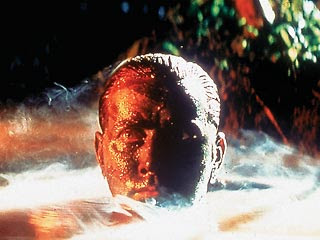
It’s the classic struggle of the good versus evil within each of us, after all, and a great many fascinating stories have been written around this internal conflict, the most engaging of which (for me) tending to be when the protagonists and antagonists of the plot at times blur into each other.  (As you can see in the photos above, Francis Ford Coppola’s Apocalypse Now is one of many films utilizing the imagery of duality—here, both Martin Sheen and Marlon Brando’s faces are half in light and half in shadow—as who is the “hero” and who is the “villain” is called into question.) As it stands, Don is a flawed protagonist just as much as Norman is a well-intentioned antagonist.

So, in the end, what I think makes me want to pat someone like Don on the back and console him with a glass of Scotch along with a Lucky Strike cigarette is the fact that, while I cannot directly empathize with his choices/actions, I can sympathize (to small degree) with where he’s coming from.  Just something to ponder as we craft our own “Good Guys” and “Bad Guys” in our stories, those complex characters that we willingly invite  to ride the carousel of our minds…


If I Could Talk I’d Tell You…

Sometimes what is really worth saying is what is most difficult to say.  Perhaps anyone can tell a story, but it’s the unsayable that charges the tale with compelling if not conflicting emotion.  Writers write because they have something within that is urging to be said; the challenge, though (and the reason why I think not just anyone can tell a good story), is articulating what we feel so strongly when there may be no direct means of doing so.  This is why people use metaphor and simile or play off the sounds of words themselves to recreate an experience that is otherwise unrelatable.

The Prompt:

To help us say the unsayable, page 23 of Room to Write asks us to “choose a feeling, idea, or experience that you haven’t been able to express to anyone no matter how hard or often you have tried.”  In trying to convey this, we are encouraged to use any of the following writing strategies:

1. Comparison – compare the sensation to a similar feeling that it reminds us of;

2. Juxtaposition – describe conflicting aspects of the sensation, side by side; and/or,

3. Rhythm – structure the words/syntax of our sentences to audibly mimic the sensation.

Response:

At times, it felt my eyes would propel from their sockets, or splash out of them with the popping burst of a water balloon breaking against blades of grass…as if I might literally ‘cry my eyes out.’  My heart felt it might split open my chest cavity like a crab leg gripped in the toothed metal of a lobster cracker; holding my heart back from rupture, however, was an opposing anvil of pressure at my sternum, compressing my breast as though I’d plunged into ever deeper waters.  The dulling of other senses was likewise like treading below the water’s surface, looking up to see the pool of light above while deliberately sinking myself toward what was cool and black, obscuring my perception of life as it actually was through the dark and refracting depths and clogging my ears to reason.  At other times, it was like being strained through a sieve, dispersing the atoms of my being into the broader environment, a melding into the background as I soaked into the carpeting or evaporated into the walls, becoming more and more transparent from my own sight.  A water-logged cadaver deadened by apathy alternating with the quick-pulsing, hyperventilating, lurching engine of emotion that, either way, spun me off the road and left me paralyzed in the ditch, tangled within the weeds where no one could see or hear me.  This is what depression felt like.

Reflection:

Yeesh, I feel like gulping for air after trying to re-feel the sensation of a dark, momentary blip in my life.  Thank goodness this experience was temporary, triggered by a few too many life changes that occurred at once—good changes overall, granted, but changes nonetheless that entailed adjustment and sacrifice.  Ah, the bittersweetness of life…but as I learned in Istanbul’s bazaars last autumn, it is good for their elaborately woven Turkish carpets to be trodden on, as it only makes the knots stronger.  And thus we all strengthen into something of more beauty just when we may want to pity ourselves for being stepped on.

In any case, while I don’t have any issues talking about it (I prefer to, actually, as being able to speak of it in the past tense makes me revel in the happiness of my present and optimism for my future), I never feel I can adequately get the experience across.  And I can’t say for certain I’ve done so here, nor really approached it in the way that Bonni Goldberg has asked; all I can say is that I wrote what came to me most readily, and I know I could rewrite it through various other lenses.

I didn’t deliberately attempt rhythm, but if I want to grasp for sound effects, I detect some unintended assonance and alliteration in the penultimate sentence:  the repeated “aw” sound in “water-logged” that draws out the words like the slowed feeling of trying to run under water, the interspersed “a” and “eh” sounds in “cadaver deadened by apathy” that sound listless and whiney, then the “d” sound in “cadaver deadened” that falls with dull thuds.  The action words with strong, snapping consonants and short “i” sounds that follow (“quickpulsing, hyperventilating”) seem to then speed up the sentence a bit.  At least that’s my take on it…or maybe I’m just making this all up as I go along 😉  But seriously, though, although my little analysis here might be stretching because I didn’t try to strategically embed devices like this, I point out these examples just to show how the sound of language could be used for certain effects, and obviously more effectively when done on purpose.  I think this is at least the 2nd time I’ve bypassed rhythm as a writing technique in my responses, so I really need to start challenging myself more in this area.

But enough about me.  How might you say the unsayable?


The Beginning of the End

To conclude my brief series of posts relating back to valuable lessons reinforced by last weekend’s Room to Write writing conference, how fitting will it be to end with endings.

I shall be brief.

Basically, a couple things were emphasized:

First, not all loose ends need to be tied up in a pretty, perfect bow; for the central conflict, yes, but other conclusions might be better left to the reader’s imagination—think Rhett Butler walking out on Scarlett O’Hara.  Do they  eventually get back together?  Your romantic optimism/pessimism will determine that, but Margaret Mitchell didn’t need to in order to effectively give her epic saga adequate closure.

Second, the ending of a story/novel should connect back to everything significant about the beginning.  The successful novels that we reviewed all shared in this aspect—they related back to character, setting, and conflict in creative ways, providing a sense of balance and resolution to our story’s main conflict.

In this way, the beginning and end stand together as “book ends” with all that good stuff in between, and as our climax tops out and falls toward denouement, we should keep that falling action brief—end it with a “flick,” as author Wendy Robertson put it succinctly with a visual flick of her wrist.  And as author Avril Joy stressed to me during some one-to-one consultation time, if I’m rising toward the climax of my novel (which I presently am), I should resolve it in a matter of a few pages or a chapter and not drag the ending out further than that.

I’m going to execute that advice in not dragging the ending to this post out…on that note, cheers, and keep writing!


Walking the Talk

My previous post addressed beginnings of stories/novels, yet before I get to endings, it is worthwhile to comment on the dialogue that might not only span all the in-between but, in fact, could very well be our means of beginning and ending if utilized effectively.  Yet again, I am drawing from the specific advice proffered at the writing conference I attended last weekend (sponsored by the organization Room to Write), lessons we may have learned time and again through various sources, but that I found particularly insightful when distilled during this focused workshop.

To begin with, dialogue is essential to a successful novel because it:

– teaches us about characters and what they might be feeling the second they open their mouths through tone, accent, dialect, and word choice.

– conveys information

– moves the story forward and quickens its pace

– gives immediacy/brings readers in by appealing to senses of sight and sound

– creates white space, which gives us a chance to visually “breathe”

To maintain this significant impact of dialogue, we must therefore keep the following in mind:

– When using dialogue to convey information that we do not through narration, keep the information provided brief.  Otherwise, it may come across as more than would be natural in a conversation.

– Voices engaged in dialogue need to be distinguished from one another—

* Test this distinction by reading dialogue out loud.

* Consider overdoing sense of voice (e.g., through dialect or word choice), as you can always go back and take it away.  Spelling phonetically or using curse words to add color to a character’s voice can be effective in distinguishing him/her, yet it can also be distracting from what they’re actually saying.

* With this previous point in mind, be aware that while dialogue more closely resembles natural speech, even in the best of books it is not exactly the same as we would really talk…and that’s okay.  Again, it may be due to avoiding distractions in exact pronunciation or errors in grammatical syntax (we don’t obey convention 100% when we talk vs. write).  Yet I also feel it may relate to the artistry of language that we might infuse through our characters’ speech—think of the TV series Mad Men…those characters certainly do not speak like ordinary people, but there is something clean and lyrical in everything they say that is a joy to listen to and truly raises the program to a higher plane of thought and reflection.

* Not every line of dialogue needs to be tagged.  This is more easily done, though, when only 2 characters are involved and it’s easier for the reader to track who is speaking the alternating lines.

* Regarding tags, you are better off using plain and simple “said.”  Also, avoid adverbs—whatever description you could provide of how a character says something should already come across through the dialogue itself.

– Incorporate the “business” that goes with the dialogue. (In the excerpt we read from Ian Rankin’s Let it Bleed, for example, one character prepared a cup of coffee for the other as they conversed.)  In doing so, you will:

* help the reader “see” the scene by bringing in movement and showing versus telling through the characters’ actions

* reinforce the reality of the situation, make it more authentic to real life

So, talking of talking, I’ll stop my yammering on this topic.  It is a critical one, though, to writing an effective, engaging, and believable piece, so bear these pointers in mind while also just having fun with bringing your characters to life when you grant them the gift of individual voice.


In the Beginning, There Was the Blank Page…

…or, these days, the blank computer screen.  Every true writer’s mind has a story just dying to get out of it, yet this doesn’t necessarily make getting started any easier.  Following up directly on my previous post regarding the writing conference I attended last weekend (sponsored by the organization Room to Write), one of the topics we addressed was beginnings, which cannot be more critical to a story, particularly if you want to get it published.

First of all, as far as how you begin to write each day, the key is:  1) ensuring that you do write every day, even if just a few sentences; and, 2) the authors leading the conference particularly advised us to write first thing in the morning.  That is when our heads can be freshest and leave us feeling for the rest of the day that we’ve already accomplished something massive (so you don’t have to feel guilty taking that nap 🙂 ).  While I wish I could discipline myself to haul my keester out of bed earlier than the minimum allowable time for getting ready for work, I have to admit I have my most significant rush of ideas in the morning as I shower, as though I’m massaging them out of me noggin as I shampoo my hair.  I always hate that I have to leave for work soon after then, just when I’m in the groove and risk losing the momentum by the time I return home drained from the daily toil.

As far as the actual beginning of our story or novel, we must note that the first chapter (indeed, first page) is the “imprint of the entire book.” The sense of place and voice established in that first page predicts the rest of the book.  My tutors also stressed the impact of including a sense of smell right from the getgo, as it creates a lingering impression unlike the other senses (and is unfortunately one of the most underutilized, as I’ve mentioned before in my “Smell No Evil” post).

With regard to place, we were advised to give places names, even if it’s a fake name to anonymize an actual place.  In this way, a place, if prevalent enough to the story, can become a character in itself.  Closely related in terms of setting, the time period in which our story takes place should be implied well enough to give a clear sense, yet we don’t have to preach to the reader when exactly it is.

With regard to the sample of best-selling novels we read in preparation for the course, we evaluated the following common denominators that we noted across each of their beginnings:

– Drama or sense of impending danger

– Character (be it the main character’s name or an archetype to be represented throughout)

– Setting (again, the sense of time and place)

– Conflict (at least a sense of the issue at the crux of the story)

– “Filmic”—i.e., achieves ready visualization and engagement through drama and descriptive language

Finally, we may have a strong temptation to overly explain some aspect of the story right out the gate, be it the character, setting, conflict, etc.  To avoid this, we need to give our reader credit and exercise restraint—we can always introduce this information in a creative way later on.

I do believe I am at the end of discussing beginnings, so meet me here next time for a few words on dialogue.


The Art of Discipline

On page 19 of Room to Write, Bonni Goldberg pauses to reflect on the importance of discipline in writing.  Her personal mantra when the going gets difficult is:

“Writers write, writers write…”

It all goes back to her emphasis on “showing up on the page” and curbing our tendencies to procrastinate or wait for inspiration to hit us.

The Prompt:

In light of the above, Goldberg asks us to write about discipline in one of 3 ways:

1.  Begin a poem or essay on what understanding you’ve reached on what it means to be disciplined, what you accept about it or what you reject;

2.  Track one of your existing characters as he/she copes with some element of discipline; or,

3.  Relate a past event that involved discipline in your life.

Going with Door #1 today…

Response:

Discipline is..

dedication and details

a dreaded dungeon

of dankness that congests my chest and blurs my eyes

resistance

like trying to run along the ocean floor.

But discipline is also

drizzling drops

of decadent delicacy

embedding structure within passion

to convert it to a sugared treat.

Reading the results

the rejuvenating reward;

whereas

idling for inspiration

the idiocy that is

waiting for words to come to you

rather than working to walk amongst them again.

The daily dollop, then,

the routine regimen,

the waking willingness

to expend effort and enjoy the effervescent energy

of Creation.

Reflection:

I can’t say I had any deliberate reason for the particular consonants and vowels I repeated in this other than they were the ones that started a lot of the words that were coming to mind with regard to the topic .  And I actually think I automatically latched onto to alliteration as a device to give me discipline, to set boundaries in which I could creatively explore.

Ironically, I’m not disciplined enough right now to spend more time on this or even take a second pass on what I just dashed off to revise or expand.  Ah well.  In truth, I think even just that brief time reflecting on it was validating, as that’s the point–if we perceive our goals as laborious tasks immense in proportion, of course we’re going to hit a psychological road-block; we’re just setting ourselves up for it.  The approach that seems widely recommended across writers is to chisel bit by bit off that boulder.  It may not feel like much at the time, but the aggregate results over the span of days will be noticeable if we discipline ourselves to set and accomplish reasonable daily goals.  If I’ve learned anything from my professional experience, it’s that goal-setting needs to focus on feasible, measurable results.

For me lately, on days when I’m not writing for my project, I’m making sure I’m at least writing a new blog post to stay warmed up.  And as for when I am working on my extended piece, sometimes I just roll with it, but other times I might set a word count–in yesterday’s case, 2,000.  It started out slow, requiring much discipline, but once I got into it, I tapped into a torrent of new ideas and ways that they could tie back to the old, and before I knew it, I had written almost 2,500 words by the time I reached a good time to stop for a break.  And even if I can at least add a few sentences of maybe a 100 or so words, I can feel the same level of satisfaction, even if I end up deleting it the next day.  Simply because I know I tried.  I worked at it, and I showed up on the page today.


Touch No Evil

The Prompt:

In wrapping up this series of writing exercises on sensory detail, today’s challenge (page 18, Room to Write) is to write through texture.  Again, we have 3 different approaches we can take on this:

1.  List textures;

2.  Describe the textures of a person, place, or thing;

3.  Reflect on how the textures help us find understanding.

I think I’m going to interweave #2 and 3 for this one, at least at the outset and just go wherever that takes me.

Response:

To lull myself to sleep at night, I often rub my fingers along the edges of my pillow case; it’s a habit I’ve had since childhood, one that I developed as a substitute for massage (I was very used to nightly back rubs from my mom).  So when I repeat this ritual as an adult, the tickling sensation of that thin fabric whispers kisses on my fingertips to assure me everything will be okay.  On the occasional night when I’m really sunken into a mode of regression, I’ll lay there in bed snugglng my panda bear, a gift from my parents when I was five.  Holding her close, I’ll run a thumb over the course, pebbly fur, matted down and hardened from decades of hugging.  Now and then I’ll still find a soft spot, a silken smooth patch that was not prone to friction and reminds me of the fluffy fuzz that once went up my nose and tickled my nostril hairs (and sometimes caused that sharp, almost stinging, muscle-constricting anticipation of a sneeze) when I sniffed the bear to find my own scent.  I run a finger over the rugged, scratched surface of its eye wondering when I would’ve let my guard down to have ever let harm come to there.  I feel how flattened and condensed the stuffing has become, the reason why this panda had actually grown an inch once on the family growth chart.  I roll onto my stomach and worry that the weight of my arm is putting the panda into a strangle hold as I feel its unyielding lump beneath, and as I turn my head the opposite way, the slippery straightness of my fine strands of hair slide across my cheek in feathery protection.  I nestle my face into the moon-cooled part of the pillow that I hadn’t yet laid on and sense its soft, suede-like fibers brush against my skin, which, newly cleansed and burning from an invigorating sandy scrub, prickles a bit at the thin fuzziness just skimming its surface, almost velvety after multiple washings.  I feel the thick raised bands of its pattern press into my cheek to stamp its existence into my damp epidermis.  Awareness of the tepid, downy pressure  of my breath upon the back of my hand distracts me from sleep, so I move my arm outwards, outstretched until it bumps dully into the warm life-force emanating from my husband’s back.  In short, vertical sweeps, my hand rubs up and down against his t-shirt, which has become flimsier and less abrasive to the touch after continuous wear has relaxed its threads.  Through the fabric, my fingers feel a twinkling of bristles as tiny needles of hair penetrate through.  Sensing a shift of the mattress below me with a tug of the sheet above me, I realize I’m waking him when not meaning to and so withdraw my hand to the top of the duvet and let it sink into cloudy puffiness as a brief escape of air from between the feathers huffs around either side of my wrist.  I lose concentration of the regulation of my breathing as, limb by limb, my body numbs against these textures and my mind delivers me into anesthetized dreams.

Reflection:

Huh.  So I didn’t really know where I was going when I started out.  At first I thought I might be listing different textures that have come to have meaning in my life and then reflect on that, yet when the pillowcase and panda that both connote safety and reassurance to me (in representing childhood nostalgia) also both coincide with bedtime, I found myself just running with that image in my mind.

I didn’t realize it until the very end how much the sense of touch comes into play at that time of night when it’s quieter and darker, and, therefore, sounds and sights are more subtle.  Touch logically comes to the forefront, then, as we try to situate ourselves in comfort conducive to fading from consciousness.   A challenge was searching for different adjectives to describe what basically boils down to a bunch of different fabrics–the textures within a bed are not all that dynamic, so I kept wanting to describe things as “soft” all the time.  On rereading, I notice how I used a visual word (“twinkling”) to describe a sensation of touch, and while that may be cheating, I don’t know, it works for me because there’s a sort of motion and sound that go with that word that lets me understand how it would touch against my fingers.  I don’t even know if what I just said makes sense, but I am realizing that the boundaries between the categories of sensory words can be crossed time to time, as the different senses so often work together to elicit a shared sensation, so that leaves us open to all the more creativity in how we spin our language into the thread of a story line.


Hear No Evil

The Prompt:

Continuing on with my previous posts related to the senses, today’s writing prompt (page 17 of Room to Write) delves into sound.  Writers benefit from being good listeners, so Bonni Goldberg asks us to comment on what we hear in any one of 3 ways:

1.   Listing  sounds we love or hate;

2.  Describing the sounds we hear around us now; or,

3.  Developing a dialogue that employs purposeful rhythm in accentuating the subject and tone of the conversation.

I think I’m going to dapple in the first two for now, though I’d like to challenge myself with the third sometime soon and will update this when I do so.

Response:

1.  Sounds I love: the melodic vocals of the song birds that wake me and sing me lullabies in the summer.  The crisp Pffftt when someone opens a can of soda.  A genuine belly laugh gurgled from a niece or nephew.  The satisfying crackle of a fire, or cereal just submerged in milk.  The fluid ripples of a harp.  The melancholy of piano music.  The tap-tapping of corpulent rain drops on the rooftop.  A tongue clicking…once.  The ting of wind chimes and crystal.  Ocean waves and the way their foam sizzles through the pebbles.  Sounds I hate: TV commercials that blare louder than the shows they invade.  The dull thuds of neighbors existing above and around me in apartment buildings.  Car alarms.  Phones and classroom bells ringing.  Cheesy R&B vocals and the ootz-ootz-ootz of dance club music.  Buzzers.  Car horns.  The creaking of my desk chair.  Human voices babbling too loudly on public transportation.  Belches, and the laughter that follows them.

2.  What I hear now: Echoes of children’s voices undulate on the air as it carries their afternoon playtime imaginings across the square.  The steady pulse of a car or building alarm cuts through persistently with a piercing beep that makes my left eardrum throb and contract.  The hum and buzz of street traffic ebbs and flows with the Doppler Effect as cars and lorries approach and flee, the road too stop-and-go to allow continuous whirring and vrooming to meld into the whooshing roar of a waterfall that could let me remotely imagine I am amidst and one with nature.  The upstairs neighbors return with thumping and scuffling on carpeted stairs and a child’s commentary on the school day before jangling keys swing and collide as one of their own unlocks the door with a heavy click muted by friction.  The thumping continues overhead, plodding about more swiftly with a child finding freedom back in her home quarters and is soon accompanied by scuffs and skids and creaks.  All the while, I hear the clacking of the keyboard keys beneath my fingers as they yield and either stomp out letters in quick succession like the notes of a piano concerto (clicking and space-barring to a waltz, perhaps) or pause with the dreaded silence of a writer’s hesitation…a silence that is not quiet, but containing the overlapping tracks of sound previously described; a silence that a writer fortunately does not always hear when seeking out the soundscape of her storyworld.

Reflection:

As I attempt to quiet all the sounds and voices, real and imagined, swarming in my mind so that I can concentrate on reading for a while, I’ll close with this little tribute to onomatopoeia: