Tag Archives: writing fiction

The Soundscape of a Novel

“The making of a good compilation tape is a very subtle art…First of all, you’re using someone else’s poetry to express how you feel.  This is a delicate thing.” —High Fidelity


*sigh*…the Mix Tape.  How I remember practicing that delicate art in high school and college…mostly, I made tapes for myself (hey, you have to love yourself before you can love someone else :)), but I can think of at least one I made for a boy…*blush*. I didn’t need to read or see High Fidelity first to innately understand the delicacy in balancing out those tracks—it’s a lot like writing, really, in that you need to start out with an attention-getter and then try to avoid redundancy in carefully pacing yourself through the highs and lows of fast and slow. The words should carry meaning, and you need to establish mood and tone.

But I didn’t necessarily adhere to all those rules this time.

You see, as I try to hold my anxiety at bay while the last 15,000 words of my manuscript rest in my trusted Reader’s hands for review and feedback, I’ve been playing around with giving my novel a soundtrack, as inspired by the Milk Fever Blog post, “The Soundtrack.” The preliminary playlist that I’ve compiled is in order of story progression, not the sacred aesthetic rules of the Mix Tape as referenced above. Basically, I thought through the themes and atmosphere of my key scenes, as well as any songs specifically referenced in the text, and have listed the songs as these elements appear.  Though humor keeps some of my scenes relatively light, needless to say my protagonist undergoes some pretty crazy stuff that just doesn’t warrant many feel-good tunes.

At any rate, I bring you “Monkey Manuscript: The Musical”—ta da!  You can access this first-pass playlist for my as-yet-untitled manuscript online by clicking the image (a painting I only just stumbled on today that is strikingly in keeping with my tale’s motifs, so would make ideal cover art). Titles and artists are also listed below:

 

"Ophelia," by Leah Piken Kolidas (www.bluetreeartgallery.com)


The “Untitled” Soundtrack:

The Ghost in You – Pscychedelic Furs

We Are All Made of Stars – Moby

Charlotte Sometimes – The Cure

Dreams Never End – New Order

The Fear – Lily Allen

Goody Two Shoes – Adam Ant

10:15 Saturday Night – The Cure

Cemetry Gates – The Smiths

Peace and Hate – The Submarines

Sexy Boy – Air

Dead Souls – Joy Division

Shiver – Coldplay

Start to Melt – Peter Bjorn and John

She’s Lost Control – Joy Division

Where is My Mind? – The Pixies

All Cats Are Grey – The Cure

Black Mirror – Arcade Fire

Cold Hands (Warm Heart) – Brendan Benson

Quick, Painless and Easy – Ivy

Last Goodbye – Jeff Buckley

Slow Life – Grizzly Bear

Edge of the Ocean – Ivy

Revisal of the Shittest

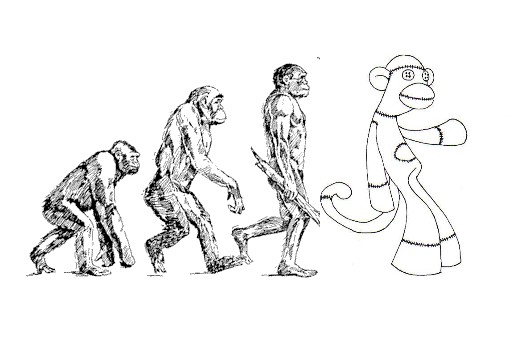
“I believe imagination is like a Darwinian system.”

sock monkey image from cthulhufhtagn.deviantart.com

In the above quotation from the novel Sophie’s World (which I finally got through a week ago), Alberto Knox—the story’s philosopher—discusses with Sophie the nature of creativity and how it follows the natural selection of Darwinism:

“Thought-mutants occur in the consciousness one after the other, at least if we refrain from censoring ourselves too much.  But only some of these thoughts can be used.  Here, reason comes into its own.  It, too, has a vital function.  When the day’s catch is laid on the table we must not forget to be selective.”

Oh, that Alberto and his way with analogies…sorry, can’t help being sarcastic toward this book. Disregarding the tremendous education on philosophy it provides (which in itself is good reason to read the novel, and I’m glad that I did), it’s the fictional aspect of the plot that pricked into my skin like so many fleas in my fur. An interesting attempt to provide an entertaining means of digesting large concepts and history, the fictitious story line that distinguishes this as a “novel” versus “textbook” fell a little flat for me. The dialogue was unbelievably forced (most of Sophie’s comments/questions simply served as breaks or segues in the long lectures), and though it takes an interesting twist mid-way through, the characters and thin plot just didn’t endear themselves. Quite frankly, I found Sophie to be a precocious little twit. But I digress…

In any case, what he’s getting at here is that imagination generates the ideas, but reason weeds out the “mutants” and selects the best ones to carry on.  The plot twist in the book also ushered in some self-reflexive commentary on writing and the manipulative power the writer has over those ideas, settings, and characters in his/her charge. As far as the creative process in general, Alberto continues to say (with another analogy in practically the same breath as the first…):

“Maybe the imagination creates what is new, but the imagination does not make the actual selection.  The imagination does not ‘compose.’ A composition—and every work of art is one—is created in a wondrous interplay between imagination and reason, or between mind and reflection.  For there will always be an element of chance in the creative process.  You have to turn the sheep loose before you can start to herd them.”

This “wondrous interplay” is what laboriously polishes our inspired first drafts into final manuscripts. It’s what also keeps us in check so we don’t overly pillage our paragraphs of the words and thoughts that breathe soul into them; all too often, reason defeats imagination when there should instead be a balance of power.

Unlike the negligent Dr. Frankenstein, however, we do need to be mindful of what we bring into being. Our stories inspire us, they speak to us, they surprise us, yes, but they also rely on us to nurture and shape them, to help find a suitable place in the world for them. It’s still essential to follow the writing rules so we don’t feed our stories after midnight or get them wet, thereby leaving the sweet Mogwais of our imagination to metamorphose into Gremlins of loose redundancy and holes. That said, I don’t mean to be harsh on our uncensored minds, and perhaps my title isn’t fair in calling our first drafts “shit”…but far be it from me to pass up a good rhyme, and, anyways, sometimes they just really are ;).  (I think Sophie’s World, for example, might’ve benefited from another read-through…)

Serendipitously, at the same time as I’d read the chapter quoted here and mulled over this intellectual tightrope, Tahlia (author of Lethal Inheritance who blogs on the site of same name) posted “Do we write a story or uncover it?“—here, she asks how much we write using our rational intellect versus not thinking and just going with the flow.  It seems we universally tread this fine line, leaving us with this:  To think or not to think…that is the question when it comes to the evolution of our story.


So, uh…Did You Bring Any Protection?

*blush*  Get your minds out of the gutter.  What kind of monkey do you think I am?!

“The best lightning rod for your protection is your own spine.” – Ralph Waldo Emerson

I have long neglected my little writing prompts that originally kicked off this blog, mainly because they’re aim was to get me over writer’s block, and it worked!  I’ve been cranking until I’m crossed eyes these recent days on revising my manuscript, and for the time being am keen to step away for a bit to clear my head.  So…

The Prompt:

Today page 43 of Room to Write asks us to list the protections we use in our everyday lives or, indeed, our writing.  We are to then have our main character embody this protection in a scene or simply write a new piece without using writing-protections (e.g., a different place than the usual, without a word/page limit, etc.).

Henry VIII's armour

Response:

My everyday protections include:

– smiling

– expression through writing versus speaking

– diving behind a book or in front of a computer/tv

– my giant headphones and iPod

– sarcasm

– my forked tongue, when need be

– stubbornness, which includes a common refusal to say, “sorry”

– quiet pensiveness, reclusiveness

Hm, given that codpiece on Henry's armour, perhaps he could've used this protection as well...

– over-analysis

– verbatim recall of prior conversations (one of my more superb defenses)

– cold silence or, conversely, inane babble

– hats, cardigans, and sunglasses

– take-away caffeine (somehow just holding the steaming paper cup is a fortification, regardless what’s inside)

– sleep

– my quilt

– a hybrid superiority/inferiority complex that’s a bit difficult to describe…

I’ll stop there and address the second part of this exercise by first peeling off one key writing-protection of mine:  the ability to revise.  So I’m just going to write this off the cuff and not obsess over how it comes out, leaving it raw in its first draft form.

So, that said, I have certainly infused a lot of the above protections into my protagonist, who I’ll continue to address by the pseudonym “Margaret” (whoops, there I go, still protecting…and for whatever reason protecting the fictional :)).  I could probably find one-to-one matches for almost everything on the list, but here’s just a few examples:

“Margaret beamed one of her fake smiles in maneuvering in ninety-degree angles toward her.”

“Writing was so much easier than calling; writing gave control, the ability to pause, reread, and revise.  Margaret didn’t trust herself with speaking any longer; the restraint in talking to her parents was difficult enough, and they alone embodied the innocence necessary to not pick up on vocal cues.  Her not-so innocent friends and brother, on the other hand, were risks she couldn’t take.”

“Shaking off the mundane tasks of Everyday-Land and shoving in a thumbnail to spear a dog-eared page, Margaret tiptoed into her alternate universe at the delicious creaking sound of a hardcover binding blooming into action.”

“She’d banked an increasing number of slumbering hours ever since that first day […] and she wiled away the afternoons on indulgences like prolonged soaks in the tub and otherwise luxurious daytime lounging.  The solitary nature of her days quieted her mind to her earlier paranoia, distortions in perception that she’d ascribed to stress-induced fatigue.  [It] all dissipated before her like the steam that rose off the bubbles in her lap.”

The sun shied away behind the clouds, making Margaret’s sunglasses redundant, so she reluctantly removed them.”

“She’d lately taken to […] a route of anonymity that concealed her among side streets rather than parade her before rows of shops and sidewalk cafés.  She didn’t want to be observed, though sometimes played a mental game that she was hiding from the paparazzi lusting to lavish her with attention—somehow desiring to be a Nobody while still feeling like a Somebody.”

And that kitten definitely has claws when she needs ’em to shield her inner vulnerability.

Reflection:

As much as this character isn’t supposed to be me, it’s interesting to look back on her through this lens and realize how cognizant I am of my defense-mechanisms, as reflected in this mirror.  I reveled before in the fact that writing can be a protective filter of our thoughts by virtue of its revision stage, yet it is also something that leaves us exposed, unveiling raw emotion, intellect, and imagination.  I’m sure I’m not the only one who felt (and continues to feel) timid about posting a blog, putting those ideas out there for anyone to read and judge.  Getting something “in writing,” after all, carries that sense of no-turning-back, as though signed in our blood or chiseled in stone.  There’s both a structured permanence and organic fluidity to it that just fascinates me, but I’ll leave that to another blog topic on another day.  For now, I suppose these blogs do allow us to go back and edit, but I’ll keep my promise and not exercise that protection ;).  In fact, I’m not even going to let myself read this over before I press “Publish.”  Ha, take that!

What are your protective layers?


Schoolhouse Crock

In the wake of my previous post on “taboo” words, I came to a horrifying realization: writers are going to put Lolly’s, Inc. from Schoolhouse Rock out of business!!!

A three-generation family business…I just don’t know if I can live with the guilt!

I therefore reemphasize what I said last time about still using the supposed no-no words like adverbs—just do so within reason—and I think dialogue or 1st-person narration deserves some leeway as well if it’s authentic to how a person would really speak.  So I guess I’ll still be unpacking my adjectives, too, but with discretion.

Working through this experience has introduced me to writer rules that *gasp!* I wasn’t necessarily teaching my high school students…when it came to dialogue tags, I confess I’d tell them that “said” is boring, so their characters should “exclaim” or “sneer” or even “smirk” something—I gave them a worksheet, in fact, that listed up to 50 different tags!  Gah!  And in looking at said worksheet, go figure the examples I used for dialogue punctuation:

I asked, “Did you see the monkey fall out of tree?”
Did you just say, “The monkey fell out of the tree”?
I screamed, “The monkey is going to fall out of the tree!”
He had the nerve to ask me, “Why didn’t you catch the monkey when it fell?”!

I will say this in my defense (not of subjecting my students to endless monkeys in their grammar examples ;), but of how I taught descriptive language):

– First of all, children and adults alike who are not naturally expressive in their writing do benefit a great deal from first learning what vast options their language provides them so they can later practice restraint when making more sophisticated stylistic decisions.

– Second, I certainly wasn’t teaching them that more words are better, merely that each of the words they are using should pack a punch.  It’s not about being redundant, it’s—for example—saying that someone “saunters” rather than “walks” or that the fish in the garbage smells “putrid” rather than “bad.”  These one-to-one swaps are sufficient in themselves to strengthen a sentence.

Thus, in their revision workshops, I’d ask them to comb through their writing and seek out any general nouns, verbs, adjectives, or adverbs and replace them with more specific ones.  They were also to identify which senses their descriptions appealed to and strive to address all five at some point.

“Writers with style never just eat breakfast.  They munch on granola, wolf down hotcakes, savor Frosted Flakes, or gorge on jelly doughnuts.” – Art Peterson, The Writer’s Workout Book: 113 Stretches Toward Better Prose

I must say it’s very fun, let alone ironic, playing the pupil and trying to follow my own and others’ lessons, and I’m grateful for the new perspective I’ll eventually bring back to the classroom.  I’m not only strengthening as a writer, but also as a teacher.


The Telltale Taboos

“Substitute ‘damn’ every time you’re inclined to write ‘very;’ your editor will delete it and the writing will be just as it should be.” – Mark Twain

The revision continues, so this is just a quickie.  That’s right, I’m gonna just love ya then leave ya, blog-slut that I am…

I’ve done a once-over combing through my manuscript and trimmed out a few thousand words so far.  As I still contemplate how I’m going to tweak that damn ending—sorry, I mean “very” ending—no, I mean “damn” ending—no, I mean just “ending,” period ;)—I’m approaching another wave.  But before I do another complete read-through, I’m strategically using my Word application’s “Find” tool to seek out and evaluate the use of a few common culprits that threaten to weaken our writing.

While there are many ways to slice-and-dice revision (including eliminating those adverbs and “to be” verbs), here’s a sample of overused, taboo words to check for in your manuscript as a quick-fix:

very

always

really

when

then

that

suddenly

just

began / started (With these, don’t use it if whatever is “beginning/starting” doesn’t stop before the action is carried out. Oh my gaawwd, I can’t believe how many ‘began’s I’ve found…naughty Monkey!)

For what that’s worth.  It’s not to say we shouldn’t use these words at all, just not overly so—it’s worth a scan to become cognizant of our usage and determine whether there isn’t a more direct, active means of engaging our reader through other word choices/sentence structure.

Also [I’m adding this retroactively in response to Sharmon’s good point in the comment below], I personally reduced those words in my 3rd-person narration, but left most of them in my dialogue, as those words are likely overused in our writing because they’re what we use often when we speak!  So, it’s arguable from that standpoint that they contribute toward authentic dialogue, no?

What words would you add to the list?

[As an aside, can’t help but share that the Mark Twain quotation reminds me of a time from my consulting days when the guy in the cubicle across from mine started swearing, walked away, then promptly returned with a colleague.  “Fix it,” he said to the guy, pointing at his computer.  Our friend/coworker giggled as he did so.  Afterwards, I learned that the guy had tampered with my cubicle-mate’s Word settings such that every time he typed the word “the” in his client report, it auto-corrected to, well, a term for male genitalia.  Ah, Finance wasn’t always so boring…]


The Shotgun-Shack Story: Nowhere to Hide

The-Breakfast-Club-movies-21223076-1558-800

I’ve been sitting on a topic for a while that a recent blog post on Lethal Inheritance  has spurred me to finally write.  In Tahlia’s post, “Is writing the second novel easier than the first?“, she discusses how she has started writing her second book while her first manuscript awaits publishing.  She mentions ways in which this second story line differs from the first:

“[I]t takes place almost entirely in one set of adjoining suites in a castle, whereas Lethal Inheritance’s scenery is always changing. Thirdly, it’s character, relationship and emotion driven, rather than action driven. For me, that’s a harder brief, and that’s why I’m not sure at this stage if I can make it work.”

To which I responded:

“What I’ve been working on to date falls in that [same] category; there are not dramatic changes in setting or adrenaline-rushing action as it’s very concentrated on the psychological/emotional variations in my protagonist as she questions identity and her perceptions of reality.”

I proceeded to say that, though this is the type of story I’m personally drawn to, I realize it doesn’t necessarily have the mass-market appeal that would get it snatched up for publication.  And that’s okay—I am definitely writing the story I want to write; I started rereading it from the beginning yesterday and am all the more convinced of that.

So, today I’m dedicating this post to those incredible stories out there that capture our attention without catering to the modern-day ADD bred by MTV-esque rapid editing and car chases and explosions.  I’m not saying I’m not likewise entertained by the action-packed tales, just that they are not the only ones capable of, in fact, entertaining.

I attended a writing seminar last year in which a panel of agents, publishers, and authors spoke on the craft of writing in conjunction with getting published.  Someone in the audience had asked about commercial versus literary fiction, and an author responded that “commercial” fiction is story-driven whereas “literary” fiction prioritizes language and ideas—it is read for the beauty of the words and provocation of thought.  She attested that many authors try to combine both.

This got me thinking, then, about the more character-driven stories that I enjoy.  Where films go, I noticed a trend in my collection of one-setting movies; indeed, some partake in just one room.  Think about that!  One room.  If a film or novel can captivate you all the way through by virtue of situation and dialogue without having to change settings, that is a brilliantly written manuscript, in my opinion.

Don’t believe me?  Try watching Rear Window, 12 Angry Men, Rope, or, hey, even The Breakfast Club—all of which take place in a single room (with the exception of maybe a minute or two outside)—and tell me that you aren’t entertained.  These are carried by characterization and dialogue, just like other favorites of mine:  Before Sunrise and its sequel Before Sunset (which both admittedly change settings, but the respective cities of Vienna and Paris are just backdrops to the characters’ ongoing conversation), The Anniversary Party (an ensemble cast in a Hollywood couple’s home), and Gosford Park (in the vein of the Agatha Christie books I loved as a kid that transpire in a single setting—a mansion in And Then There Were None and a train in Murder on the Orient Express).  And it doesn’t take dramatic, in-your-face action and cutting from setting to setting to get the blood rushing, as not only evidenced by these mysteries and the two aforementioned Hitchcock films (Rear Window and Rope), but in haunting thrillers like Dead Calm and The Others as well…which coincidentally both star Nicole Kidman, the first taking place on a sailboat and the second in yet another old English mansion.

In speaking on setting, the visual examples of this most readily come to my mind through film, but the success in capturing even a viewer’s attention in this case comes down to the writing.  The writer scripts the dialogue and envisions the setting and behavior of the characters—in film, the director then works to capture this audiovisually.  Yet in a novel, it is all on the writer to convey these elements entirely in words.

Stripping away the attractive actors, elaborate sets, and soundtracks does not render mere words dull, nor is a single/minimal-setting book a bore.  If that were the case, where would that leave the classic works of authors like Austen or Bronte, whose stories don’t deviate far from the character’s homes.  Think of the chill sent down the spine by novellas like Henry James’s The Turn of the Screw or Poe’s The Fall of the House of Usher (houses), the adrenaline and fury aboard Hemingway’s The Old Man and the Sea (boat), or the intimate existential conversation in Salinger’s Franny & Zoe (the entire second part moves only from the bathroom to the living room) or Boethius’s 6th-century The Consolation of Philosophy (a prisoner speaks with Fortune in his cell).

What is it about the single-setting that so fascinates me?  I suppose it’s in part the appreciation I feel for the effectiveness of story-telling that doesn’t rely on bells and whistles.  And it’s the great experiment of what happens when you isolate people in a room—throw in a dash of tension, stir, and bring to a boil.  It becomes a study of humanity when characters aren’t able to escape each other or even themselves:

There is much heart, soul-seeking, and thrill to be had within four walls.  A writer can most certainly pull it off, though the impact can only be as strong as the writing itself in bringing it from the corners of a room to the corners of the mind.

How about you, readers and writers—do you gravitate toward the story-driven or character-driven?  What are some examples that successfully combine both?


The Fear Factor


The Prompt:

I love how Bonni Goldberg relates writing to medicine when it comes to protecting us against our fears:

“You take small doses of your fears in combination with written words and they create a kind of antibody: a cathartic human experience that authenticates your strength and fragility.”

Page 42 of Room to Write, then, asks us to write a list of our fears and describe one in more specific detail.

Response:

Some things I fear:

– geese

– clowns

– confined spaces

– death (mine, but mostly loved ones)

– being in any way “too late” for anything by the time I move back home

– losing my sight or hearing

– the debilitating effects of aging

– having children

– lack of purpose

– never finishing my book

– rejection

– regret

Okay, I think that’ll do.  Now, to pick just one…it’s tempting to go the route of writing-related fears, but I think I devote enough of this blog to that!  How about the “too late” factor, as I feel it’s one needing more explaining:

The fact that my aging parents continue to age in my absence while living abroad positively terrifies me.  I know many will find that irrational and say that I have to live my own life, but I will never, never forgive myself if something happens to either of them while I am an ocean away.  Just writing this right now is bringing me to tears.  It is something I really, truly cannot stand to fathom.  And I don’t want to miss out on my nieces’ and nephews’ milestones, nor do I want the littlest ones to not know their Auntie.  I am not the person who realizes what they have only when it is “too late”; I’m the person who has always known perhaps too clearly, which is why I would have never left in the first place if it were only up to me.  I don’t think of it as something holding me back; being with my family is actually part and parcel of my life’s ambitions, so anyone who thinks I should feel otherwise can suck it 🙂

My own aging has started to frighten me as well.  I don’t consider myself to be old, but my husband and I have agreed to wait until we return home to our support network before starting a family, at which time I will most definitely be at the infamous cut-off age that younger mommies love to throw out there as the danger zone of higher risks and mandatory tests.  Gee, thanks for making me feel geriatric.  Sorry my last decade has been pleasurable and focused on my needs and catering to my own identity before I give it over so fully to a little person of my making.  I genuinely hope I didn’t just offend any mothers reading this—I think parenting is the most noble occupation for one to assume, but it’s not my fault that I didn’t get married until after my friends were already popping out kids and that other life changes have thrown me for a loop such that there’s a lot I need to get sorted before I feel I could do a remotely good job of it myself.  So I’ll put off applying for that particular position a bit longer; yes, I know, at my own risk.  *eyes rolling*

Returning to find that my old job (for which I was only 1 year away from getting tenure) is not remotely available to me anymore is scary.  I moved the very week that the economy tanked, and what I’d considered a recession-proof job has still managed many layoffs since then, and some departments have frozen their hiring.  Barring that, even if I can vie for a position, perhaps I’ll be judged negatively for my time away from teaching; the powers that be may frown upon my rationale, not find value in how I’ve chosen to apply myself since then.  Even worse, what if I fear teaching itself?  After such a long hiatus, I’m no longer riding the momentum of consecutive years ramping up in the profession.  The flexibility (and sleeping in!) of my present days will be lost, and never doubt the intimidation of staring down 125+ teenagers a day and, even worse, their parents who will too quickly point the finger at you for the consequences of their own lack of parenting at home.  Then again, if I end up not having kids of my own, teaching is a great way to play surrogate.

I think what is overall frightening me is the realization that my life at home did not simply freeze once I took off on that plane, preserved in its tableau of near-perfection while I have my fun and then return to reinsert myself seamlessly back into it.  I will not be entirely the same person either, after all; current experiences are carving me from a square to an octagon-shaped peg.  So I fear the transition that will be repatriation, after expatriation was already so difficult.  I fear feeling out of place in my own home and possibly acknowledging a discontent that wouldn’t have otherwise been there.

But, you know, so be it.  Rejoining my family, starting a family, returning to teaching…I cannot think of three things more worth facing that fear.

Reflection:

First of all, allow me to apologize.  Addressing personal fear just automatically lends itself to a whiny rambling of self-pity, so thank you for bearing with me through it if you’ve made it this far 🙂  I don’t think this activity has brought out any special writing, per se…the fears are plain, so embellishment didn’t come naturally—the way I wrote it is not creative or revelatory.  It didn’t make me realize anything new about myself.

Maybe selecting a different fear or writing in another frame of mind would have made all the difference, but the one thing I can take away from this exercise is the fact that Goldberg was right!  When I started writing about this, as I said, it made me cry—it thrust me into my fear and made me tremble in the face of it.  And yet the more I wrote, the easier it was to pull out of this vulnerable state; putting it in writing made it very plain to see that, while my fears may be justified, they really aren’t as big of a deal as I sometimes let them be.  The more I wrote, the more my heart quieted and the more my mind said, “Poor you with the wonderful family and profession and wonderful period of creative flexibility and travel that you have in-between.  To have had it as long as you did is a gift, and you still might get your cake back to eat it too—or even be okay if you don’t.  So in the meantime, buck up.  Deal.”

In short, facing my fears was embracing my blessings.

And you, brave readers of mine?  What are you so afraid of? And how might your fears impact your writing?


Speak and Spell

I’m presently hosting cousins who are in town visiting, and we attended the evensong service at St. Paul’s Cathedral.  I confess that I usually tune out during church readings and sermons—really, when anyone has been talking too long—and it’s that much harder to keep focus when my eye has a massive dome and intricate mosaics, sculptures, and paintings to wander about.  A surreal kind of solitude even in a room filled with people.

In any case, because I’m visual and we had a program containing the readings and songs, I did catch this passage:

“If [the flute or the harp] do not give distinct notes, how will anyone know what is being played?  And if the bugle give an indistinct sound, who will get ready for battle?  So with yourselves; if in a tongue you utter speech that is not intelligible, how will anyone know what is being said?  For you will be speaking into the air.  There are doubtless many different kinds of sounds in the world, and nothing is without sound.  If then I do not know the meaning of a sound, I will be a foreigner to the speaker and the speaker a foreigner to me.”  – from 1 Corinthians 14

Now, the context of this passage regards speaking in “tongues”—i.e., spreading God’s message in different languages that people may not understand without interpretation.  Yet it got me thinking about language in general and the way people communicate with each other even within the same language that they all understand.  This transports me back to the first days of school explaining to students why taking an English class is necessary—not as in learning the language itself, but, rather, learning all the possibilities of how to use that language.  I told them that they could have the most brilliant ideas in the world, but it won’t mean anything if they can’t communicate them clearly.

For students, the technical ways to communicate are the starting point.  [DISCLAIMER:  My criticism is limited to those who butcher their first language only.  My hats off to those who speak another language at any level, as it’s more than I’ve achieved.]

I could go on and on about how many times I caught text-message-ease infiltrating formal essays (yes, “u” instead of “you” appeared countless times) and how proof-reading is a lost art thanks to Spell-Check being taken for granted (need I mention the infamous “there”/”their”/”they’re” problem)?  Maybe I’m just a stickler—after all, I’m not immune to such errors when I’m writing quickly, and naturally leave it to a teenage wisenheimer to bring to my attention the Cambridge study on spelling—but it becomes increasingly alarming to me when I catch more and more typos on menus, signs, and other messages in print.  I don’t know if any of you WordPress users had the same issue, but I couldn’t get into my blog the other day because “Writes to access this site have been disabled.”  Really?

But this isn’t what I mean to harp on (and I don’t want everyone whose stuff I read to fear my teacher’s red pen :)), so I digress…

What I really want to address relates at least in part to Cities of Mind‘s comment on my earlier post:

“I decided that maybe what you do is write the book you want to write, in a way people want to read it.”

This lingered in my mind, and, while the ways in which people want to read a story may encompass several factors (e.g., engaging through suspense or pacing), I thought about how important a story’s overall readability is in the first place—i.e., the ease with which readers can comprehend what is written without having to read through a sentence three times before understanding what it’s getting at.   This ended up echoed in my own sister’s words during her recent local TV interview (which I had to see on her blog before that modest little stinker even showed it to me!).  Starting out in that oh-so soulful world of Finance like myself, when asked how she shifted gears from “boring” financial writing to creative writing, she responded that the former actually helped:

“One thing that was always pounded into me was, ‘This needs to be understandable to the clients,’ so [business writing helped me] for getting the message across and understandable to the reader.  So as far as the passion and the creativity of the story, that part was kind of easy to just have, but to get it written down so that someone else would read it and feel and see the characters the same way that I wanted them to, [I go through a lot of editing] to just think of it from the reader’s point of view.”

I suppose that’s mostly what the “rules” are all about, ensuring that the vivid images and concepts in our minds are translated into words that recreate the thoughts in the reader’s own mind.  This is the fundamental principle of communication, whereby the Sender relays a Message to the Receiver.  If the Receiver does not understand the Message, the Sender has failed to communicate effectively.  And, as Cities of the Mind puts it, we should relay our messages in a way the reader would best welcome them.

The English language is extremely word-rich, so we must take advantage of its possibilities, appreciate the options for syntax and structure, the varying degrees of meaning conveyed by carefully choosing among synonyms like “pretty,” “beautiful,” and “gorgeous,” and not speak into the air in haughtily intellectual or overly abstract ways (mind you, this does not mean dumbing it down either).  A story is meant to be shared, so keep it clear, keep it accessible, and—just as importantly—keep it honest.

“The great enemy of clear language is insincerity” – George Orwell


The FaMo Awards

Gah!  I’m so delinquent in my blog-posting/reading…as I explained this morning on Twitter, “the sloth in the next cage died, so am filling in for it at the last minute. Have been very convincing in my role.”

For what that’s worth.

And shame on me further because I have yet to formally thank the lovely Lisa Reece-Lane and Agatha of the Milk Fever and Here Be Dragons blogs, respectively, for humoring a primate with blog awards!  My very first ones, so I’m screeching and throwing poop around my cage like it’s confetti.

Following my blog post on rules, ironically, here are a few more that I am more than delighted to adhere to in accepting these honors (along with the gown I shall be wearing to the award ceremony):

1. Thank those who loved you enough to bestow this gift.
2. Share seven (7) things about yourself.
3. Bestow this honor onto 10 newly discovered or followed bloggers–in no particular order–who are fantastic in some way. (The You’re Going Places award only obligates me to 5, but I’ll honor the original Spotlight reqs)
4. Drop by and let the 10 chosen friends know you love them.

Okay, so to follow my thank-you above, here are 7 random things about me:

1.  I am the youngest of 4 and the proud auntie of 2 nieces and 6 nephews.  Being 7 to 10 years younger than my siblings, let’s just say I fought my way into this world as an “unexpected” gift from God.

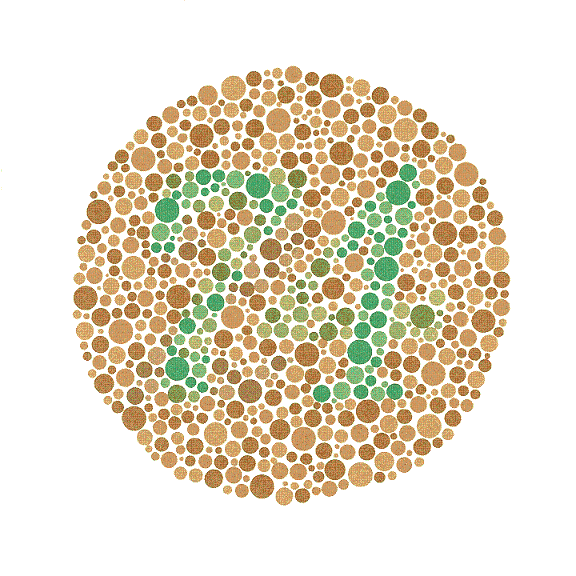
2.  Though it’s rare in females, I’m color-blind.  Well, color “weak” as the eye doctor says every time I fail one of those gol’ damn color  tests.

3.  Although I love animals (I am, after all, a monkey), I am not a pet person. At all. But if I had to align myself with either the infamous Dog People or Cat People in a finger-snapping gang face-off of “West Side Story” proportions, I would probably go Cat.

4.  While not advanced and hardly ever getting the chance anymore, I love playing the piano.

5.  The only physical features that I’m genuinely insecure about are my feet.

6.  I suspect that I have an old soul, but cannot determine its age (though, considering my bunions and the flannel granny cap I wear in bed on winter nights—very much to my husband’s chagrin—I estimate it’s at least 80).

7.  My mind is a reservoir of meaningless pop cultural free-association-of-thought.  For example, on command, I can sing/hum theme songs to old TV shows (with a concentration in ’80s sitcoms). My college roommates discovered this ability in our dorm cafeteria—nothing stumped me, but after something like 2 hours I stopped in frustration that I could only recall ONE of the themes for “Lost in Space” (the later color episodes had a different song than the earlier B&W seasons, you see, but I’m pleased to announce that I eventually did remember the other one and will sing it at your wedding if you book me far enough in advance).

Though not all necessarily “newly discovered,” I will now bestow the honors to 10 of my consistent blogger friends (I’ll split the 2 awards 50/50):

Receiving the Spotlight Award:

The Spotlight Award

1. To extend my thanks further, Here Be Dragons.  This blog is a constant source of empathy and inspiration for me as a writer.

2.  Nicki Elson’s Not-So-Deep Thoughts.  A newly-published author’s witty musings on writing and the 1980s—as her little sister, I couldn’t be prouder!

3. Real Bloggers United.  A diverse new collaboration of bloggers to which I try to contribute on a monthly basis and encourage you all to do the same!

4.  Courage 2 Create.  An insightful writer embodying refreshing humility and kindness.

5.  Aphorism of the Day.  Though he humbly goes by “nothingprofound,” his bite-sized pearls of wisdom give a busy life pause for meaningful thought.

Receiving the You’re Going Places Award:

You're Going Places Award

6. In keeping with the spirit of #1, Milk Fever.  Lisa is a rising newly-published author, and her posts crack me up.

7.  Though she already has heaps of ’em, there’s a reason:  Bowl of Oranges.  Our gal Lua never fails to share spot-on reflections related to the journey of a writer.

8.  Write in Berlin.  I *heart* this gal’s wit and sharp perspectives as a writer and Berliner.  Her advertising eye always makes for an engaging interplay of images and text.

9.  In Media Res.  Filled with humor and honesty, Milo is a lesson in imagination and perseverance in publication.

10.  Lethal Inheritance.  A richly informative guide on writing and the quest for publication by YA fantasy lit author, Tahlia.

*phew*  I’m pooped (in the figurative sense, not the literal with regard to my nasty monkey habits).  I’m off for the evening and hoping to catch up on all of your blogs this weekend, as well as those of newer commenters who I’m very pleased to meet and looking forward to following as well!


Writer Rules. I mean, Writers Rule!

I recently read a post on the Here Be Dragons blog entitled, “Are We Having Fun Yet?” in which the author, Agatha, shares a refreshing, honest rant over the agony that can be refining a manuscript into its final draft.  She references Stephen King’s book On Writing (which many keep recommending and my slack-ass has yet to read) and specifically addresses a few writing rules that are compounding her frustration, such as how to approach that infamous first chapter (i.e., beginning at the beginning of the action to hook the reader rather than leading in with too much description of setting) and the debatable requirement that there be tension on every single page.

This got me thinking about all the RULES we new writers are trying so diligently to follow to not only write that novel, but also craft it into something marketable so it has a shot at getting published.  We scour the blogosphere for the sage wisdom of literary agents and published authors, and we look to our most beloved books for guidance.  It goes without saying that the pressure this places on us is tremendous, especially when we look back to the precious first drafts we wrote from our hearts and realize they are violating rules left and right…

Suddenly the Adverb becomes our arch nemesis, and we’re playing Whack-a-Mole against any dialogue tags other than Said.

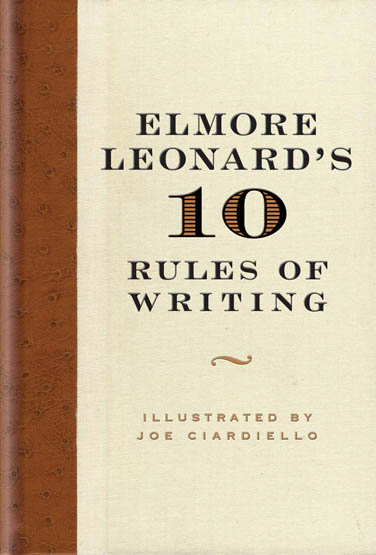
A few months back, The Guardian (inspired by Elmore Leonard’s The 10 Rules of Writing) published the article “Ten Rules for Writing Fiction,” in which they surveyed 29 renowned authors for their own list of dos and don’ts.  This was a fascinating read for me.  At first, it overwhelmed me, because of course as I scanned down the screen I was tripping over everything that I apparently do wrong…and yet, the more author lists that I read, the more I noticed how varied their perspectives were.  For being a list of “rules,” it if anything taught me there is no consistent formula set in stone.

While there are no doubt sound universal suggestions out there we should adhere to, I think we also need to find solace in the fact that there couldn’t possibly be a one-size-fits all approach to writing a good book.  We are all unique and have something different to bring to the table, and that’s something that should be celebrated in our writing as well.  I particularly like how Ollin Morales (Courage 2 Create blog) phrased it in his comment on Agatha’s post:

“I’d rather write a book that I love and everybody hates, than one that everybody loves and I hate.”

True dat.  And I also commend the truth Corra McFeydon just shared in her A Lit Major’s Notebook blog, a post appropriately titled, “The Truth.”  It is here that Corra, also in the process of writing a novel, admits that she does not desire to be a professional writer because, right now at least, it’s killing her spirit in what she loved about writing in the first place.  Seeking to break free from the rules and schedules that constrict her, she asserts:

“That’s why my novel will be written when the spirit hits me — as a product of my intensity, my laughter, and my free spirit — even though apparently that’s not how to be successful.”

I began this project for me, and if it remains just for myself after I’ve at least given it a shot at going elsewhere, so be it if I’m happy with the end product.  But even abiding by our own expectations entails discipline as we make time for our writing and edit it until it becomes the best version of itself.  I think most of the rules I’m opting to follow these days are self-imposed based on my own standards (which are quite high—I’m an English teacher after all, and grade myself constantly ;)).

That being said, one external rule I’m trying to stick to is the advised first-time-author word count of 100,000—not in my first draft that I’m wrapping up presently, but when I go back through to polish up.  Yet another blog post I recently read that I really appreciate for its straightforward guidance on how to cut, let’s say, 19,000 words for a final manuscript is, well, “How to Cut 19,000 Words” from the ‘Lethal Inheritance’ blog—Tahlia Newland tells us how she did just that when her agent asked her trim down her YA fantasy novel of same name.  I was at first absolutely psyched out that cutting words meant cutting entire paragraphs and chapters—and sometimes it does and perhaps will, but it’s reassuring to know that it can be achieved on a sentence/word level as well, an edit so subtle you’d hardly miss a thing.

I’m curious:  Which writing rules do YOU swear by?  And which rules do you think are totally bogus?

Argh.  Can you even imagine Jane Austen sweating it out like this?  I can’t imagine she was slapped in the face by rules at every turn, as we are at every page we flip and link we click.  But then again…