
Tag Archives: writing guidance

The FaMo Awards

Gah!  I’m so delinquent in my blog-posting/reading…as I explained this morning on Twitter, “the sloth in the next cage died, so am filling in for it at the last minute. Have been very convincing in my role.”

For what that’s worth.

And shame on me further because I have yet to formally thank the lovely Lisa Reece-Lane and Agatha of the Milk Fever and Here Be Dragons blogs, respectively, for humoring a primate with blog awards!  My very first ones, so I’m screeching and throwing poop around my cage like it’s confetti.

Following my blog post on rules, ironically, here are a few more that I am more than delighted to adhere to in accepting these honors (along with the gown I shall be wearing to the award ceremony):

1. Thank those who loved you enough to bestow this gift.
2. Share seven (7) things about yourself.
3. Bestow this honor onto 10 newly discovered or followed bloggers–in no particular order–who are fantastic in some way. (The You’re Going Places award only obligates me to 5, but I’ll honor the original Spotlight reqs)
4. Drop by and let the 10 chosen friends know you love them.

Okay, so to follow my thank-you above, here are 7 random things about me:

1.  I am the youngest of 4 and the proud auntie of 2 nieces and 6 nephews.  Being 7 to 10 years younger than my siblings, let’s just say I fought my way into this world as an “unexpected” gift from God.
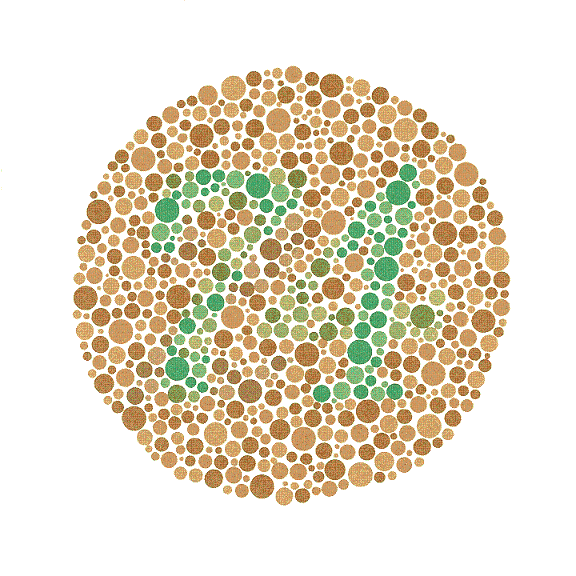
2.  Though it’s rare in females, I’m color-blind.  Well, color “weak” as the eye doctor says every time I fail one of those gol’ damn color  tests.

3.  Although I love animals (I am, after all, a monkey), I am not a pet person. At all. But if I had to align myself with either the infamous Dog People or Cat People in a finger-snapping gang face-off of “West Side Story” proportions, I would probably go Cat.

4.  While not advanced and hardly ever getting the chance anymore, I love playing the piano.

5.  The only physical features that I’m genuinely insecure about are my feet.

6.  I suspect that I have an old soul, but cannot determine its age (though, considering my bunions and the flannel granny cap I wear in bed on winter nights—very much to my husband’s chagrin—I estimate it’s at least 80).

7.  My mind is a reservoir of meaningless pop cultural free-association-of-thought.  For example, on command, I can sing/hum theme songs to old TV shows (with a concentration in ’80s sitcoms). My college roommates discovered this ability in our dorm cafeteria—nothing stumped me, but after something like 2 hours I stopped in frustration that I could only recall ONE of the themes for “Lost in Space” (the later color episodes had a different song than the earlier B&W seasons, you see, but I’m pleased to announce that I eventually did remember the other one and will sing it at your wedding if you book me far enough in advance).

Though not all necessarily “newly discovered,” I will now bestow the honors to 10 of my consistent blogger friends (I’ll split the 2 awards 50/50):

Receiving the Spotlight Award:

The Spotlight Award

1. To extend my thanks further, Here Be Dragons.  This blog is a constant source of empathy and inspiration for me as a writer.

2.  Nicki Elson’s Not-So-Deep Thoughts.  A newly-published author’s witty musings on writing and the 1980s—as her little sister, I couldn’t be prouder!

3. Real Bloggers United.  A diverse new collaboration of bloggers to which I try to contribute on a monthly basis and encourage you all to do the same!

4.  Courage 2 Create.  An insightful writer embodying refreshing humility and kindness.

5.  Aphorism of the Day.  Though he humbly goes by “nothingprofound,” his bite-sized pearls of wisdom give a busy life pause for meaningful thought.

Receiving the You’re Going Places Award:
You're Going Places Award

6. In keeping with the spirit of #1, Milk Fever.  Lisa is a rising newly-published author, and her posts crack me up.

7.  Though she already has heaps of ’em, there’s a reason:  Bowl of Oranges.  Our gal Lua never fails to share spot-on reflections related to the journey of a writer.

8.  Write in Berlin.  I *heart* this gal’s wit and sharp perspectives as a writer and Berliner.  Her advertising eye always makes for an engaging interplay of images and text.

9.  In Media Res.  Filled with humor and honesty, Milo is a lesson in imagination and perseverance in publication.

10.  Lethal Inheritance.  A richly informative guide on writing and the quest for publication by YA fantasy lit author, Tahlia.

*phew*  I’m pooped (in the figurative sense, not the literal with regard to my nasty monkey habits).  I’m off for the evening and hoping to catch up on all of your blogs this weekend, as well as those of newer commenters who I’m very pleased to meet and looking forward to following as well!


POVs of the Published

Since I’m relatively out of commission this week as I’m visiting Stateside and busy mixin’-n-minglin’ with all my loved ones (not to mention that my dear hosts, my parents, have an excruciatingly slow dial-up connection to contend with), the rest of my posts in the upcoming days are admittedly pre-scheduled snippets of what I learned from my Room to Write writing conference last weekend.   To follow up on my previous post, I’d like to expound a little more on a few of the quotations uttered during that workshop that I identified of value in their simple truths:

“80% of the meaning of a novel comes from the reader and 20% from the writer.”

Anyone who writes knows that even fiction is autobiographical in some way.  Writers are the originators of their stories and draw from their life experiences and personal frames of reference to structure and weave these tales, yet it is inevitable that different readers will pull different meaning away from even the same text.

This is something I stressed to my high school students constantly when we approached a new story or novel—my favorite task to assign to them would be maintaining margin notes (provided they, and not the library, were the owners of their books!).  These would be basic symbols that they could quickly transcribe with pencil in hand as they read so that they would not have to interrupt their reading too much—e.g., a “!” for something that surprised them, a “?” for something that confused them or prompted a topic for discussion, or a “*” for a line that resonated with them in some way, be it its content, beauty in phrasing, or some other aspect rendering it significant to them.  In doing this, the outcome is often the same—while there may be some passages that elicit a common reaction from all of them (as the author surely intended), there were always those that garnered different attention, whether spurring both like and dislike or perhaps overlooked entirely by some while having heartfelt impact on others.

That is where the reader’s life experience and personal frame of reference forms unique interpretations, as when a spectator in an art gallery looks upon an abstract painting or scultpure and sees in it the infinite wisdom of millenia of human history whereas the person next to him/her snorts at it with irreverence and comments that a child could have achieved the same result.  Beauty is in the eye of the beholder, as they say, and so is meaning.  We need to give our readers credit that they can fill any gaps we leave and not bind and chain them to a narrow view through our lens alone.

“Writers taste life twice–once when they live it, once when they write it.”

I just thought this was such a lovely sentiment as it conveys the sweet gift of life writers truly can enjoy…it’s almost like a form of immortality, getting to multiply one’s life experience in this way.  Of course, when writing fiction, we are not necessarily chronicling the factual details of our lives, but we certainly draw from the essence of what we live through to fuel our stories with authenticity and heart—and, yes, the wee tidbits that really do happen to us that we can incorporate are not only special ways of documenting those moments for posterity, but likewise add a genuine touch of reality to what could otherwise entail too much suspension of belief…not to mention that sometimes crazy things happen to us that one simply could not make up!

On revision:  “Kill your darlings–if you love it, delete it.”

I found this advice so interesting in its irony.  One would think that you should leave something in because you love it, but what I infer from this statement is a warning against being blinded by favoritism to what may not be suitable for a particular story.  I have heard this uttered by other published authors as well as they related times when they wrote a scene that they thought was so powerful and well-written, yet had to concede it did not further/enhance their plot in necessary ways.

It isn’t about destroying a scene or passage entirely, but, rather, removing it from one particular text with the hope that it will possibly offer better relevance to another work that you write.  I catch myself all too often wanting to put something in a story for the sake of squeezing it in somewhere because I think it’s such a marvelous observation or insight—and that may be true, but if it comes across as forced, it is really belittling the rest of what I’ve written and probably not optimizing its own efficacy.  So there you have it…we be warned.

On research:  “Write, don’t research.”

This quotation was of particular relief to me.  While one of my favorite genres to read is historical fiction, for example, I am not ambitious enough at this stage to undertake writing it myself because the research involved seems so intensive.  As a lifelong learner, I think it’s a fun and enriching aspect of writing, however, and certainly do carry out a degree of research for my own projects.  Yet in doing so, I’ve been paranoid that a lot of it does tend to be online, as if I’m taking the lazy route.  It’s terribly convenient to be able spelunk the web to verify a fact on the very same screen as the work in progress, though I’ve often second-guessed whether this is the professional way to approach it.

Well, I learned from my lovely mentors that the internet should indeed be valued as a legitimate resource provided you are using discretion in which websites you consult—Wikipedia, for example, is the notorious taboo online reference to avoid (and, naturally, it’s always the first cyber stop my students would make, much to my chagrin).  Qualify your sources for their credibility:  verify the author/institution that sponsors it, and cross-reference its claim against other sources.  Sites like Wikipedia allow any average schmo to post information without checks in place for validity, so it should be a no-go zone for your research of any purpose.

I do consult print books the old-fashioned way to verify bits and pieces of historical information, which reassures me that I’m not approaching this totally amateurly…and yet, what’s at the heart of the above quotation is that we should first and foremost write our story rather than pressure ourselves with the research from the getgo.  This isn’t to say we can blatantly disregard fact and rewrite our own histories, but simply that if we get too caught up in researching the details, we might inhibit our writing and the depth of feeling that could infuse it through our imaginations.  We were told that if we close our eyes and imagine the experience of what we want to research, we might surprise ourselves with how our accurate our imaginations are.

One example given to a fellow aspiring author related to a scene on a sailboat tha she is writing.  She was advised to just conjure in her mind what it would feel like to be on that boat, how the motion and the air and the spit of water might feel.  Just in doing this, she can create a more authentic experience than merely cataloguing the parts of the boat and sailing terms.  Certainly, checking her facts as far as what technical aspects she may reference is important, but this is not something she’d need to prioritize initially.  Rather, she should write the scene, then research and correct for the details as necessary retroactively.

So that’s my two cents on the UK authors’ two pence offered at the writing workshop.  Hopefully it offers useful nuggets of guidance for your own writing.  Coming up in my next three blog posts will be further advice provided on beginnings, endings, and dialogue.  Cheers!