Author Archives: thefallenmonkey

About thefallenmonkey

Unknown's avatar
Primate that dapples in writing when not picking others' fleas or flinging its own poop.

Writer Rules. I mean, Writers Rule!

I recently read a post on the Here Be Dragons blog entitled, “Are We Having Fun Yet?” in which the author, Agatha, shares a refreshing, honest rant over the agony that can be refining a manuscript into its final draft.  She references Stephen King’s book On Writing (which many keep recommending and my slack-ass has yet to read) and specifically addresses a few writing rules that are compounding her frustration, such as how to approach that infamous first chapter (i.e., beginning at the beginning of the action to hook the reader rather than leading in with too much description of setting) and the debatable requirement that there be tension on every single page.

This got me thinking about all the RULES we new writers are trying so diligently to follow to not only write that novel, but also craft it into something marketable so it has a shot at getting published.  We scour the blogosphere for the sage wisdom of literary agents and published authors, and we look to our most beloved books for guidance.  It goes without saying that the pressure this places on us is tremendous, especially when we look back to the precious first drafts we wrote from our hearts and realize they are violating rules left and right…

Suddenly the Adverb becomes our arch nemesis, and we’re playing Whack-a-Mole against any dialogue tags other than Said.

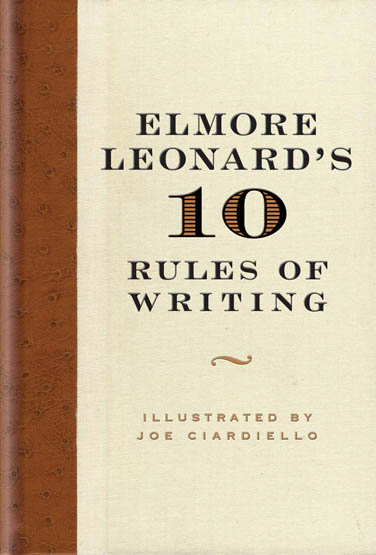
A few months back, The Guardian (inspired by Elmore Leonard’s The 10 Rules of Writing) published the article “Ten Rules for Writing Fiction,” in which they surveyed 29 renowned authors for their own list of dos and don’ts.  This was a fascinating read for me.  At first, it overwhelmed me, because of course as I scanned down the screen I was tripping over everything that I apparently do wrong…and yet, the more author lists that I read, the more I noticed how varied their perspectives were.  For being a list of “rules,” it if anything taught me there is no consistent formula set in stone.

While there are no doubt sound universal suggestions out there we should adhere to, I think we also need to find solace in the fact that there couldn’t possibly be a one-size-fits all approach to writing a good book.  We are all unique and have something different to bring to the table, and that’s something that should be celebrated in our writing as well.  I particularly like how Ollin Morales (Courage 2 Create blog) phrased it in his comment on Agatha’s post:

“I’d rather write a book that I love and everybody hates, than one that everybody loves and I hate.”

True dat.  And I also commend the truth Corra McFeydon just shared in her A Lit Major’s Notebook blog, a post appropriately titled, “The Truth.”  It is here that Corra, also in the process of writing a novel, admits that she does not desire to be a professional writer because, right now at least, it’s killing her spirit in what she loved about writing in the first place.  Seeking to break free from the rules and schedules that constrict her, she asserts:

“That’s why my novel will be written when the spirit hits me — as a product of my intensity, my laughter, and my free spirit — even though apparently that’s not how to be successful.”

I began this project for me, and if it remains just for myself after I’ve at least given it a shot at going elsewhere, so be it if I’m happy with the end product.  But even abiding by our own expectations entails discipline as we make time for our writing and edit it until it becomes the best version of itself.  I think most of the rules I’m opting to follow these days are self-imposed based on my own standards (which are quite high—I’m an English teacher after all, and grade myself constantly ;)).

That being said, one external rule I’m trying to stick to is the advised first-time-author word count of 100,000—not in my first draft that I’m wrapping up presently, but when I go back through to polish up.  Yet another blog post I recently read that I really appreciate for its straightforward guidance on how to cut, let’s say, 19,000 words for a final manuscript is, well, “How to Cut 19,000 Words” from the ‘Lethal Inheritance’ blog—Tahlia Newland tells us how she did just that when her agent asked her trim down her YA fantasy novel of same name.  I was at first absolutely psyched out that cutting words meant cutting entire paragraphs and chapters—and sometimes it does and perhaps will, but it’s reassuring to know that it can be achieved on a sentence/word level as well, an edit so subtle you’d hardly miss a thing.

I’m curious:  Which writing rules do YOU swear by?  And which rules do you think are totally bogus?

Argh.  Can you even imagine Jane Austen sweating it out like this?  I can’t imagine she was slapped in the face by rules at every turn, as we are at every page we flip and link we click.  But then again…


On the Borderline

Oh goodie, this is a fun one—a game of sorts for those days when you fear the tap to your creativity has run dry and you just can’t write.  Well, you can.  Given some direction—rules, if you will—you might be surprised when you spring a leak 🙂

The Prompt:

Page 41 of Room to Write asks us to choose one of the following words:  fence, road, boil, or fall.  Then:

1. Write the first words that come to mind when you think of your chosen words.  Write them in a list form until you hit the bottom of the page (or your computer screen…I decided to do 20).

2.  Keeping the list in the exact same order, develop a story in which every line uses one of these words.

Response:

He rode the fence on the issue.

Sure, he realized the importance of establishing boundaries,

but was this something to fall under such restriction?

He was already on the border of sanity as it was.

One thing he was never good about was choices,

options that left him speculating which path to take and leaping to cynical conclusions as to what menaced him ahead on each.

In this way, even the gift of choice wound barbed wire round his psyche

and threatened to strangle his pride with the chain-links of fear he entangled himself within.

He never was a man of conviction, willingly crossing picket lines to not rock the boat with authority

and practically tying their strings onto himself as if he were some wooden puppet,

his thoughts and actions the property of someone else, always.

Facing the crossroads that he was now, he tried to envision vast farmland

dotted with livestock and caressed by the open breezes.

In this vision was also a garden; yes, there must be a garden in the back,

serving as the division of pleasure and labor,

where his legal troubles could be checked at the gate and all he would know of the world was a blooming fortress.

He then frowned at the way even his fancies imposed a natural barrier around him,

and wondered if he wouldn’t constantly need something to hold him back—balancing on the precipice of order and chaos as he was—

yes, something that would keep him penned in for his own protection and the safety of the world below.

He struck a match against the brick ledge, the final demarcation he would draw.

Reflection:

Today is definitely one of my days of feeling groggy and uncreative—there’s so much to take care of on all levels of my life, so my preoccupation with it all is almost paralyzing me into doing none of it.  In light of these kinds of days, I really appreciate an activity like this that confines me within a short set of rules; for as much as I think I’m a creative spirit, I’ve always functioned well within parameters.  Maybe that’s why the word “fence” is the one that leapt out at me 🙂

Anyways, if you ever find  yourself in a writing funk, I can promise you this is a good way to shake up your stagnant creative juices; there’s no pressure to how this sort  of piece will turn out, just that you follow the rules and keep on to the end.  Maybe it’ll go straight to the rubbish bin, maybe you’ll actually pull something from it to recycle in another work.  Who knows, but this took me less than 10 minutes, so surely you can afford that little bit of time to see what results.  It also has potential as a good lesson in working with motifs/extended metaphors in following through on a theme.

So, obviously I use these writing prompts to get me going, but I’m curious about YOU.  What is it that gets your brain-blood flowing and inspired to write again during periods of creative dormancy?


Here’s Mud in Yer Eye!

My first Nanoism is out:  #194


Same Difference

The Prompt:

Page 39 of Room to Write asks us to draw at least 25 comparisons between 2 different things:  something that’s around you right now, and something else that’s either an object, person, or concept.

I’m going to compare the old Victorian church outside my window to marriage 😉

Response:

1.  Soulful, can inspire

2.  Houses both joy and grief

3.  Immense, sometimes imposing

4.  Intricately constructed; always something new to see from a different angle

5.  What appears outside is not always indicative of/relevant to what’s occurring inside

6.  Wears with time

7.  Built one brick at a time

8.  Requires faith and commitment

9.  Can be alive with song and community

10. Is empty when neglected, hollow and echoey

11. Fundamentally the same structure throughout time, yet must adapt the way it operates to change

12.  Needs to be scheduled into a busy life

13.  The lushness surrounding it periodically gets chopped away, but does grow back, and more lushly for it

14.  Is a vessel of new life, on varying levels

15.  You get out of it what you put into it

16.  Can house hypocrisy

17.  Can’t please everyone all of the time

18.  Needs constant maintenance

19.  Provides sanctuary

20.  Provides education

21.  Requires attentiveness—not just hearing, but listening

22.  Requires reciprocal communication

23.  Requires an open heart and mind

24.  Cannot operate without thankless hard work

25.  Comes around collecting, making you pay now and then

Reflection:

These were the first 25 things to come to mind, and I’m sure that some of them are redundant with each other—I found it getting really hard by around 18 or so!  A very fun and brain-flexing activity, though, when trying to assess all that is similar between things otherwise so dissimilar to one another.  Writing involves an abundance of comparisons, after all, as such devices as metaphor and simile help us communicate more vividly and stylistically, drawing parallels within the universe to illustrate the connectedness of all things.


The Kitchen Culprits

"I suspect: Colonel Mustard, in the Kitchen, with the Candlestick."

The Prompt:

On page 38 of Room to Write, Bonni Goldberg describes the kitchen as a “symbolic place” that is “well stocked with associations, memories, and metaphors.  Today, then, we are to write about our kitchens as though we are detectives on the scene, conducting a forensic analysis of sorts as we use visual clues to deduce what may have happened there and how the kitchen reflects who we are.

Response:

With trepidation, I approach the kitchen.  Squinting as I scan the grey and black-splotched stone of the countertops, I pan my head to the kitchen island.  I crouch like a jungle cat to bring my eyes level with its flat surface and frown at the otherwise camouflaged crumbs to be spied at this angle; I straighten and peer over the infected area more closely, pressing a fingertip into the crusty debris and raising it to my tongue:  digestive biscuit…dark chocolate…Marks & Spencer.  And do I detect a hint of sesame, poppy, and pumpkin seed cracker?  Hmm…before I can analyze further, my attention is usurped by a darkened stain a mere inches away.  Blood!  No, it’s not red.  Urine!  Ewwww, no, we may leave crumbs, but we’re not that uncivilized (at least I’m not).  Tea!  Yes.  Dripped when pouring yerba mate from my iron Japanese tea pot.  Phew.  Aside from that, a benign burgundy pasta bowl rests on its wrought iron stand, bearing oranges, apples, and bananas (green-turned-yellow ones, only…the second they start to spot and infuse the room with that banana smell, they’re outta here!), standing squatly beside the coin jar and miscellaneous utility bills.

I redirect my focus, then, on the longer, L-shaped countertop comprising the kitchen corner.  A food-stained cookbook (used at long last!  Hurrah, newly discovered inner Domestic Goddess!) reclines on its wrought iron easel next to the paper towels, obscured only by the blue Brita-filter water pitcher that hangs here due to no space in the wee London-sized fridge as well as my aversion to drinking cold water because it hurts my teeth and throat.  Adding to the clutter on this side of the sink are a couple crystal wine goblets with little puddles of deep crimson collected at the bottom.  The sink is suspiciously empty…yet the anal-retentive way in which the hand soap, lotion, washing-up liquid, and sponge are aligned behind it indicates that exposed dirty dishes are not an option in this space.  Turning my head further right, I see a retro-style chrome toaster tucked into the corner, chillin’ with its buddies the french press, tea pot, and all the tall cooking/serving utensils standing to attention atop tiny silver stones inside a clear vase.  Which brings us to the stove…hmm…more crumbs and stains, and a red tea kettle splattered with grease.  This doesn’t happen on my watch; the husband clearly was the last to cook.  Salt, pepper, knife block, and corkscrew are still present and accounted for on the stove’s other side.

But wait a minute.  Something is amiss.  I turn round in circles and rove my line of sight all about the wooden cabinetry that surrounds me.  Where are all the major appliances?!  Thief!  Whodunit?!  Inhaling and exhaling rapidly, my heart thumping against my breastbone, I slowly sink to a squat as the scene starts to flicker like a film reel, and the words Crouching Tenant, Hidden Dishwasher splay across the silver screen.  I extend my hand toward the sleek metal handle protruding horizontally from one of the cabinet doors; held in my clammy grip, it yields with creaking resistance as I draw it down like a drawbridge.  The dishwasher!  A musty, swampy smell wafts out as I pull out the lower drawer:  dishes are segregated into different quadrants by dish, small plate, large plate, and miscellaneous.  It becomes evident I was the last to load the washer, as they would otherwise be arranged haphazardly in such a way that only a third of the dishes would be able to fit, indeed if they made it into here from the sink or countertop at all…I shudder at the thought and return my gaze to the efficient logic that does, thank goodness, reside in front of me, then close the door.

I stand with fists clenched, resolved to find the rest.  In a flurry, I throw open all the cabinet doors to reveal what lays behind, and it’s as though the kitchen is a life-size Advent calendar when the hidden goodies are revealed:  a fridge, a freezer, a washer-dryer—you heard me.  Remember, it’s London.  Why not do laundry in the kitchen?  Why not risk perishing a painful death in flames when the water from the washing cycle drains out and is automatically replaced with searing heat?  Just as I think it, a vibration unbeknownst to me earlier begins to thrum with more aggression, shaking the tile at my feet.  I look to the washer-dryer and notice a spin cycle in play, remembering that what the spouse lacks in dishwasher-loading-strategy (will be commencing his virtual training soon via the Tetris game) is readily compensated for by his penchant for doing laundry.  I become more cognizant than I’d like to be of all the untoned bits hanging off my body as they shake along with the machine.  The humming rises in volume as my breasts and biceps begin to blur, and I dive to the carpeting in the adjoining living room with hands clasping my head as the drum propels our terrified clothing about like a jet engine about to send our flat airborne.

A minute later, all is calm.  Quiet.  I crack an eye open to scan the perimeter before making another move.  Turning myself about, I army-crawl back to the washer and wait for the click to signal I can open the door.  As I do so, hot steam rudely breathes in my face, and my husband’s boxer shorts look to me hopefully as they cling to the edges of the drum and leave my panties to fend for themselves when they peel off and fall to the bottom.  With a pissy sigh, I climb to my knees, then feet.  My inner Domestic Goddess has long since fallen and rolled down Mount Olympus, so she mutters under her breath as she trudges out of the kitchen to retrieve the drying racks and thinks about tending to that damn dirty countertop.  At any rate, case closed.

Reflection:

If anything, this exercise has reminded me I need to clean my kitchen 🙂

I think it would have been interesting to have tried this activity a couple years ago when I was still single and living alone to compare/contrast with how I approached it here.  It seems clear that many of my present kitchen’s connotations relate to my adjustment to cohabitation and those little domestic idiosyncrasies that occur between couples.  The dynamic of the setting is also influenced by virtue of being in a different city and country; there’s a cultural impact on physical features and layout that differs from what I had in the States.

Overall, I enjoy this sort of “investigation” based on visual clues and have used it overtly already in my current manuscript—there’s a scene I included for comic relief in which my protagonist wakes up after a night of heavy wine-drinking and follows the trail of evidence she herself left behind to figure out what she did before passing out.  Based on a true story, of course… 🙂


The Monkey Meltdown

Real Bloggers United

What happens when you combine a tiki, whiteboard, and woman pushed to her brink?

To start off on a tangent, I’m back in London and rubbing together what brain cells I have to work with during my lingering jet-lag…zzzzzzzz…

I promise to get back up in my tree and swingin’ on the vines again this week, but first allow me to share another guest post of mine that featured on Real Bloggers United (“RBU“). This is a personal memoir that I offered up for RBU’s July theme, “The Day My Patience Died.”


No Child Left Behind…That Can’t Bring His or Her Own Self Forward

“We dance round in a ring and suppose,
But the Secret sits in the middle and knows.”
Robert Frost

There was a time last year when my patience was whittled to its tender core, its raw, throbbing nerve exposed until it one day collapsed in the throes of death.

Allow me to provide some context.

Three years before my patience died, I began my career as a high school English teacher after leaving the Finance field. It was a challenging first year of self-doubt and pining for the safe confines of my cubicle, questioning if I’d made the right decision in sacrificing money and lifestyle to pursue this entirely different path. But I persevered—it was a shift in identity, but one I’d chosen, and it taught me that it isn’t all about me after all…Helping teenagers recognize their abilities and become the best versions of themselves is a calling and a blessing.

Three months before my patience died, I moved to London as a newlywed. It had been a summer of transition—of ending a school year, of beginning a marriage, of packing…of resigning. After a few months of settling in, I registered with a London teaching agency, interviewed, and found a long-term substitute (supply) position on the outskirts of the city, to commence just after the New Year.

Three weeks before my patience died, I was touring Ireland with my husband on our way back from visiting the States for Christmas. That rolling landscape, unfathomably green for January, helped to quell what was steadily curdling within me: panic. Panic that I’d accepted the job within hours of flying home for the holidays; panic that I was now only days away from starting; panic that the school provided me with no materials so I could plan my units. For those who haven’t taught, I can’t emphasize enough how critical it is to plan out lessons in advance. Sure, you end up having to modify on the fly depending on what’s working and what isn’t any given minute, but that’s exactly why you need the game-plan coming into it. The unpredictable is inevitably going to happen, so having an organized, logical basis to work with is all that will give you some semblance of control when the day sucks you into its current, taking you where it may as it tosses and tumbles you on its foaming pedagogical waves.

Three days before my patience died, I was poising to quit, and the next day I phoned the teaching agency to request replacement. My patience was already on its death-bed, you see, and it was time to call in the sick nurse. A unique intersection of factors (which I endearingly call “The Perfect Storm”) had gotten me down—the emotional trauma of relocating as an accompanying spouse, the aforementioned lack of resources/support from the school as I tried to adjust to a new national curriculum and procedures, the guilt that my lack of UK training could possibly sabotage student achievement. But the one factor that proved to be the last straw to break the proverbial camel’s back, however, lasted right up until…

…three seconds before I banged my Tiki stick on the floor and spontaneously decided on a new methodology.

(FYI, the Tiki is a carved wooden stick I bought in New Zealand and use as a pointing tool and “zero noise” signal—no, not for corporal punishment or conjuring hexes…yet).

Right. It was time for a change in tack. Why? Because after breaking up three fist-fights my first week and continuing to enjoy that privilege over the next, I was a bit tired. I came from a suburban school district in which a light congratulatory pat on a student’s shoulder could’ve gotten me sued, and here I was practically shoving my foot against one student’s face to gain better leverage to pry the other off and grip him (or her!) in a bear-hug, thereby preventing another pounding. And when they weren’t fighting, they were incessantly hopping out of their seats and jabbering off topic, as students will do.

As a result, lessons never reached fruition due to behavior I admittedly couldn’t manage effectively (despite learning I could be quite the physical powerhouse when need be). The advice I always received from the toughened urban teachers was to yell and yell loudly, which I really did try. But aside from hurting my throat, it really didn’t make a difference and only left me not liking who I was by the end of the school day. Ultimately, I knew I had to stay true to myself, and if that wasn’t enough, well then, I wasn’t meant to be in this position.

Nonetheless, I still had to survive the last week. And, as an educator, I needed to teach! So my patience finally died when I handed my Years 9s a worksheet and asked them to silently read it and write their responses. On seeing that only six students had, in fact, followed the directions, I was done.

It was time to leave children behind.

“Okay, if you, you, you, and you, you, and you could please gather your things and come up here to the front of the room, please,” I asked as I pointed to each of the six diligent students. Might I add that these were also my quietest kids, thus the most reluctant to participate in class, especially when their shy ideas were squashed by their more unconstructive, attention-seeking peers.

I could tell the chosen students were confused, but I warmly encouraged them to continue toward the front. As for the disengaged kids already sitting there:

“All right. You guys’ll have to move back.”

I’m still surprised how no one really questioned me at this point. The obedient and disobedient alike followed my instructions and got up. They loved being out of their seats, after all.

“Okay, so you six, let’s bring these tables a bit forward, and if you two don’t mind just bringing those chairs round so we’re close to the whiteboard. There, that’s great.”

They got themselves situated, and, within close range of the Chosen Six, I proceeded to explain in a normal speaking voice (i.e., not the teaching one that speaks over students instead of bringing their volume down):

“Okay, so this isn’t going to be easy, but what I need you guys to do is concentrate really hard on listening to me. Just ignore those yahoos in back. Let them screw off; we’re not going to care. I can’t teach someone who doesn’t want to learn, so I’m letting them choose for themselves whether they want an education or they don’t.” At this point, I wasn’t even looking at the outlying students, only my Chosen Six. “I refuse to raise my voice—we should be able to speak civilly, so just stay with me, and we’ll be okay.”

With their modest, smiling faces nodding in assent, I proceeded to ask the same question that minutes earlier had met with blank expressions because three-fourths of the class hadn’t read what they were supposed to. This time, my quietest students had the confidence to answer.

“Yes, very good!” I said, promoting their esteem further by writing responses on the whiteboard, transcribing their intelligence for posterity (at least until I had to erase it for the next period…).

Their smiles grew and their eagerness to share more ideas flourished in multiple raised hands. There was no question they felt the buzz of receiving individualized attention and having earned status among an elite few.

The Unchosen Ones were quick to pick up on this. And, after a time, some of them wanted in on it, too.

One girl who typically looked at me with a deadened stare from the back of the room while sucking her thumb was never one of my allies in successful lesson execution, usually only pulling her thumb out long enough to share in the smacking and unruly chatter that prevailed back there. This day, though, she collected her bag and stood to walk to the front of the room. She politely asked for another handout, as hers had been balled up and thrown elsewhere by then.

I should probably address at this point what, precisely, was going on in the back of the classroom while I was conducting this little experiment. Well, brazen tomfoolery, that’s what. A little over half of the other students were up on their feet and throwing paper wads into the rubbish bin that they’d positioned on top of a table. They were yelling and jabbing and singing with Dionysian abandon given this new, unusual liberty. The seated ones, however, eventually turned to face the front again, and from their eye contact, I could tell their ears were straining to hear what was transpiring among the Chosen Six.

Or should I say Chosen Seven now that the thumb-sucker had joined us and started offering up her ideas—very good ones at that. A minute later, two other girls left their seats to drag them up front as well. One by one, some boys made the move, too, including the one who’d started to yell to me, “Hey, Miss! Hey, why aren’t you teaching us? Miss, why won’t you look at me? Hey!”

I handed each newcomer a fresh handout and welcomed them with, “In coming up here, you’re choosing to learn. If you can’t participate in this lesson, I’d honestly prefer you go back and do whatever else you want. I won’t get mad; you won’t get in trouble. It’s entirely your choice.”

They stayed with me.

By this time, given the loud ruckus in the back managed well enough by only a few boys, the Chosen Seven + Several More (who shall henceforth be named The Ones Who Chose Education) had felt the need to abandon the tables altogether and pull their chairs closer to the whiteboard, forming a tight semicircle around me.

By the end of the period, only three boys remained in the back.

“This was our best lesson, guys! Awesome job; I’m really proud,” I congratulated as The Ones Who Chose Education exited after the bell rang.

But as my day continued, other challenging classes had to be endured, and I was yet again demoralized by the time I returned home that evening.

Consequently, the next day as I walked back to the classroom to confront my Year 9s again, I had already given up on the experiment and figured I’d just resume instruction (or lack thereof) as usual and engage in survival mode for the last couple days. In trepidation and defeat, I approached the classroom door. I passed through the threshold, and almost audibly gasped at what I saw…

* * *

There was a day I had believed my patience died, but I lived to tell the tale. And live on I did with a renewed sense of satisfaction and confidence, as well as a question on my mind:

Had my patience died that day, or did what didn’t kill it only make it stronger?

* * *

I passed through the threshold, and almost audibly gasped at what I saw: a group of Year 9 students who arrived earlier than me. I had caught them out of their seats and right in the middle of—

—pushing tables back and dragging chairs forward. They were rearranging the classroom into exactly the way we’d left it the day before. They were making the decision for me.

I followed their cue, then, and conducted the lesson in this way again.

Two students (only one from the day before while the other had been absent) shot baskets between empty tables filling the open expanse of the rear two-thirds of the classroom.

Twenty others squished together with their notebooks on their laps in a semicircle around the whiteboard, choosing Education.


Save

Save

Save

Save


M.I.A. (Monkey in Absence)

Just dropping the MIA FYI…I’m presently back in the U.S. of A. visiting with dear family and friends to celebrate birthdays, meet newborn babies, attend weddings, sort out my condo’s new tenancy, and all that good schtuff that always makes these visits brim over with joyful obligation.

As a result, the Monkey screeches (i.e., my blog-posting and reciprocal blog-reading/commenting) may be quieted for the bulk of the week—not assisted by the fact that the Internet speed of my parents’ computer is presumably generated by two hamsters running in a wheel.  If I want to spare them the expense of a shattered window and broken PC (when thrown out of said window), it is best that this dial-up connection and I keep our distance from each other.  “It’s not you, AOL, it’s me.  Well…maybe it is you, but I hope we can still be friends.”

I shall miss you, fine writers of the blogosphere!  But I look forward to reuniting on my return from holiday and catching up on your pearls of wisdom 🙂


In the Year 2030

So, folks, this week we’ve found ourselves the victims of an Internet hoax that claimed yesterday, 6 July 2010, was the very day that Marty McFly and Doc flew into the future from 1985 in Back to the Future‘s sequel.  The evidence of this was compelling:  a photograph of the time-traveling DeLorean’s dashboard (above).  Uh, well…see here’s the thing about living in the “futuristic” society that we do today:  computer technology has brought us a little something called “Photoshop.”  The actual date?  21 October 2015.

Do you realize what this means???!!! We still have five more years to invent the hoverboard.  Wicked.

In any case, I found this “news” of transcending time and space to be quite timely with regard to the next writing prompt…

The Prompt:

On page 36, Room to Write asks us to choose a fantasy of what our lives will be like in 20 years.  We’re supposed to “develop a reasonable plot that would make the fantasy work out.”  Otherwise, we can try the same exercise using a beloved character from either our own writing or a treasured story.

Response:

Well, I don’t know how “reasonable” this is, but in my fantasy future life, I’ll have published a few novels, earning not enough for a sustainable living on my own, but enough to supplement our travel budget—or, wait a minute, if this is my fantasy, I’ll up it and say that it’s also making the mortgage payments on that stone cottage in the English countryside that we’ll maintain so we can still get our UK fix after having returned to the States (eighteen years earlier) to start a family.

[okay, I’m grabbing the DeLorean’s stick and shifting this into present tense—it’ll be cooler, like I’m speaking to you from the future]

For we do have a family—Fate decided it for us before we managed to overcome selfishness and laziness on our own 🙂  Three children, two in high school, one in middle school.  Ever since the offspring have been old enough to poop and wipe by themselves, we’ve been travelling with them abroad as well as domestically (so they know how to appreciate their own country as well), taking them to London to show them where Maw-n-Paw started their married life together, pointing up to the very window out which Mumsy would stare and formulate her fictional storylines in penning her first novel.

Not much has changed with the old neighborhood, essentially as little as had changed in the century-and-a-half prior to then.  Well, the doors are painted different colors, and the streets need some paving—we have those hoverboards as well as hovercars by then, so they are no longer a priority!

“Roads?  Where we’re going, we won’t need roads.” – Dr. Emmett Brown, Back to the Future

[…oh, c’mon, I’m spotting the envisioners of Back to the Future an extra fifteen years here]

Wellll…no, okay, even twenty years out, I think we’ll be lucky if we’ve even converted to 100% alternative fuel automobiles, so I really don’t see the hover-anything happening.  Rather, every petrol station has outlets where we can plug in our electric cars, or hoses for those autos that run solely on baby shampoo.

I still sit at a desk tap-tappin’ my stories, even though computer keyboards are now archaic—replaced with laser light sensors that project from a paper-thin pad.  I decide to still play it old-school, vowing to use my last-generation Mac keyboard until it goes kaput, just as I had with my Jetta, dearly departed about thirteen years ago…(resto en paz, my little German car manufactured in Mexico).  I listen to my same old alternative rock 80s tunes, but not on the computer—I now upload my iTunes (just like the rest of my apps) by scanning the chip embedded in my wrist against my monitor whenever I order new music; the music then pipes into my inner ears through my veins, so no headphones necessary.  If there’s a video, it projects inside my eyes.  There is now an app for dreams.

My parents are still alive, and they are defying science with their amazing health and sharp minds.  There is no question they will be able to see our children off to university (not the one where I teach literature and film studies, though, having earned my PhD a decade ago), just as they did for my nieces and nephews.  Our Illinois home is a warm and velvety, pristinely preserved 19th-century house with a floor-to-ceiling bookshelved library with REAL BOOKS (they’re not obsolete yet) and a hidden door, an attic bedroom with a dusty sock monkey resting in a box, and an echoey phonograph reproduction playing my Artie Shaw—and, okay, my John Hughes movie soundtracks thanks to the vinyl records a friend gave me for my birthday way back in 2008.  My siblings still live near us and make me laugh as hard as they did twenty years ago, and the twenty years before that.  Some things never do change.

Otherwise, when it’s life at the English cottage with its durable thatched roof, it’s Wellies and soil beneath fingernails, raking the earth to make a garden bloom and feed us.  It is quiet.  The few cars along the narrow roads no longer make noise.  The iTune chip in my arm is muted.  It is only the insect-leg violins and fluting birds that orchestrate the score of a life of expectation now fulfilled.

Reflection:

Well, I had to stop it somewhere.  I look back on this and notice all the aspects of my life I inevitably left out—What job will my husband have?  What about friends?  In-laws?  Relatives?  What about the negatives?  The illness?  The loss?  What’s going on in the world?  Politics?  Other technologies?  Pop culture?  And on and on and on…it makes me ponder why I did describe what I did, what I chose to idealize and stretch as far as fantasy would allow me…and still feeling that I didn’t play with it quite enough or feel comfortable with what extent I could.  There was the temptation to write science fiction, yet the reality is that 20 years isn’t really that far out.  Though technology has made tremendous strides in the last couple decades (ah, to recall a time before email and mobiles), I don’t believe the same goes for people and lifestyles in general—so this is more a study in how an individual might evolve over time, the outcomes of choosing certain paths over others.

But if I did want to tinker with creative futuristic imaginings, I’d definitely have to leap waaaay farther out than 20 years…further than Back to the Future II‘s 30 years…something more like…the Year 3000:

So consult the crystal ball and do tell—what does the future hold for YOU or your characters?


The Levity of Brevity

[Time to kick it old school…yeeeah boyee!] Just found out my first attempt at writing a Nanoism is scheduled to publish in July.  A Nanoism is microfiction based on Twitter-length stories—that’s right, up to 140 characters.  Microfiction is a trend relatively new to me, but one that writer Milo James Fowler (In Media Res blog), utilizes as a means of keeping his creativity flowing during and between writing stories—one of his submissions (75-words only) was recently published at Paragraph Planet.  And now I’m appreciating it as a tool for practicing how to pare down.

I can dash off a 10-20 page essay with relative ease, but it was back in grad school when I was asked to write only 2-3 pages comparing/contrasting 3 works of fiction that I suffered my first true writer’s block.  The notes I’d taken in preparation weren’t even that succinct, so just when I felt my extensive planning would make the writing a cinch, trying to pull it all together within that parameter had me seriously contemplating just dropping out of a $1,500 class (non-refundable by that time, of course. Ouch.).

“Brevity is a great charm of eloquence.”  – Cicero

Conciseness is an art.  Truly.  Go figure that it was probably my first career in business that ultimately saw me through that essay—though it sucked the creative soul out of writing, it taught me a thing or two about keeping it brief and direct, and…well…any of you who read my stuff here will see that that particular skill has by now gone to the wayside…gah, I recently sent off a guest post weighing in at just under 2,000 words (scheduled for Real Bloggers United on July 17th), which has me contemplating the value of getting to the point faster.

“Let thy speech be short, comprehending much in few words.”
–  Bible, Ecclesiasticus

“The most valuable of all talents is that of never using two words when one will do.”
– Thomas Jefferson

Admittedly, one of the factors that initially delayed me in writing my manuscript’s ending was word count.  At 90,000, I’d estimated I was about three-quarters through when a concerned author told me that’s the length my entire work should be as a newbie.  So thinking about both the tremendous hacking I was going to have to do in addition to still writing said ending sent me into panic, which I’ve only just recently released.  Basically, I’ve adopted the mindset that I need to just let myself carry the story out freely and deal with the editing afterwards, which has helped, though the inevitable still hovers over my head like the guillotine blade I’ll need to use on my text, the executioner of my own words 😦

This all being said, what I have trimmed out so far has clearly strengthened the story, just as my sage advisers always said it would, so I do trust in that.  And as I look at bits I’ve scribbled along the way and always assumed would have a place in my book, I understand now that if they didn’t meld in naturally by this point, to attempt to include them now would be about as thrilling to me as gouging a funnel down a duck’s neck to make myself foie gras.  I think instead I’ll measure out those grains for a less fatty entree or side dish in future meals…

So.  I’ve lapsed on updating this blog until today because I have indeed been cranking on my ending as well as going back to the beginning to ensure there’s balance—and, in doing so, I can see how my writing has evolved over the course of this long project…how my sentences were much longer and more complex, my descriptions more frequent…it seems I’ve since learned a wee bit more about the art of condensing, so may need to retroactively apply that to those opening chapters so the overall work can shed that fat and really flex its muscles.

“It is with words as with sunbeams. The more they are condensed, the deeper they burn.”  – Robert Southey

Huh.  I thought I’d be brief with this post.  Oh, the irony.


Fraying at the End

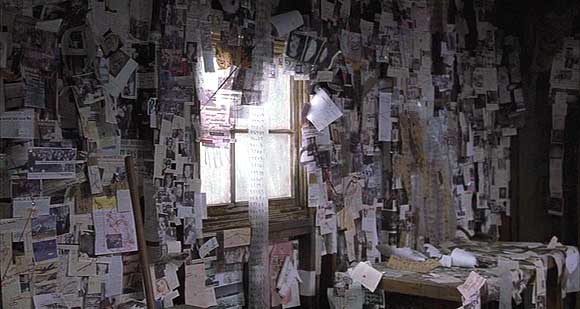
Ah, yes, that Family Guy clip makes me laugh and want to cry at the same time…little Stewie may as well be prodding me over how it’s been over a year and a half since I started my manuscript.  And that’s when I actually started writing it; the idea had come to me a couple years before that, in the form of random scribblings on the pages of my journal or Starbucks napkins and envelopes…and the more I read about other writers’ processes, the more universal that mode of transcription appears to be—I see us all just dwelling in these rooms with Post-Its and index cards and newspaper scraps thumb-tacked to the wall and strung together with yarn, the map room in the midst of a warzone where our batty, “Beautiful Minds” strategize…

That digression aside, I’m seriously having issues pulling it all together right now.  I haven’t even been able to follow the advice I shared in “The Beginning of the End,” back in March…yeesh.  And why, when the journey has already been so long and is so close to its end destination?

Because there is very good reason for that initial voyage to require some time.  Unlike what many tend to perceive, writing is a lot of work, not merely something one just dashes off in a burst of inspiration as one’s Muse sings softly in one ear as Her sister strokes a harp into the other, with the brooding writer sequestered in a candlelit garret, feverishly scribbling with ink-stained fingers—films like Becoming Jane or Shakespeare in Love would have you believe even a masterpiece can be penned overnight.  Not that I’m remotely considering myself in the ranks of Jane Austen or William Shakespeare simply by virtue of taking a stab at this writing thang, but I can’t keep psyching myself out with how much I’m not them either, or I’ll utterly paralyze myself.

You know what helps with that, though?  Empathy.  Lua Fowles, for instance, shares her experience grappling with “The Fear of the First Draft” in her Like a Bowl of Oranges blog.  And if it isn’t the fear that can slow you down, it’s the procrastination—Eva, author of the Write in Berlin blog, shares a few surefire tips on how to do so in “The Art of Avoiding to Write.”  Even when you do find your groove, there is a process to it, a method underlying all that madness that ensures the narrative is structured and worded effectively—I love author Wendy Robertson’s take on her own process in “The Joys of Cranking the Engine of a Novel” in her A Life Twice Tasted Blog (she’s one of the gracious and encouraging facilitators of the Room to Write workshop I attended in Spring).

And even when a writer does finish that first draft, the pilgrimage is far from over.  Never mind the elusive quest of getting published, the revision alone is going to be another prolonging factor.  Some revise as they go along, others leave the bulk of it for the end; regardless, it’s yet more process to undertake, and that requires some time, people.  Again, empathy to the rescue!—see Lua once more in “Editing 1 (oh no) 1” and Agatha’s appropriate analogy in “Digging in the Dirt” from her Here Be Dragons blog.  I personally am one of those who revises along the way, so my constant backtracking is another reason for delay.

Whatever excuses I can arguably throw out there to defend why it’s taking me so long to finish writing this book, the brutally honest truth about it is that the story has gone quiet in my head.  I’ve sat, and I’ve written.  But whereas before I was satisfied and moved forward, now I only go back and delete and rewrite and delete and think and re-envision and write and delete…never seeming to get it right.  What I write these days feels artificially imposed on my characters, you see, because I don’t seem to see them or hear them anymore.  No kidding, I almost feel abandoned…and melancholy, as I didn’t get the proper chance to say goodbye.  So what sort of cerebral seance could I conduct to summon their spirits back to my consciousness?  How can I get them back?

Maybe it’s because the story really is ready to end, and this is its way of telling me.

Or, egad!  Maybe the story already ended within its alternative universe, and I failed to write it down in time!

Maybe it’s only because I’ve been tending to it lately in fits and starts and need to more fully immerse myself back into its world.

Maybe it’s because after stringing those varying colors of yarn all around the walls, I now sincerely have no idea where to take those loose ends, which to tie up neatly in bows and which to continue on out the window and into the sunset on their own happy trails unbenownst to any of us.  Seriously, maybe I’ve over-thought myself into a rut and simply don’t know how to end it.

Maybe the Muses have stopped singing for me.

Or maybe, just maybe, I’m not ready for it to end…

?????????????????????????????????????????????????????????????????????????????????????

“I’m a novelist; I’m never going to finish the book.”  – James, Sliding Doors