Category Archives: Musings on Writing

Hedging an Investment in Myself

“Fiction submissions should have no discernible genre. While the fiction editor enjoys writing that plays with form & conventions, and is eagerly awaiting writing that sparkles with surprise, it is widely known that each time a vampire story is written, somewhere an orphan dies.  Shame on you.”
– Ampersand Review Submission Guidelines, as quoted from Ampersand Books’ website

This, my aspiring author friends, this is the ray of sunlight I’ve been waiting to see in perusing the publishing world online to find who to query next. Hands-down the best submission requirement I’ve yet to find—bravo to them for lauding originality when everyone else seems to want the next Stephanie Meyer…

[Disclaimer: I’m in a mood, so this post may sound cynical or overly rationalizing in the way diva amateur writers do so well. Would I be saying any of it if I had an offer for publication and thousands of blog followers clamoring for their signed copies? Yeah, probably not. Fickle monkey.]

The fact is, reading used to be a joy. Writing used to be a joy. And then I entered the literary cyberworld. Suddenly, I was blogging, and stalking my WordPress dashboard to see how many hits I got, hooking the Monkey up with its own Twitter account and Facebook page, straying from my simple, original purpose of just writing for writing’s sake to instead wax philosophical and egotistical on my writer’s journey toward publication (as I’m totally doing now!), becoming paranoid that I’m not blogging as often as others or commenting enough on other blogs to link back to mine to grow an audience for my writing, then reading about authors obsessed with Amazon rankings, authors dissing reviewers, reviewers dissing authors, agents dissing queries, publishers dissing anything straying from formulaic conventions that feed their bottom line, and AAARRGGHH! I JUST WANT TO WRITE. I want to write what I want to read. And I want to read what I want again without comparing the author’s writing to mine or wondering how she worded her query letter and synopsis to land an agent and publisher, or what social media efforts she undertakes to get the story out there.

It’s exhausting. Am I alone in thinking this? And am I alienating myself from your support by letting my defenses down for a bit and starting to stitch up a white flag of surrender? I promise I won’t be waving that flag, but at present I’m feeling quite annoyed and really rather bored by this commercial racket.

I also recently wrote about letting go of the ego that can have so many writers sucking their tongues from the roofs of their mouths and heaving a sulky sigh at the criticism they receive of their work, and I vow to not become one of these…but that being said, I just turned down a generous option to rewrite my manuscript (which lies at the intersection of multiple genres) in a way that would conform better to what readers of one particular genre expect. Even though that could give me a better shot at getting it published with a certain indie publisher (as opposed to potentially no one), I’ve made the decision that I can’t make the story or my writing style something it’s not.

This is not going to be my commercially marketable manuscript; I know that and am at peace with it. And even if it were, do I even have the moxy for self-promotion? Who knows, maybe I’ll churn out a mainstream potboiler next time round to wedge my foot more firmly in the door, but seeing there are still proponents of non-formulaic literature out there gives me enough hope to keep pushing the story I’ve got now in a digestible form still faithful to its original vision (because I am revising, and substantially—don’t think that I don’t take constructive criticism to heart!). I will climb back up my tree and nurture its scraggly branches, dolling it up with an ornament or two and conducting necessary trimming, yes, yet pruning it in a shape still reflecting its natural growth rather than Edward-Scissorhanding it into a poodle.

In short, and in the profound words of Charlie Brown, “This commercial dog is not going to ruin my Christmas.” Metaphorically speaking. 😉


War of the Worries and Warm Fuzzies

Just an utterly random post when I should be working to generate new creative material, but alas, my stomach is flipping and expanding and contracting right now with a frantic brawl going on in there. No, I didn’t eat too many beans. As my title says, the contenders in this ultimate cage match are:

Worry VS. Warm Fuzzy

I’ve always known myself to be riddled in dichotomy, and at this moment in time, the conflict has entered my emotional realm. I’ve tried to shake some of it out of my brain, which then trickled to my heart, which doesn’t want to deal with it either, so it’s all been kicked to the curb and plummeted into my belly. It’s nauseating. But let’s get on with it.

“In this corner, we have Worry! Brought to this ring thanks to unsuccessful queries and the usual insecurities that plague a first-time writer!”

Worry clasps its hands and shakes them above its head as though already victorious. The crowd boos and hisses. Empty and crushed cans of Schlitz fling into the center of the ring along with the errant tomato that accidentally takes out the bikini-clad model who was about to hold up the “Round 1” sign.

“And in this corner, coming all the way from the empathic people whose opinions matter an endearing amount, ladies and gentlemen, we give you—Warm Fuzzy!”

Whistles and cheers and feet drumming on the floor fill the arena as Warm Fuzzy bashfully hides its face behind boxing gloves. Chocolates and flowers sprinkle the ring.

With my unfortunate front-row seat, I sit here in as much anticipation as the crowd as to the outcome of this match. For you see, my morale is a little depressed as a result of this submission process. I know it’ll pass, that regardless of the rejection that comes, I’ll stand straight, relax my shoulders, stretch my fingers and get them typing about alternate realities once again for the sheer fun and love of it. But not yet, I guess. What’s enveloping me in comfort and giddy flattery in the meantime, however, are the thoughtful, encouraging words of those who know me personally or perhaps just as the Monkey…including two that have recently bestowed sweet recognition, so I thank you, Nicki Elson (Not-So-Deep Thoughts blog) and Milo James Fowler (In Media Res blog) for the Stylish Blogger and Write Hard nods, respectively. Any positive words are for certain taken to heart at this time :).

And so, in return for both of the above (which have been added to my blog award trophy case), I share my 7 random things here and pass the Write Hard torch (see rules here) to other writers who should receive it if they haven’t already:

1. Nicki Elson at Nicki Elson’s Not-So-Deep Thoughts

2. Eva at Write in Berlin

3. Tahlia at Lethal Inheritance

4. Cities of the Mind

5. Ollin at Courage 2 Create

6. Glen at Glen’s Life

7. Melissa at Blame it on the Weatherman

Each of the above (and Milo, I hope you realize you’re likewise included in these sentiments—you, too, Alannah, when you’re back to blogging again) continue to be so honest about their writing processes, sharing the ups and the downs as well as take-away advice for how to stay on the up with one’s writing. They’re perseverant, prolific, and have provided me with thoughtful feedback. I appreciate the time they take for—and the interest they take in—me and reckon with this backing, no matter how much of a deflated nerd I may feel at times, I won’t go down without a fight.

DING!


Leggo My Ego

I am a sensitive artist.
Nobody understands me because I am so deep.– King Missile

I can’t help it
Because I am so much more intelligent
And well-rounded

Than everyone who surrounds me. […]

I stay home
Reading books that are beneath me,
And working on my work,
Which no one understands.”

Yep, there are a lot of divas out there like this, particularly among those of an artistic temperament, so we writers are no exception. Well, becoming a teacher certainly knocked any such pride out of me, reducing me to such a state of humility on a daily basis that I finally learned it’s okay to admit when I don’t know something. No one could know all information, master all skills, and we certainly won’t grow in any respect until we can learn to acknowledge our limitations and accept help from others. 

That’s what I’ve been enjoying so much about the blogging community I’ve shared in for the last year—aspiring writers who are proud of their work, yet willing to put their vulnerabilities and uncertainties out there in their blog posts for all to know and empathize with. By doing so, we’re learning and improving. We also learn and improve from having our work critiqued, be it by peers in a writing group, an informal beta-reader, editor/agent feedback, etc. When taking on such a personal task as writing that inherently possesses so much passion, however, it can be difficult to accept criticism of our babies. What we write is who we are, and who likes hearing that they’re anything less than perfect? I’d say not a single one of us, if I were a bettin’ man (or a man at all, for that matter).

Yet take it in stride we must. It’s hard to control how another will respond to our work, but we can control how graciously we respond to their feedback. I love the tale I’ve written and certainly want to retain ultimate creative license, but as agent rejections already start rolling in (2 so far), I understand that there will always be something to adjust. And in this case I just hope I can handle it as gracefully as the author whose work I’m presently editing. I just got her edits back, along with this lovely email:

“I must say, your editorial was wonderful, so user friendly and in tune with what I was aiming for and didn’t quite reach.  I particularly appreciated how you explained why certain patterns weren’t working or how they could work better.  I believe that your input will benefit my future writing as well, and not just this work. […] I did take your suggestions to heart, and I’m pleased with the result. Really, your editorial was invaluable. I’m looking forward to your opinion of the revised work.”

Not that I’m letting this go to my head ;)…but it was an inspiration, not to mention such a relief! So time now to get over myself and help this author reach her personal best. Ego begone! But confidence, stay.

How about you? Has a dose of humility ever caught you getting a bit too stubborn during the writing process? How do you know when to assert what you believe are your strengths and when to concede your weaknesses?


The Mind’s Eye

Now that I’ve confessed to initiating my submissions, I think it’s rather timely that I caught a film on TV last night that delivered a little perspective.

The Diving Bell and the Butterfly. Seen it or read it? I had read it about three or four years ago, and I’m not saying I think it’s a masterpiece or that the author is entirely likable, but the fact he wrote what he wanted to write and surmounted a massive obstacle to do so is commendable enough for me (not to mention makes me wonder what the hell I have to whinge about…).

The book is less than 150 pages, but if you’ve read it, you understand that there was nothing “short” about the process. If you aren’t familiar with the premise of the book, it chronicles the memories of a man (Jean-Dominique Bauby, former editor of French Elle magazine) diagnosed with “locked-in syndrome,” thus paralyzed from head to toe, other than the ability to blink one eye. The prison of his own body, then, became his enclosing “diving bell,” and after initially suffering an understandably defeatist attitude, he came to realize that his greatest mobility and freedom—his “butterfly”—was his mind and the imagination and memories it held. He learned that in this way he could escape to anywhere in the world, dine on the most sumptuous feasts, and do whatever else met his fancy. And thanks to the persistence of a hospital therapist, he learned he could write a book.

Unable to speak, unable to move, this man wrote a book. And I speak of him in the past tense because he passed away within days of this book’s publication in 1997. But it wasn’t about the publication; it was the process itself that helped preserve his will to live.

And, clearly, the way it came about is remarkable. In my second-to-last post, I talked about editing on a chapter-by-chapter, to paragraph-by-paragraph, to sentence-by-sentence, to word-by-word level; well, how about writing on a letter-by-letter one? As the woman transcribing his memoir would read through a special alphabet (arranged in order of the most frequently used letters), he would blink when she said the letter he wanted. Now imagine approaching writing this way; this is a time-consuming, surely exhausting effort, so you’re certainly not going to waste any words getting to your point. Yet it’s the presence of description that I remember astonishing me when I read the book. He “wrote” vividly, expressively, demonstrating that some detail is worth working for; it’s necessary to conveying the true idea.

So as I’ve written before, as we hack into our own pieces and try to reduce word count, it’s important not to strip those ideas of their joy. Every word needs to matter, however, so we must be discerning in our choices. And we must remember what we’re doing it for. Is it in the hope of being published so everyone knows our name and kidding ourselves that it’ll make us rich? Or is it the sheer achievement when the odds may have been against us? The joy of the act itself and of sharing it with others? Think of the celebration it is to pen the triumph of one’s mind, capturing in words the life we’re infused with through imagination and memory. It is tremendously difficult work, yes, and yet doesn’t inspiration sometimes flutter through us in a blink…peppering our pages with butterfly kisses from the lashes of our mind’s eye…


From Sentiments to Sentences – Part II


Hiya!  I’m back from where I left off yesterday. Hopefully I didn’t leave anyone in a great deal of suspense, as this post will only reek of anticlimax :).

What I was about to continue yammering on about last night, at any rate, was that sentimentality is not the only way my past informs my writing.  To start, yes, I’ve had a lovely life—I’d be an ungrateful twit not to acknowledge that and count my blessings every day (I know, la-dee-frickin’-da, right?)—yet to be honest it concerned me this would hurt my writing, make it too naive, idealized, and anything otherwise be too two-dimensional and cliché.  And that’s a very valid concern…

I couldn’t help but peek ahead in my very-neglected Room to Write book, where on page 90 Bonni Goldberg says:

“Where we come from influences both what we write and how we write. […] This is why six people can describe the same tree differently. Each person sees it through a unique set of experiences.”

And then she warns that:

“Cliché seeps into writing when writers forget or neglect to bring who they are into the piece.”

This reinforces what eventually got me over the above concern.  Everyone’s life brings something to the writing desk, and maybe some of things I don’t understand first-hand consequently don’t have a place in my writing. Maybe this, then, helps me narrow down my focus, find my creative niche where what I do know can be optimized.  OR maybe what I don’t know presents that extra intellectual-emotional challenge that could be enriching to explore further through research and imagination, as when a method actor immerses into a new role.  In that way, I don’t have to be so pigeon-holed after all.

Then there is the simple fact that, despite general trend, my life of course hasn’t been entirely rosy! I know pain, heartache, depression, and have sharpened my teeth around anger and resentment pretty well in my day…I may idealize the past out of sentimentality, but I’ve also brought in the darker emotions from the tougher experiences I’ve had—case in point being the “writing-as-therapy” I mentioned yesterday. As a result, my protagonist shared in my own downturn, and in a way we worked through it together.  Then, when I succeeded in pulling out of mine, I could outstretch my hand to lift her out of hers.

I’m not going to do the writing prompt today, but the exercise on that above-mentioned page from Room to Write asks us to write about our origins, beginning with, “I come from.” In doing so, we’re to also consider the sensory details coinciding with our memories that, by virtue of experiencing them, have impacted who we are.

Now, to put my teacher-cap back on briefly, I can’t help but recall from this a poem I had to teach my sophomores during a unit on discovering our cultural identities and identifying how they shape our individual frames of reference:

Where I’m From, by George Ella Lyon

I am from clothespins,
from Clorox and carbon-tetrachloride.
I am from the dirt under the back porch.
(Black, glistening,
it tasted like beets.)
I am from the forsythia bush
the Dutch elm
whose long-gone limbs I remember
as if they were my own.

I’m from fudge and eyeglasses,
from Imogene and Alafair.
I’m from the know-it-alls
and the pass-it-ons,
from Perk up! and Pipe down!
I’m from He restoreth my soul
with a cottonball lamb
and ten verses I can say myself.

I’m from Artemus and Billie’s Branch,
fried corn and strong coffee.
From the finger my grandfather lost
to the auger,
the eye my father shut to keep his sight.

Under my bed was a dress box
spilling old pictures,
a sift of lost faces
to drift beneath my dreams.
I am from those moments–
snapped before I budded —
leaf-fall from the family tree.

In “An Interview with George Ella Lyon,” the poet says:

“If I weren’t from Appalachia (or from my family and my genetic expression and my experience — I don’t know how to separate these), my writing — and I —  might be bolder.  I might live in New York or L.A. and push it more. As it is, I’ve chosen to stay close to home and to be somewhat restricted in what I’ve written and/or published.  I anguish a lot about hurting or betraying family members…On the other hand, if I weren’t from Appalachia, my work might not have the same support of noncompetitive colleagues, of a community of memory, and of strong voices from my childhood that still speak in my head.  Certainly it wouldn’t have its roots in the rocky creeks and high horizons, the enfolding spirit of trees that I call home.”

Though kids inevitably groaned over reading and writing poetry, I always loved this activity because they’d surprise themselves—by recalling and isolating the simplest of images, smells, sounds, tastes, and textures, they’d craft their own “Where I’m From” poems that offered profound insight into who they were, and I think in the end they were proud, learning that if they seized the power to really know themselves, they could harness the power to write.

Such a simple exercise here, yet so dense as we draw out the good along with all the bad to build the organs and flesh around the skeletons of our characters and infuse them with blood and soul.

And YOU, my dears? How does your sense of self inform your writing?


From Sentiments to Sentences – Part I

Sentimentality is both a blessing and a curse.

I’ve demonstrated before to what extent I can cling onto the past in my guest post for Real Bloggers United, “CSI: Chronically Sentimental Individual.”  Now, in the spirit of the recently passed Halloween, let’s just say my memories continue to “haunt” me…

But in good ways (hence, a “blessing”), though sometimes they hurt so good (hence, a “curse”).  I first conceived this topic last week when my parents’ visit came to an end and they returned Stateside.  Though the effect has had a few days to wear off, I remember how I walked home from the tube and almost couldn’t bear how everything I saw reminded me of them because of our recent walks around the neighborhood together.  Forget that I’ve traversed that same route for over two years now and between their two visits they haven’t even been in London a total of two months…the memories with them seemed to replace my collective everyday experience.  Same went for when I returned to the flat and sobbed over little things like the coffee remaining in the French press that we’d shared earlier that morning.  I know, I know…it’s passed now, though tonight I’m jolted with another stroke of sweet sentimentality from home, as I just checked my Facebook messages and saw one from a former student I taught my last year in the States. She was a freshman at the time and is now a grown-up senior about to graduate…simply cannot believe it! My babies! Anyways, she had the sweetest things to say, which made me really pine for those happy teaching years.

In view of such “ghosts” from my past, I find that they appear in some incarnation or another in my writing, perhaps in special homage of these special people and moments.  “Write what you know,” they always say, and I do, knowing full well I am clearly not alone.  I’m constantly reading intros to novels that state how they’re the “most autobiographical” of the author’s works, and, really, isn’t every work of fiction arguably so?  Just ways of telling our truths “slant”?

At the time I started my current manuscript, I was in need of emotional healing to follow leaving home and career, so the tale I began to spin was much more so a “therapy” than an ambition. I didn’t care if it was unoriginal; I let my first chapters draw very much from my own background, which resurrected the spirit of my earlier happiness and allowed it drift and swirl around me in my new atmosphere. The words brought it alive, brought the people and the values back to me and reminded me who I was in an otherwise unfamiliar context that sapped me of purpose. The story certainly evolved from there into a terrain highly unlike anything on which I myself have embarked, but those early chapters gave my protagonist her core, and in doing so assured me of mine.

Among the sentimental inspirations from real life, there are very direct ones that creep up in sentences reflecting the comforting closeness of my family like:

“They weren’t the stuff best-sellers and blockbusters were made of, and prayed they never would emulate what society spent its money on or turned its channel to.”

“Her mom multi-tasked concern for her child with rescuing bacon strips from their spitting inferno.  She wore her short, hairsprayed curls like a helmet ready to combat any threats to her family head-on.”

I’ve also incorporated actual snippets from childhood diaries and adulthood travel journals. Plucked entirely out of their original contexts, though, it’s crazy the way they fit in and communicate something entirely new and different and had inspired new offshoots of sheerly imaginative thought, not that from experience.  It’s been like dismantling a clock and using some of its gears to operate, ooh, maybe something like the Happiness Machine in Ray Bradbury’s Dandelion Wine (which, in keeping with our theme here, is a valentine to Bradbury’s own childhood).

It’s all about our frames of reference.  No one could possibly perceive the world in exactly the same way that we do individually because we occupy separate space and move differently through it. This gives us our own private reality, then, and this is what writers constantly tap into to construct their fictional realities.  And there’s more I’d like to say on this, but am realizing this is getting long, so I’ll break it into two parts.  Fair enough?  Cool.  See you tomorrow.


The Soundscape of a Novel

“The making of a good compilation tape is a very subtle art…First of all, you’re using someone else’s poetry to express how you feel.  This is a delicate thing.” —High Fidelity


*sigh*…the Mix Tape.  How I remember practicing that delicate art in high school and college…mostly, I made tapes for myself (hey, you have to love yourself before you can love someone else :)), but I can think of at least one I made for a boy…*blush*. I didn’t need to read or see High Fidelity first to innately understand the delicacy in balancing out those tracks—it’s a lot like writing, really, in that you need to start out with an attention-getter and then try to avoid redundancy in carefully pacing yourself through the highs and lows of fast and slow. The words should carry meaning, and you need to establish mood and tone.

But I didn’t necessarily adhere to all those rules this time.

You see, as I try to hold my anxiety at bay while the last 15,000 words of my manuscript rest in my trusted Reader’s hands for review and feedback, I’ve been playing around with giving my novel a soundtrack, as inspired by the Milk Fever Blog post, “The Soundtrack.” The preliminary playlist that I’ve compiled is in order of story progression, not the sacred aesthetic rules of the Mix Tape as referenced above. Basically, I thought through the themes and atmosphere of my key scenes, as well as any songs specifically referenced in the text, and have listed the songs as these elements appear.  Though humor keeps some of my scenes relatively light, needless to say my protagonist undergoes some pretty crazy stuff that just doesn’t warrant many feel-good tunes.

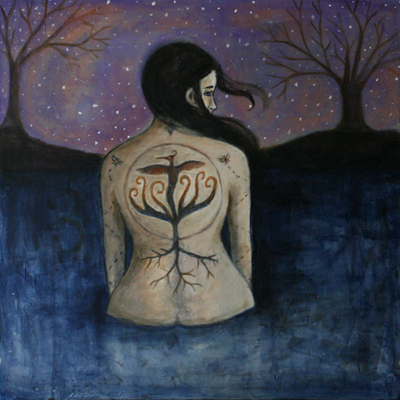
At any rate, I bring you “Monkey Manuscript: The Musical”—ta da!  You can access this first-pass playlist for my as-yet-untitled manuscript online by clicking the image (a painting I only just stumbled on today that is strikingly in keeping with my tale’s motifs, so would make ideal cover art). Titles and artists are also listed below:


"Ophelia," by Leah Piken Kolidas (www.bluetreeartgallery.com)


The “Untitled” Soundtrack:

The Ghost in You – Pscychedelic Furs

We Are All Made of Stars – Moby

Charlotte Sometimes – The Cure

Dreams Never End – New Order

The Fear – Lily Allen

Goody Two Shoes – Adam Ant

10:15 Saturday Night – The Cure

Cemetry Gates – The Smiths

Peace and Hate – The Submarines

Sexy Boy – Air

Dead Souls – Joy Division

Shiver – Coldplay

Start to Melt – Peter Bjorn and John

She’s Lost Control – Joy Division

Where is My Mind? – The Pixies

All Cats Are Grey – The Cure

Black Mirror – Arcade Fire

Cold Hands (Warm Heart) – Brendan Benson

Quick, Painless and Easy – Ivy

Last Goodbye – Jeff Buckley

Slow Life – Grizzly Bear

Edge of the Ocean – Ivy


Revisal of the Shittest

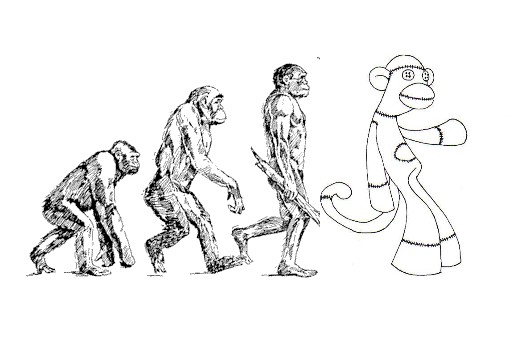
“I believe imagination is like a Darwinian system.”

sock monkey image from cthulhufhtagn.deviantart.com

In the above quotation from the novel Sophie’s World (which I finally got through a week ago), Alberto Knox—the story’s philosopher—discusses with Sophie the nature of creativity and how it follows the natural selection of Darwinism:

“Thought-mutants occur in the consciousness one after the other, at least if we refrain from censoring ourselves too much.  But only some of these thoughts can be used.  Here, reason comes into its own.  It, too, has a vital function.  When the day’s catch is laid on the table we must not forget to be selective.”

Oh, that Alberto and his way with analogies…sorry, can’t help being sarcastic toward this book. Disregarding the tremendous education on philosophy it provides (which in itself is good reason to read the novel, and I’m glad that I did), it’s the fictional aspect of the plot that pricked into my skin like so many fleas in my fur. An interesting attempt to provide an entertaining means of digesting large concepts and history, the fictitious story line that distinguishes this as a “novel” versus “textbook” fell a little flat for me. The dialogue was unbelievably forced (most of Sophie’s comments/questions simply served as breaks or segues in the long lectures), and though it takes an interesting twist mid-way through, the characters and thin plot just didn’t endear themselves. Quite frankly, I found Sophie to be a precocious little twit. But I digress…

In any case, what he’s getting at here is that imagination generates the ideas, but reason weeds out the “mutants” and selects the best ones to carry on.  The plot twist in the book also ushered in some self-reflexive commentary on writing and the manipulative power the writer has over those ideas, settings, and characters in his/her charge. As far as the creative process in general, Alberto continues to say (with another analogy in practically the same breath as the first…):

“Maybe the imagination creates what is new, but the imagination does not make the actual selection.  The imagination does not ‘compose.’ A composition—and every work of art is one—is created in a wondrous interplay between imagination and reason, or between mind and reflection.  For there will always be an element of chance in the creative process.  You have to turn the sheep loose before you can start to herd them.”

This “wondrous interplay” is what laboriously polishes our inspired first drafts into final manuscripts. It’s what also keeps us in check so we don’t overly pillage our paragraphs of the words and thoughts that breathe soul into them; all too often, reason defeats imagination when there should instead be a balance of power.

Unlike the negligent Dr. Frankenstein, however, we do need to be mindful of what we bring into being. Our stories inspire us, they speak to us, they surprise us, yes, but they also rely on us to nurture and shape them, to help find a suitable place in the world for them. It’s still essential to follow the writing rules so we don’t feed our stories after midnight or get them wet, thereby leaving the sweet Mogwais of our imagination to metamorphose into Gremlins of loose redundancy and holes. That said, I don’t mean to be harsh on our uncensored minds, and perhaps my title isn’t fair in calling our first drafts “shit”…but far be it from me to pass up a good rhyme, and, anyways, sometimes they just really are ;).  (I think Sophie’s World, for example, might’ve benefited from another read-through…)

Serendipitously, at the same time as I’d read the chapter quoted here and mulled over this intellectual tightrope, Tahlia (author of Lethal Inheritance who blogs on the site of same name) posted “Do we write a story or uncover it?“—here, she asks how much we write using our rational intellect versus not thinking and just going with the flow.  It seems we universally tread this fine line, leaving us with this:  To think or not to think…that is the question when it comes to the evolution of our story.


Schoolhouse Crock

In the wake of my previous post on “taboo” words, I came to a horrifying realization: writers are going to put Lolly’s, Inc. from Schoolhouse Rock out of business!!!

A three-generation family business…I just don’t know if I can live with the guilt!

I therefore reemphasize what I said last time about still using the supposed no-no words like adverbs—just do so within reason—and I think dialogue or 1st-person narration deserves some leeway as well if it’s authentic to how a person would really speak.  So I guess I’ll still be unpacking my adjectives, too, but with discretion.

Working through this experience has introduced me to writer rules that *gasp!* I wasn’t necessarily teaching my high school students…when it came to dialogue tags, I confess I’d tell them that “said” is boring, so their characters should “exclaim” or “sneer” or even “smirk” something—I gave them a worksheet, in fact, that listed up to 50 different tags!  Gah!  And in looking at said worksheet, go figure the examples I used for dialogue punctuation:

I asked, “Did you see the monkey fall out of tree?”
Did you just say, “The monkey fell out of the tree”?
I screamed, “The monkey is going to fall out of the tree!”
He had the nerve to ask me, “Why didn’t you catch the monkey when it fell?”!

I will say this in my defense (not of subjecting my students to endless monkeys in their grammar examples ;), but of how I taught descriptive language):

– First of all, children and adults alike who are not naturally expressive in their writing do benefit a great deal from first learning what vast options their language provides them so they can later practice restraint when making more sophisticated stylistic decisions.

– Second, I certainly wasn’t teaching them that more words are better, merely that each of the words they are using should pack a punch.  It’s not about being redundant, it’s—for example—saying that someone “saunters” rather than “walks” or that the fish in the garbage smells “putrid” rather than “bad.”  These one-to-one swaps are sufficient in themselves to strengthen a sentence.

Thus, in their revision workshops, I’d ask them to comb through their writing and seek out any general nouns, verbs, adjectives, or adverbs and replace them with more specific ones.  They were also to identify which senses their descriptions appealed to and strive to address all five at some point.

“Writers with style never just eat breakfast.  They munch on granola, wolf down hotcakes, savor Frosted Flakes, or gorge on jelly doughnuts.” – Art Peterson, The Writer’s Workout Book: 113 Stretches Toward Better Prose

I must say it’s very fun, let alone ironic, playing the pupil and trying to follow my own and others’ lessons, and I’m grateful for the new perspective I’ll eventually bring back to the classroom.  I’m not only strengthening as a writer, but also as a teacher.


If Truth Be Told…


Halfway through Sophie’s World, and it keeps prompting new thoughts.  Well, more accurately, the history of philosophy that it shares does.

Though dear Sophie and I have already progressed to the 18th century, Plato’s ancient allegory of the cave continues to flicker in my mind like the flame casting shadows onto the back of the cave wall.  If you aren’t familiar with the story, the basic idea is this: 

Visualize a cave with people seated with their backs to its opening.  They are therefore only able to see the back of the cave wall, which is dancing with the shadows of objects held behind the people and in front a fire.  The people are unable to turn around, thus only know the world from these vague shadows of what’s transpiring beyond them outside of the cave.  

In this myth, the actual objects (which would be seen in clearer detail if the people turned around to look at them directly) represent the world of ideas, whereas the shadows are only our perception of the material world.  Plato believed that true knowledge could not be gained through our senses, but, rather, our reason.  Thus, the enlightened ones who try to see beyond their physical world into the realm of ideas will see with clarity and truth.

So why do most of us keep our backs to the cave opening, staring into the darkness and shadows?  Is it because we choose not to see or aren’t able to?  When I think of this myth literally, I pretend that I’m the one to stand up and look around at what is creating the shadows.  My eyes having been adjusted to the dark all this time, I’d think they’d be pierced by the bright fire/daylight.  This then makes me think of the Emily Dickinson poem:

Tell all the Truth but tell it slant —
Success in Circuit lies
Too bright for our infirm Delight
The Truth’s superb surprise

As Lightning to the Children eased
With explanation kind
The Truth must dazzle gradually
Or every man be blind —

Methinks Miss Dickinson and Colonel Jessep share something in common—though Emily might agree we ordinary folk are entitled to the truth, neither believes we can handle it.  For that matter, how would everyone else in my cave respond if I suddenly told them what I saw?  Would they believe me?  Be shocked by it?  Deny it?

Me-then thinks perhaps stories are a way we writers try to help the medicine go down.  Hey, Plato’s allegory is a case in point, is it not?  Stories help us to better understand truths through visualization and creative “slant”—no, not lies, just not necessarily the facts either when it comes to fiction.  And I shouldn’t imply that it’s “sugar-coating”; indeed, stories well-told will intensify rather than dilute, expressed in engaging, vivid ways that make a reader receptive to even the grittier stuff.

Years ago, I attended a lecture  by Tim O’Brien in which he discussed his novel The Things They Carried.  Written in the first person and narrated by a character whose name was also Tim and who also fought in Vietnam, the book reads like it’s the author’s memoir.  O’Brien clarified, however, that while much of the novel is based on his real life, it is a novel.  Flip to the inside cover and see that it is denoted as a work of fiction (there are many semi-autobiographical narratives that are, which many don’t realize until Oprah exposes it mercilessly on her show…*ahem* A Million Little Pieces *cough*…Night is arguably another—and oh, hey, just look whose book club it’s in…).

Basically, O’Brien said he had to stray from writing the factual truth in order to tell the absolute Truth.  He likened it to catching your first fish; sure, it might be scrawny, but your excitement is massive.  In order to get someone else as excited about your catch as you are, you might stretch your hands further apart from the few inches of, “It was this big,” to the two-foot length of, “It was THIS BIG!!”  Describing a tiny bluegill as a giant catfish isn’t factually true, but your friend’s commensurate reaction is the Truth of what you actually felt.  Likewise, O’Brien believed that for anyone who didn’t experience Vietnam to feel remotely the way he felt when he was there, he needed to tell it differently.

So my question for YOU is this:  what Truths do you write or read about?  Which of your stories (or those you’ve read) do you think do a particularly effective job of helping the reader “handle the truth” and why?