Category Archives: Musings on Writing

What Happens in a Meadow at Dusk?

“[L]ong before the child learns to talk properly—and long before it learns to think philosophically—the world will have become a habit.  A pity, if you ask me.”  – Sophie’s World

I’m currently reading a book that I’ve had sitting on my bookshelf for years.  I literally moved it across an ocean two years ago, and still it had sat mutely, patiently, until I finally plucked it out and cracked it open a few days ago:  Sophie’s World.  I’m only a quarter of the way through it, so will withhold offering a critique, but so far I’m enjoying the questions it raises—it’s essentially taking your own correspondence course in philosophy, without getting graded 🙂    Less than twenty pages in, I was struck by the above quotation…I hadn’t really reflected on how the world becomes a “habit” as we age:

“The world itself becomes a habit in no time at all.  It seems as if in the process of growing up we lose the ability to wonder about the world.  And in doing so, we lose something central—something philosophers try to restore.  For somewhere inside ourselves, something tells us that life is a huge mystery.  This is something we once experienced, long before we learned to think the thought.”

At this point, the “philosopher” instructing our protagonist, Sophie, has been pointing out how infants and young children look about at everything surrounding them with wonder, getting excited about even the little things we adults come to take for granted through familiarity.

I’m not going to wax philosophical on this, but what it did make me think about is how writers seem to be blessed with the ability to behold the world with that same wonder we did as children.  We have to, really, in order to continue creating our own little worlds. 

The writer is someone for whom a bus ride is not merely from Point A to Point B; rather, it’s an exercise in character study as we little voyeurs observe those in such close proximity that it almost seems weirder to pretend that they’re not there (as the masses do on the London Underground…the eye aversion is almost unbearable – and on sidewalks, too!  This Chi-town gal misses eye-contact *sigh*).  Anyways, we watch these people, speculate on where they’re going, where they’re coming from, what their whole backstory might be.  We get ideas in our noggins as to the perfect character to insert into our current tales or on which to base a whole new novel…all thanks to paying some attention to the real people right under our noses.

We notice subtleties, the body language that suggests insecurities or the butterfly that carries so many metaphors aloft the breezes of its wings.  We notice with a painter’s eye that the clouds aren’t just white and that the sofa is illuminated differently when the sun shines in from that late-afternoon angle.  We notice the people who smile to themselves when they think no one’s looking and that a tree can look sad, hopeful, or maternal.  We notice what a gust of fresh air feels like in our lungs, through our hair, and the new story ideas that the sensation can conjure.

We can describe what happens in a meadow at dusk.

We behold the world with wonder, and the beauty is that not only are we richer for it, but we have the calling that compels us to write it down so that others might experience the world through our eyes and look at it as though for the first time through their own.  There is not always beauty in this awareness; in fact, we may reveal the darker sides of humanity and tell gritty, disturbing stories without that happy ending.  But what there will always be is Truth – I’m talking the capital ‘T’ truth so long as we write, to the best of our abilities, what it is we wonder at through our genuine voices.  That is what makes a story authentic and universal, for something has told us that “life is a huge mystery,” and now that we can think the thought, we can write it.


The Shotgun-Shack Story: Nowhere to Hide

The-Breakfast-Club-movies-21223076-1558-800

I’ve been sitting on a topic for a while that a recent blog post on Lethal Inheritance  has spurred me to finally write.  In Tahlia’s post, “Is writing the second novel easier than the first?“, she discusses how she has started writing her second book while her first manuscript awaits publishing.  She mentions ways in which this second story line differs from the first:

“[I]t takes place almost entirely in one set of adjoining suites in a castle, whereas Lethal Inheritance’s scenery is always changing. Thirdly, it’s character, relationship and emotion driven, rather than action driven. For me, that’s a harder brief, and that’s why I’m not sure at this stage if I can make it work.”

To which I responded:

“What I’ve been working on to date falls in that [same] category; there are not dramatic changes in setting or adrenaline-rushing action as it’s very concentrated on the psychological/emotional variations in my protagonist as she questions identity and her perceptions of reality.”

I proceeded to say that, though this is the type of story I’m personally drawn to, I realize it doesn’t necessarily have the mass-market appeal that would get it snatched up for publication.  And that’s okay—I am definitely writing the story I want to write; I started rereading it from the beginning yesterday and am all the more convinced of that.

So, today I’m dedicating this post to those incredible stories out there that capture our attention without catering to the modern-day ADD bred by MTV-esque rapid editing and car chases and explosions.  I’m not saying I’m not likewise entertained by the action-packed tales, just that they are not the only ones capable of, in fact, entertaining.

I attended a writing seminar last year in which a panel of agents, publishers, and authors spoke on the craft of writing in conjunction with getting published.  Someone in the audience had asked about commercial versus literary fiction, and an author responded that “commercial” fiction is story-driven whereas “literary” fiction prioritizes language and ideas—it is read for the beauty of the words and provocation of thought.  She attested that many authors try to combine both.

This got me thinking, then, about the more character-driven stories that I enjoy.  Where films go, I noticed a trend in my collection of one-setting movies; indeed, some partake in just one room.  Think about that!  One room.  If a film or novel can captivate you all the way through by virtue of situation and dialogue without having to change settings, that is a brilliantly written manuscript, in my opinion.

Don’t believe me?  Try watching Rear Window, 12 Angry Men, Rope, or, hey, even The Breakfast Club—all of which take place in a single room (with the exception of maybe a minute or two outside)—and tell me that you aren’t entertained.  These are carried by characterization and dialogue, just like other favorites of mine:  Before Sunrise and its sequel Before Sunset (which both admittedly change settings, but the respective cities of Vienna and Paris are just backdrops to the characters’ ongoing conversation), The Anniversary Party (an ensemble cast in a Hollywood couple’s home), and Gosford Park (in the vein of the Agatha Christie books I loved as a kid that transpire in a single setting—a mansion in And Then There Were None and a train in Murder on the Orient Express).  And it doesn’t take dramatic, in-your-face action and cutting from setting to setting to get the blood rushing, as not only evidenced by these mysteries and the two aforementioned Hitchcock films (Rear Window and Rope), but in haunting thrillers like Dead Calm and The Others as well…which coincidentally both star Nicole Kidman, the first taking place on a sailboat and the second in yet another old English mansion.

In speaking on setting, the visual examples of this most readily come to my mind through film, but the success in capturing even a viewer’s attention in this case comes down to the writing.  The writer scripts the dialogue and envisions the setting and behavior of the characters—in film, the director then works to capture this audiovisually.  Yet in a novel, it is all on the writer to convey these elements entirely in words.

Stripping away the attractive actors, elaborate sets, and soundtracks does not render mere words dull, nor is a single/minimal-setting book a bore.  If that were the case, where would that leave the classic works of authors like Austen or Bronte, whose stories don’t deviate far from the character’s homes.  Think of the chill sent down the spine by novellas like Henry James’s The Turn of the Screw or Poe’s The Fall of the House of Usher (houses), the adrenaline and fury aboard Hemingway’s The Old Man and the Sea (boat), or the intimate existential conversation in Salinger’s Franny & Zoe (the entire second part moves only from the bathroom to the living room) or Boethius’s 6th-century The Consolation of Philosophy (a prisoner speaks with Fortune in his cell).

What is it about the single-setting that so fascinates me?  I suppose it’s in part the appreciation I feel for the effectiveness of story-telling that doesn’t rely on bells and whistles.  And it’s the great experiment of what happens when you isolate people in a room—throw in a dash of tension, stir, and bring to a boil.  It becomes a study of humanity when characters aren’t able to escape each other or even themselves:

There is much heart, soul-seeking, and thrill to be had within four walls.  A writer can most certainly pull it off, though the impact can only be as strong as the writing itself in bringing it from the corners of a room to the corners of the mind.

How about you, readers and writers—do you gravitate toward the story-driven or character-driven?  What are some examples that successfully combine both?


Speak and Spell

I’m presently hosting cousins who are in town visiting, and we attended the evensong service at St. Paul’s Cathedral.  I confess that I usually tune out during church readings and sermons—really, when anyone has been talking too long—and it’s that much harder to keep focus when my eye has a massive dome and intricate mosaics, sculptures, and paintings to wander about.  A surreal kind of solitude even in a room filled with people.

In any case, because I’m visual and we had a program containing the readings and songs, I did catch this passage:

“If [the flute or the harp] do not give distinct notes, how will anyone know what is being played?  And if the bugle give an indistinct sound, who will get ready for battle?  So with yourselves; if in a tongue you utter speech that is not intelligible, how will anyone know what is being said?  For you will be speaking into the air.  There are doubtless many different kinds of sounds in the world, and nothing is without sound.  If then I do not know the meaning of a sound, I will be a foreigner to the speaker and the speaker a foreigner to me.”  – from 1 Corinthians 14

Now, the context of this passage regards speaking in “tongues”—i.e., spreading God’s message in different languages that people may not understand without interpretation.  Yet it got me thinking about language in general and the way people communicate with each other even within the same language that they all understand.  This transports me back to the first days of school explaining to students why taking an English class is necessary—not as in learning the language itself, but, rather, learning all the possibilities of how to use that language.  I told them that they could have the most brilliant ideas in the world, but it won’t mean anything if they can’t communicate them clearly.

For students, the technical ways to communicate are the starting point.  [DISCLAIMER:  My criticism is limited to those who butcher their first language only.  My hats off to those who speak another language at any level, as it’s more than I’ve achieved.]

I could go on and on about how many times I caught text-message-ease infiltrating formal essays (yes, “u” instead of “you” appeared countless times) and how proof-reading is a lost art thanks to Spell-Check being taken for granted (need I mention the infamous “there”/”their”/”they’re” problem)?  Maybe I’m just a stickler—after all, I’m not immune to such errors when I’m writing quickly, and naturally leave it to a teenage wisenheimer to bring to my attention the Cambridge study on spelling—but it becomes increasingly alarming to me when I catch more and more typos on menus, signs, and other messages in print.  I don’t know if any of you WordPress users had the same issue, but I couldn’t get into my blog the other day because “Writes to access this site have been disabled.”  Really?

But this isn’t what I mean to harp on (and I don’t want everyone whose stuff I read to fear my teacher’s red pen :)), so I digress…

What I really want to address relates at least in part to Cities of Mind‘s comment on my earlier post:

“I decided that maybe what you do is write the book you want to write, in a way people want to read it.”

This lingered in my mind, and, while the ways in which people want to read a story may encompass several factors (e.g., engaging through suspense or pacing), I thought about how important a story’s overall readability is in the first place—i.e., the ease with which readers can comprehend what is written without having to read through a sentence three times before understanding what it’s getting at.   This ended up echoed in my own sister’s words during her recent local TV interview (which I had to see on her blog before that modest little stinker even showed it to me!).  Starting out in that oh-so soulful world of Finance like myself, when asked how she shifted gears from “boring” financial writing to creative writing, she responded that the former actually helped:

“One thing that was always pounded into me was, ‘This needs to be understandable to the clients,’ so [business writing helped me] for getting the message across and understandable to the reader.  So as far as the passion and the creativity of the story, that part was kind of easy to just have, but to get it written down so that someone else would read it and feel and see the characters the same way that I wanted them to, [I go through a lot of editing] to just think of it from the reader’s point of view.”

I suppose that’s mostly what the “rules” are all about, ensuring that the vivid images and concepts in our minds are translated into words that recreate the thoughts in the reader’s own mind.  This is the fundamental principle of communication, whereby the Sender relays a Message to the Receiver.  If the Receiver does not understand the Message, the Sender has failed to communicate effectively.  And, as Cities of the Mind puts it, we should relay our messages in a way the reader would best welcome them.

The English language is extremely word-rich, so we must take advantage of its possibilities, appreciate the options for syntax and structure, the varying degrees of meaning conveyed by carefully choosing among synonyms like “pretty,” “beautiful,” and “gorgeous,” and not speak into the air in haughtily intellectual or overly abstract ways (mind you, this does not mean dumbing it down either).  A story is meant to be shared, so keep it clear, keep it accessible, and—just as importantly—keep it honest.

“The great enemy of clear language is insincerity” – George Orwell


Writer Rules. I mean, Writers Rule!

I recently read a post on the Here Be Dragons blog entitled, “Are We Having Fun Yet?” in which the author, Agatha, shares a refreshing, honest rant over the agony that can be refining a manuscript into its final draft.  She references Stephen King’s book On Writing (which many keep recommending and my slack-ass has yet to read) and specifically addresses a few writing rules that are compounding her frustration, such as how to approach that infamous first chapter (i.e., beginning at the beginning of the action to hook the reader rather than leading in with too much description of setting) and the debatable requirement that there be tension on every single page.

This got me thinking about all the RULES we new writers are trying so diligently to follow to not only write that novel, but also craft it into something marketable so it has a shot at getting published.  We scour the blogosphere for the sage wisdom of literary agents and published authors, and we look to our most beloved books for guidance.  It goes without saying that the pressure this places on us is tremendous, especially when we look back to the precious first drafts we wrote from our hearts and realize they are violating rules left and right…

Suddenly the Adverb becomes our arch nemesis, and we’re playing Whack-a-Mole against any dialogue tags other than Said.

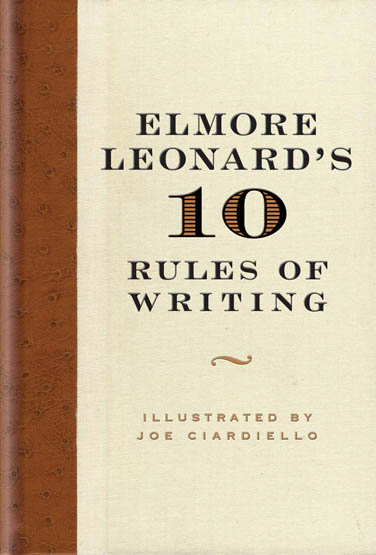
A few months back, The Guardian (inspired by Elmore Leonard’s The 10 Rules of Writing) published the article “Ten Rules for Writing Fiction,” in which they surveyed 29 renowned authors for their own list of dos and don’ts.  This was a fascinating read for me.  At first, it overwhelmed me, because of course as I scanned down the screen I was tripping over everything that I apparently do wrong…and yet, the more author lists that I read, the more I noticed how varied their perspectives were.  For being a list of “rules,” it if anything taught me there is no consistent formula set in stone.

While there are no doubt sound universal suggestions out there we should adhere to, I think we also need to find solace in the fact that there couldn’t possibly be a one-size-fits all approach to writing a good book.  We are all unique and have something different to bring to the table, and that’s something that should be celebrated in our writing as well.  I particularly like how Ollin Morales (Courage 2 Create blog) phrased it in his comment on Agatha’s post:

“I’d rather write a book that I love and everybody hates, than one that everybody loves and I hate.”

True dat.  And I also commend the truth Corra McFeydon just shared in her A Lit Major’s Notebook blog, a post appropriately titled, “The Truth.”  It is here that Corra, also in the process of writing a novel, admits that she does not desire to be a professional writer because, right now at least, it’s killing her spirit in what she loved about writing in the first place.  Seeking to break free from the rules and schedules that constrict her, she asserts:

“That’s why my novel will be written when the spirit hits me — as a product of my intensity, my laughter, and my free spirit — even though apparently that’s not how to be successful.”

I began this project for me, and if it remains just for myself after I’ve at least given it a shot at going elsewhere, so be it if I’m happy with the end product.  But even abiding by our own expectations entails discipline as we make time for our writing and edit it until it becomes the best version of itself.  I think most of the rules I’m opting to follow these days are self-imposed based on my own standards (which are quite high—I’m an English teacher after all, and grade myself constantly ;)).

That being said, one external rule I’m trying to stick to is the advised first-time-author word count of 100,000—not in my first draft that I’m wrapping up presently, but when I go back through to polish up.  Yet another blog post I recently read that I really appreciate for its straightforward guidance on how to cut, let’s say, 19,000 words for a final manuscript is, well, “How to Cut 19,000 Words” from the ‘Lethal Inheritance’ blog—Tahlia Newland tells us how she did just that when her agent asked her trim down her YA fantasy novel of same name.  I was at first absolutely psyched out that cutting words meant cutting entire paragraphs and chapters—and sometimes it does and perhaps will, but it’s reassuring to know that it can be achieved on a sentence/word level as well, an edit so subtle you’d hardly miss a thing.

I’m curious:  Which writing rules do YOU swear by?  And which rules do you think are totally bogus?

Argh.  Can you even imagine Jane Austen sweating it out like this?  I can’t imagine she was slapped in the face by rules at every turn, as we are at every page we flip and link we click.  But then again…


The Levity of Brevity

[Time to kick it old school…yeeeah boyee!] Just found out my first attempt at writing a Nanoism is scheduled to publish in July.  A Nanoism is microfiction based on Twitter-length stories—that’s right, up to 140 characters.  Microfiction is a trend relatively new to me, but one that writer Milo James Fowler (In Media Res blog), utilizes as a means of keeping his creativity flowing during and between writing stories—one of his submissions (75-words only) was recently published at Paragraph Planet.  And now I’m appreciating it as a tool for practicing how to pare down.

I can dash off a 10-20 page essay with relative ease, but it was back in grad school when I was asked to write only 2-3 pages comparing/contrasting 3 works of fiction that I suffered my first true writer’s block.  The notes I’d taken in preparation weren’t even that succinct, so just when I felt my extensive planning would make the writing a cinch, trying to pull it all together within that parameter had me seriously contemplating just dropping out of a $1,500 class (non-refundable by that time, of course. Ouch.).

“Brevity is a great charm of eloquence.”  – Cicero

Conciseness is an art.  Truly.  Go figure that it was probably my first career in business that ultimately saw me through that essay—though it sucked the creative soul out of writing, it taught me a thing or two about keeping it brief and direct, and…well…any of you who read my stuff here will see that that particular skill has by now gone to the wayside…gah, I recently sent off a guest post weighing in at just under 2,000 words (scheduled for Real Bloggers United on July 17th), which has me contemplating the value of getting to the point faster.

“Let thy speech be short, comprehending much in few words.”
–  Bible, Ecclesiasticus

“The most valuable of all talents is that of never using two words when one will do.”
– Thomas Jefferson

Admittedly, one of the factors that initially delayed me in writing my manuscript’s ending was word count.  At 90,000, I’d estimated I was about three-quarters through when a concerned author told me that’s the length my entire work should be as a newbie.  So thinking about both the tremendous hacking I was going to have to do in addition to still writing said ending sent me into panic, which I’ve only just recently released.  Basically, I’ve adopted the mindset that I need to just let myself carry the story out freely and deal with the editing afterwards, which has helped, though the inevitable still hovers over my head like the guillotine blade I’ll need to use on my text, the executioner of my own words 😦

This all being said, what I have trimmed out so far has clearly strengthened the story, just as my sage advisers always said it would, so I do trust in that.  And as I look at bits I’ve scribbled along the way and always assumed would have a place in my book, I understand now that if they didn’t meld in naturally by this point, to attempt to include them now would be about as thrilling to me as gouging a funnel down a duck’s neck to make myself foie gras.  I think instead I’ll measure out those grains for a less fatty entree or side dish in future meals…

So.  I’ve lapsed on updating this blog until today because I have indeed been cranking on my ending as well as going back to the beginning to ensure there’s balance—and, in doing so, I can see how my writing has evolved over the course of this long project…how my sentences were much longer and more complex, my descriptions more frequent…it seems I’ve since learned a wee bit more about the art of condensing, so may need to retroactively apply that to those opening chapters so the overall work can shed that fat and really flex its muscles.

“It is with words as with sunbeams. The more they are condensed, the deeper they burn.”  – Robert Southey

Huh.  I thought I’d be brief with this post.  Oh, the irony.


Fraying at the End

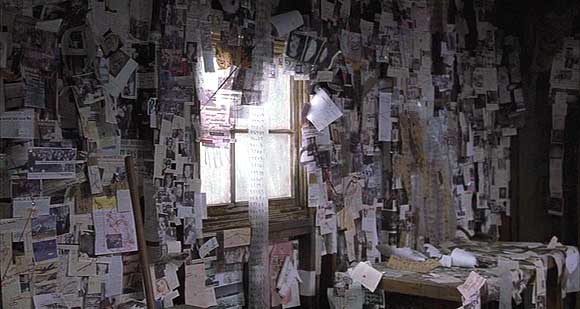
Ah, yes, that Family Guy clip makes me laugh and want to cry at the same time…little Stewie may as well be prodding me over how it’s been over a year and a half since I started my manuscript.  And that’s when I actually started writing it; the idea had come to me a couple years before that, in the form of random scribblings on the pages of my journal or Starbucks napkins and envelopes…and the more I read about other writers’ processes, the more universal that mode of transcription appears to be—I see us all just dwelling in these rooms with Post-Its and index cards and newspaper scraps thumb-tacked to the wall and strung together with yarn, the map room in the midst of a warzone where our batty, “Beautiful Minds” strategize…

That digression aside, I’m seriously having issues pulling it all together right now.  I haven’t even been able to follow the advice I shared in “The Beginning of the End,” back in March…yeesh.  And why, when the journey has already been so long and is so close to its end destination?

Because there is very good reason for that initial voyage to require some time.  Unlike what many tend to perceive, writing is a lot of work, not merely something one just dashes off in a burst of inspiration as one’s Muse sings softly in one ear as Her sister strokes a harp into the other, with the brooding writer sequestered in a candlelit garret, feverishly scribbling with ink-stained fingers—films like Becoming Jane or Shakespeare in Love would have you believe even a masterpiece can be penned overnight.  Not that I’m remotely considering myself in the ranks of Jane Austen or William Shakespeare simply by virtue of taking a stab at this writing thang, but I can’t keep psyching myself out with how much I’m not them either, or I’ll utterly paralyze myself.

You know what helps with that, though?  Empathy.  Lua Fowles, for instance, shares her experience grappling with “The Fear of the First Draft” in her Like a Bowl of Oranges blog.  And if it isn’t the fear that can slow you down, it’s the procrastination—Eva, author of the Write in Berlin blog, shares a few surefire tips on how to do so in “The Art of Avoiding to Write.”  Even when you do find your groove, there is a process to it, a method underlying all that madness that ensures the narrative is structured and worded effectively—I love author Wendy Robertson’s take on her own process in “The Joys of Cranking the Engine of a Novel” in her A Life Twice Tasted Blog (she’s one of the gracious and encouraging facilitators of the Room to Write workshop I attended in Spring).

And even when a writer does finish that first draft, the pilgrimage is far from over.  Never mind the elusive quest of getting published, the revision alone is going to be another prolonging factor.  Some revise as they go along, others leave the bulk of it for the end; regardless, it’s yet more process to undertake, and that requires some time, people.  Again, empathy to the rescue!—see Lua once more in “Editing 1 (oh no) 1” and Agatha’s appropriate analogy in “Digging in the Dirt” from her Here Be Dragons blog.  I personally am one of those who revises along the way, so my constant backtracking is another reason for delay.

Whatever excuses I can arguably throw out there to defend why it’s taking me so long to finish writing this book, the brutally honest truth about it is that the story has gone quiet in my head.  I’ve sat, and I’ve written.  But whereas before I was satisfied and moved forward, now I only go back and delete and rewrite and delete and think and re-envision and write and delete…never seeming to get it right.  What I write these days feels artificially imposed on my characters, you see, because I don’t seem to see them or hear them anymore.  No kidding, I almost feel abandoned…and melancholy, as I didn’t get the proper chance to say goodbye.  So what sort of cerebral seance could I conduct to summon their spirits back to my consciousness?  How can I get them back?

Maybe it’s because the story really is ready to end, and this is its way of telling me.

Or, egad!  Maybe the story already ended within its alternative universe, and I failed to write it down in time!

Maybe it’s only because I’ve been tending to it lately in fits and starts and need to more fully immerse myself back into its world.

Maybe it’s because after stringing those varying colors of yarn all around the walls, I now sincerely have no idea where to take those loose ends, which to tie up neatly in bows and which to continue on out the window and into the sunset on their own happy trails unbenownst to any of us.  Seriously, maybe I’ve over-thought myself into a rut and simply don’t know how to end it.

Maybe the Muses have stopped singing for me.

Or maybe, just maybe, I’m not ready for it to end…

?????????????????????????????????????????????????????????????????????????????????????

“I’m a novelist; I’m never going to finish the book.”  – James, Sliding Doors


Kiss-and-Tell


The Prompt:

* blush * Today Room to Write, that saucy minx, is asking us to write about kissing (p.34).  As Bonni Goldberg says, “Besides being fun, it is an especially good practice for writing scenes between two people.”

All right then, I suppose I can share a snippet from a scene that I previously wrote while under the influence of wine (when I feel my most floozy) and the very next day yanked from the story.  It really wasn’t the suitable direction for the characters, but I’ve kept it within reach under the file name, “The Gratuitous.”  At any rate, this picks up from when a couple of friends have fallen asleep on the sofa together.

Response:

A couple stirrings later, she felt within a tighter squeeze and then a light brushing of lips atop her hair.  She thought she’d been mistaken, but no; the puckering sound of a fully carried-out kiss had sounded against her scalp, then her forehead, and was now moving in slow succession down the bridge of her nose until—

Their lips met.  Both of their eyes closed.  Soft at first, then hardening and spreading with each contact, more slippery each time.  Their tongues met, and together they began to swell and ebb with one another, pressing and pulling away only to heave again toward each other once more as their tongues now spiraled and lunged against their mutual provocation.

Reflection:

Oh, there was more involved, but I’ve restricted it to only the kissing part.  I have no desire (“desire” being the operative word) to become the next Danielle Steel, though kudos to her for, you know, targeting a market well.  Granted, I cut the scene because I felt it wasn’t right for these two characters to hook up, but I do tend to be prudish on stuff like this and wonder why.  I have no qualms thinking it or feeling it or even writing it down, but when it comes to my finished product, I censor.  Is it because there is so much of the gratuitous out there when, by definition, it’s unnecessary in furthering plot or character?  This point makes me recall the film, The Player, with Tim Robbins, who plays the character Griffin Mill:

Griffin Mill:  It lacked certain elements that we need to market a film successfully.
June:  What elements?
Griffin Mill:  Suspense, laughter, violence. Hope, heart, nudity, sex. Happy endings…
June:  What about reality?

The film itself includes the formulaic “hope, heart, nudity, sex” elements, just not where you’d conventionally expect them to be, thereby turning the formula on its head as a means of satire.

That being said, there must be a reason why the formula does exist.  Human passions prevail for the masses.  And what about the story line that has a real message to put forth that necessarily requires a bit of physical relations?  My sister, who writes under the pen name Nicki Elson, addresses this in her blog post, “Should I Have Faded to Black?” with regard to her recently published debut novel, Three Daves.  Set during the 1980’s on a central Illinois college campus, its protagonist (Jennifer) is one of the last American virgins  who seeks compromise between coming of age sexually while still holding out for the elusive “one.”  Jen’s solution to this moral predicament is both a practical and hilarious journey for her as she navigates through three boyfriends who share the same name but entirely different personalities—namely, David, Dave, and Big “D.”  To tell a tale like this, it is appropriate for the details to be explicit:

“She tentatively licked at his lips with the tip of her tongue to try and coax him in.  He teasingly flicked his tongue at hers but refused to take the plunge.  Jen whimpered in frustration, and he ended his torture, finally pushing his way into her mouth.  Jen sucked him in gratefully and clutched his head to hers to make sure he didn’t get away.” (p.67)

Whatever other sexual techniques we might learn during such scenes, it’s in the simple kiss when Jennifer genuinely loses herself in emotion.  The kiss, though only “first base,” can truly be the most sensual, intimate, and affectionate act.  And let’s not forget that kisses can also merely be pecks on the cheek or an innocent idea blown off the palm of a hand.

I’ve spun the bottle and now it’s pointing at YOU.  How about parting your lips and saying what you think on this topic?  What are your thoughts on kissing as an expressive act between people and its role in literature?  Have you ever read/written an effective portrayal of two characters kissing that you’d care to share?


Marveling over the Macabre

The Monkey is feeling the author-love today…

…first of all, through the recent shout-outs on newly-published novelist Josh Hanagarne’s The World’s Strongest Librarian blog and published authors Wendy Robertson, Avril Joy, and Gillian Wales’s Room to Write website (they’re hosting another Durham conference in November!).

…second of all, as I sit cradling my copies of Her Fearful Symmetry and Falling Angels freshly signed by their respective authors, Audrey Niffenegger and Tracy Chevalier!!  Imagine my delight during a dull workday afternoon when I received the phone call that my wait-listed arse had scored a last-minute opening for last night’s lecture.  Located in the 19th-century chapel of London’s Highgate Cemetery, the event began with a cocktail-half-hour of wine and milling about the gateway to Highgate’s West Cemetery (where poet Christina Rossetti and her brother, Pre-Raphaelite painter Dante Gabriel Rossetti are buried, among other notable deceased–Karl Marx is buried in the East counterpart).  Filing into the intimate confines of the chapel, we were treated to readings from each author’s novel as well as explanations as to how they came to chance upon Highgate Cemetery and become inspired to build their literary projects around its historic, overgrown, and elegantly morose splendor.

Both American women had merely visited as tourists that first time, but the impression upon both was immediate, and they subsequently became volunteer tour guides as a means of interacting with this enchanting garden of flora and headstones as well as unearthing more of its history than any texts could reveal (Niffenegger continues to conduct tours here, and Chevalier lives just down the hill from the site).  Following their brief “lectures” (which were structured as interviews between the two authors themselves), the floor was opened to a Q&A session with the audience.

Chevalier had originally written a manuscript divided between modern-day and a period backdrop, yet ultimately felt the graveyard and its history lent itself best to historical fiction, so her novel, Falling Angels, takes place during Edwardian England.  She was most interested in how this once pristinely trimmed and pruned site came to fall into such decay and neglect following the Victorian Era, yet wanted to capture the local culture prior to the changes wrought by World War I, when many had lost their faith in God.  The tale depicts two feuding families that ironically share neighboring burial plots in Highgate Cemetery.

Niffenegger had likewise begun her novel along a different path than the one ultimately taken, centering on a different character and a different graveyard (Chicago’s Graceland Cemetery—woo-hoo to my sweet home, Chicago!).  She had realized that if a cemetery was to play such an integral role in her book, she would need to ensure that it was one of the ultimate ones.  Just like Chevalier had visited the cemetery several years before actually writing about it, Niffenegger cited memories of a 1990s visit to Highgate Cemetery during which she spent half the time looking at it through a camera lens and fiddling with said contraption (her words to the wise are to visit the cemetery without your camera on your first visit, which I gratefully did just two weeks ago…I wrestle with the ethics of graveyard photo-opping anyway).  She, however, essentially said her mind does not wrap around historical fiction naturally, so she maintained her novel, Her Fearful Symmetry, during the present day and incorporates an American element, given that her two main characters are American twins who come to inherit their aunt’s London flat that overlooks the cemetery.

I was captivated by everything each woman said in its entirety, yet my pea-brain is unable to reproduce an accurate transcript of everything wonderful and insightful about it.  A couple other comments that do linger in my mind, though, were their reflections on after a novel is written.  Chevalier said that she continues to “collect” ideas from the places that inspire her, whereas Audrey felt that her characters and their story lines eventually go “quiet” in her mind, and thus she moves on.

I wonder which will ultimately happen to me…Ironically, I found great inspiration to write at another Victorian cemetery just a block from my flat and which I’ve been visiting ever since the day after I moved here two years ago, so I had more affinity for this particular lecture than merely the fact that I did love reading the authors’ other books, The Time Traveler’s Wife and Girl With a Pearl Earring.  And, like Niffenegger, I do sense my protagonist’s voice and immediacy fading from my consciousness lately, which signals to me that it’s time to bring her story to rest.  May it requiescat in pace for her, then, yet stay alive in my imagination and those who will humor me and read it some day 🙂

*** For more coverage of this event, please do also see author/illustrator Sarah McIntyre‘s blog post, audrey niffenegger & tracy chevalier at highgate cemetery” —this is a comprehensive trove of observations, sketches, photos, and video! ***


Remote Control

Today’s post comes to you via my new netbook, my new key to freedom!  Or is it… 


When my first iBook laptop went kaput after 5 years in 2007, I have since been desk-bound with my newer  iMac.  Yes, I am on Team Mac, but unfortunately don’t wish to shell out the quid on another iBook.  But this is beside the point…

My new lil’ Sony netbook is liberating me from my hybrid home office/guest bedroom.  So far, I’ve made it all the way to the living room.  Baby steps, baby steps.  What I’m getting psyched about is the ability to work on my writing project remotely in London cafes, pubs, parks, and even cemeteries, such that I can still get out and about and explore this city in the newly-turned gorgeous weather without the eternal guilt over neglecting my writing.

The guilt…oh, the guilt.  I am wondering if other writers out there will gasp at what I’m about to confess or own up that they sometimes feel the same way.  When I speak of liberation, this applies to writing as well, as, along with reading, it is the ultimate way to escape into the free life of the mind at any given moment, taking me into other locations and minds and hearts. 

Yet as of recently, I’ve been more conscious of the limiting effects of indulging this pasttime.  Rather than free, I can feel trapped…for one thing, there is the guilt I mentioned above when I heaven forbid do something else with my free time after work or on the weekend and have not planted my bum in my desk chair to crank out at least a couple more pages or revise what has already been written. 

Adding to this, I once thought it freeing that I could work through my plots and characters even away from my computer and pen and paper, as ideas and revelations will come to me in the shower or during my commute. 

“The best time to plan a book is while you’re doing the dishes.”   –Agatha Christie

“What no wife of a writer can ever understand is that a writer is working when he’s staring out of the window.”  –Burton Rascoe

This has had the effect, however, of overwhelming my thoughts, exhausting me noggin when it’s set in hyperdrive and I find myself trying to figure out how to get a character into or out of a situation while I simultaneously need to get my work done…my brain needs to be in on that, too, after all, and my high levels of distractibility ever since I took on writing as a primary and ongoing endeavor are leading me into some embarassing situations. The other week, I was working through a plot line in my head as I was exiting the Notting Hill Gate Tube station, and, realizing I should probably top-up my Oyster card—my prepaid public transport pass—I walked up to a kiosk touch-screen and cancelled a stranger’s transaction, not realizing he’d been standing there and about to finish adding £50 to his card!  I’d never felt so foolish and kept apologizing profusely from the adjacent kiosk as I saw him restarting his transaction all over again in my peripheral vision. 

“Writing is a socially acceptable form of schizophrenia.”  –E.L. Doctorow

Even when I try to escape into reading to calm my overworking mind, I find I’m not enjoying it in the way that I used to—reading as a writer, there is the tendency to analyze the character and plot development, the descriptive detail and overall style and construction, not in analysis of the text itself (which is perfectly okay and necessary to truly engaging with it), but in comparison with my own style and approach, which is maddening.  Yes, reading can inform our writing, but what if I just want to read for reading’s sake?  Can I recover this ability at some point, or in taking on writing have I forever altered the relationship I have with other people’s stories?  And most importantly, should I feel bad to be feeling this way, or is it natural?  Writers of the world, please advise 🙂

In the meantime, I’m hoping that I haven’t just substituted a ball and chain with a house-arrest bracelet that permits me more mobility, but still holds me prisoner to obligation and guilt. I think instead my wee netbook and I will have many happy travels together as we get back out there to resume control of my everyday and observe life for it’s own sake—and, sure, if it provides good material for a story, that’s not too shabby either even if it does serve to feed my aforementioned neuroses.

“How vain it is to sit down to write when you have not stood up to live.”   –Henry David Thoreau, Journal, 19 August 1851


Chairman of the Bored

“An author is a fool who, not content with boring those he lives with, insists on boring future generations.”
– Charles de Montesquieu

Uh-oh…my worst fear is happening right now, so I have to take a break from my story.  And yes, I’m sure you have guessed it:  I’M BORED.  Not with writing it (though that sometimes happens, too), but in rereading it.  Yet I can’t figure out if I’m getting bored because I’ve already reread and revised these same parts several times before or because these are just genuinely boring scenes that readers would get even more bored with.

Is it bad that my first instinct is to get up and walk away for the night rather than keep plugging through?   I mean, it’s not like I’m a published author against a deadline, after all…yet I know that real writers do not wait for inspiration to write; it’s a discipline, and part of that discipline is trudging through when the going is difficult.  That said, I’ve been looking at it for hours now, so if I mentally step away to dash off this post right now and then go crack open someone else’s novel to read, that’s also an investment in my writing future, no?  And to continue over-rationalizing for myself, life has to exist outside of the storyworld as well if we’re to accumulate any authentic experience and emotion to be able to draw on for those stories—living life, versus only writing about it, is how we get our ideas (consider this post of inadvertent character-finding in “Of Characters and Other Weirdos” from the Write in Berlin blog).

“Either write something worth reading or do something worth writing.”
– Ben Franklin

I hear you, Ben, and will try my best to make the most of this night if I do, in fact, shut down the computer until tomorrow.  And when I do revisit this little yawn-factory that is the last quarter of my story, I will be refreshed and ready to infuse some oomph into it.  And I think corresponding with this boredom is my great knack for comparing myself to others’ writing again.  And if the latter is the case, then maybe I need to adopt this mentality and just get over myself:

“My books are water; those of the great geniuses are wine.  Everybody drinks water.”
– Mark Twain (1835-1910)

Well, hopefully I can work on becoming water and not the sleeping pill the water is washing down.  Okay then, I’m off to get my sight back. If you ever encounter this same feeling, please cure my boredom with your comments!