Tag Archives: publishing

To Market, To Market

After a month hiatus, I’m finally back and swingin’! Travels and deadlines have quieted down, so I’m eager for a month of focusing on my own writing again. And some exciting news this week: my first editing assignment was published! Can’t wait to get my hands on a copy – it won’t be the same as looking at my own words in print, but still quite a creatively satisfying return on my two cents. 🙂 I’m thrilled for the author, her talent, and the trust she’d shown in my input.

Anyway, I couldn’t resist opening with the film clip above because, if you’ve ever seen The Player, you know how that pitched movie idea ends up…starring Julia Roberts and Bruce Willis, with a lot of commercial action and a happy ending. Why? Because “that’s reality” when test screenings of the original ending bombed. Which raises the question for me:

Is deliberately writing to “what sells” in the market selling out?

I’m not talking about those who genuinely enjoy reading commercial versus literary fiction and whose writing naturally takes to that course. I mean the literary fiction reader and writer who throws his or her hands up and decides, “Oh, to hell with it! I just want to get published!” Is there something to be said for catering to the broader market just to get one’s foot in the door, with the hope that down the road once one is established, one can write whatever one wants? Isn’t that what John Mayer did with his music?

I used to automatically look down on this tack, but lately I’m having a re-think. At the Festival of Writing, I’d attended a workshop called “The Market and the Muse,” which endeavored to discuss how writers can both write what inspires them while still being marketable. The UK author on the panel (C.M. Taylor, Premiership Psycho) reminded me oh-so much of screenwriter Tom at the end of The Player – the somewhat cocky way he sat back and spoke freely of tossing his failed literary attempts aside and just writing on a topic of mass interest (football AKA soccer), which, go figure, was the one that got picked up by a publisher. He spoke of the liberating feel of it, just writing, not poring over every word and working hard to build in symbolism and meaning…just writing and telling a story. It was definitely a moment of a once-literary fiction writer shrugging his shoulders and saying, “Hey, that’s what sells. And I had fun writing it.”

I was conflicted in my attitude toward him at the time, this peacock strutting so confidently now that publication had validated him as a writer, even though it didn’t reflect the writing he’d done before. And yet… As I continually revise ms #1, I find myself tweaking the phrasing to make it easier/faster to read, chopping out introspective moments to make the plot move forward faster, and I’m even contemplating how I might slap that happy ending on the damn thing after all! I’m not sure about that yet, but I do know this: the ms #2 that I’ve outlined is going to be approached in this new way, this less encumbered way of writing in which I just run with it and not struggle to make every sentence poetic or profound but keep the plot tight and always moving forward. It will still be the story I want to tell and in my own words, but let’s see if it doesn’t turn out to be something more marketable than the first baby I’ve nurtured so long now. Which then makes me wonder: is that writing commercially exactly or just better?!

Regardless, I won’t pitch ms #1 altogether, though I might not pitch it again (i.e., to agents/publishers) for a while either – not until I either find a way to make it more marketable or let it ride the coat-tails of ms #2’s undoubted success. 😉

What are your thoughts? Is there a perfect union between Market and Muse? 


The Second Coming: If at First You Don’t Succeed, Write and Write Again

Image from etsy.com

I’ve got lots and lots of material to share and will do so in the coming days (or weeks, more realistically, given the bat-shit craziness of my sheh-jule these days…). And what I’m noticing right now is that my writing life is experiencing a rebirth of sorts that has me coming back for SECONDS…

To start, while the jury is still out on the POV issue plaguing my first editing project (see “POV for Vendetta“), I’ve been assigned my SECOND PROJECT, which is already presenting issues of its own. In this case, the author is safely applying 3rd person limited across different characters by only shifting POV in new sections and/or chapters. However, its story arc is sagging in the middle due to a repeating element that flattens it out through lack of variety. In future posts, I’ll speak to both my editorial comments on this specific manuscript as well as pacing a story in general.

In the last couple weeks, I have also been mapping out a SECOND MANUSCRIPT of my own! Idea remnants that got left behind as I finished my first manuscript have inspired another story line altogether, so I’m working to apply all I’ve learned from my many, many mistakes on manuscript #1 to what will hopefully be a better planned and executed #2. Outlining the plot from the get-go is a first for me, as I’d nearly written myself into a hole the first time around and didn’t know how to bring it all together (see “Fraying at the End“). So while ms #1 accordingly still needs a lot tender lovin’ care, ms #2 is providing my mind a healthy diversion for a while. Having a second project in the pipeline also keeps me from placing too much pressure on that first one navigating its path to publication. As presenters at my workshop said last weekend, hardly any new author’s “debut” novel is actually the first book they’d written.

Speaking of workshop, I got a SECOND WIND for tackling both the manuscripts I’m writing and editing by attending the Festival of Writing in York this past Saturday and Sunday. In addition to two ten-minute one-to-one meetings with a literary agent and published author (the latter being Charles Darwin’s great-great-granddaughter, no less), I attended several workshops on topics like plotting, pacing, and marketability. It gave me gobs of food for thought, so I’ll share what smattering of notes and resources I can with you.

Finally, while I admittedly didn’t churn any creativity out during the month of February for Write 1 Sub 1, I feel I’ve gotten a SECOND CHANCE this month thanks to my sister-in-law, as fate would have it. This ridiculously talented lady is a graphic designer by day and painter, photographer, and potter by night. Her latest endeavor is to create a website for her lovely pottery, and instead of presenting each with an ordinary catalog-type description, she’s opted to pair them with short stories inspired by their design and function. So guess who’s the lucky gal who gets to write these?! I’ve written five short-short pieces so far with five to go (as far as I know), so hopefully these will be appearing online by mid-April. While I still aim to write stories for submission to literary publications in subsequent months, I’m hoping this gig at least covers me for March.

All right, time to shut my yapper. Just a preview of more posts to come after I take a SECOND to catch my breath… 😉

What’s on your writing agenda these days? Any writing firsts or seconds to celebrate this month?


State of the Zoo-nion Address

Image from cafepress.com

Hello, my fellow Simians.
Today, I’d like to brief you on my current state of affairs, not as your faithful Primate President, but as a Reader, Writer, and Editor.

First of all, in the wake of my whining two weeks ago (“Hedging an Investment in Myself“), I was delivered from my woes. Unbeknownst to me at the time, but I was sitting on a Christmas gift that I was about to crack open and rediscover inside it my love of reading. My new muse is Kate Morton, whose The Forgotten Garden I just finished over the weekend and whose debut novel, The House at Riverton, I purchased the same day. Her stuff might not be everyone’s bag, but this book was like a more accessible Possession meets The Secret Garden—a family mystery spanning generations and set largely on a Cornish estate with a maze and hidden garden—which suits my literary gothic fancies just fine. Her skill in structuring a story and incorporating detail (that richly fleshes out her settings and characters without seeming superfluous) is not only providing me new writing guidance within a genre and style that appeals to me, but has also at long last delivered me into a storyworld I can submerge myself in. I’ve read many books that I’ve enjoyed recently, but it’s been ages since I absolutely got lost in the atmosphere of one and didn’t want it to end. I came out of it feeling very satisfied as a reader and inspired as a writer.

Which brings me to the next talking point of my address here. The writing. Because (contrary to the bratty little rants I might have now and then) I do take constructive criticism to heart, I’ve lost myself in my own story again to overhaul its beginning. Whole sections have been hacked and the remaining ones rearranged, so the manuscript is looking a bit Frankenstein’s Creature-ish until I go back through and stitch up some of those fleshy seams and smooth it out. I’m now starting my novel with what was originally the third chapter as it involves a more critical turning point for the protagonist and gets on with the main story more quickly at not much sacrifice of backstory (which is just reinserted other places). I’ve heard this advice given to newbie writers countless times, and I’ll be damned if I’m not surprised it finally came my turn to follow it. Not as great a sense of loss as I thought it would be, though I’m being extra cautious not to throw any babies out with the bath-water.

And wouldn’t it figure my mother tells me over Skype last night that the lil’ stinker found an old copy of my manuscript on her computer, has been reading it, and loves the beginning just as it was. Doh! I might have to comfort her more through this revision than myself :).

In any case, I’m up against a March 1st deadline for both polishing my first chapter for feedback at an upcoming writing festival and completing my developmental edit, so I’m concerned I won’t have a new February story to submit for Write1Sub1…yeesh, time to crank. But never fear; the zoo is not yet in a state of crisis, merely raised to an alert level of **Yellow**.

How are YOUR current projects going, everyone?


Welcome to the Jungle – a.k.a. Where I Write

My sister, “Nicki Elson,” invited me to join a blog hop with her fellow authors. While surely a combination of her kindness and shared DNA compelled her to assure I qualified for having one whole big giant short story pending publication (at a date which seems to have been pushed back to infinity and beyond), I am too shy to join their ranks.

And just as I am beneath them, I am not above ripping off their theme anyway ;). I encourage you, though, to check out Nicki’s post, “Where Do You Write?” and meet the other authors-in-crime listed in the blog hop to discover some fun new reads or join in if you’ve got the published goods yourself (or are contracted to).

So then, on to where I write. Well, the zookeeper is being uncooperative and not allowing cameras inside the cage, so while I’d like to share images of my tree branch and vintage typewriter that my trainer sneaks in for me at night, my human alter-ego has been so kind as to provide me hers…she will narrate from here on:

So there it is. Squished into the second bedroom of a typically gargantuan, so-much-space-I-don’t-know-what-to-do-with-it London flat. And in two nights, I’ll be able to officially post a sign above that bed that the great author Nicki Elson was squished in here, too—because my sissy’s coming to London!!! AHHH!!! Psyched.

As we continue the tour, note that the water glass to the left is conveniently interchangeable with a glass of red wine, as such swapping happens with great frequency. The desktop image is a photo from Cabo San Lucas from years ago that helps me escape my grey UK days. Beneath the monitor is a clock depicting the world map, which my parents gave as a reminder of what time it is in Chicago…awww. And beneath the monkeys are books that helped inform my first novel manuscript, along with my brainstorming journal and the Room to Write book of writing prompts that I only occasionally dust off these days now that I’ve found other things to yammer about.

Now about those monkeys. To be honest, when I first created the Fallen Monkey profile, I did not, nor did I ever…actually…own…a sock monkey. Truth. Now *shame*. Thus, my sister gifted me the one on the right a year ago, and me mum delivered its fickle and very green (as in color, not environmentally-conscious—that chimp could care less) mistress. The husband then wooed me with the 2011 sock monkey calendar, which as yet has nowhere to hang as a proper primate ought.

Such as in a tree…Compare/contrast the original view out the window that would inspire me to write, as opposed to after the branch-carnage ensued. At least I still have a perdy church to look at.

And now to give a nod to the second writing space used when I’m motivated to travel as far as the next room…

Netbook-n-me will hang occasionally on the frumpy but oh-so comfy sofa. While any writing done here is usually on my daily London blog for work, I must acknowledge that about 10,000 words of my manuscript were drafted with that wee keyboard in a surreal burst of inspiration whilst reclining here. It’s the one portion I consider to require the least revision, too, so I don’t know what Victorian spirit must’ve been lounging there to whisper it to me :).

So this leaves me ever-so curious—Where do YOU write?!


The Red Pen: Editing Another’s Manuscript – Part II

Hello again! Just accommodating the overspill from yesterday’s post, as I yet wanted to address developmental edits on my first manuscript assignment in this capacity. Again, I can’t share any comments that would give away plot/character specifics, and I’m obviously not including the little microediting minutiae here (like reworking sentence structures), but what I am doing is grabbing the meatier highlights of what I found to be the most prevalent issues in the hope it helps reinforce what to check for in your own manuscript as it did for mine.

So to speak on a macroediting level today, this author’s main focus now as she makes her edits (due back to me later this month) needs to be on her ending. We’ve talked story arc before, and a scene after a critical moment of rising action in a later chapter seemed to drag out too long as the reader nears the story’s climax, for which I noted:

[…] I’m not suggesting cutting these parts out, as they serve a purpose in the story and provide important information. Yet perhaps if they’re condensed a bit the pacing could keep flowing toward that climax. What’s key is to determine what you perceive as this story’s pinnacle and make sure everything is building up and up to that, keeping the reader compelled and not bogged down in too much talk or description that tends to flatten out the story’s trajectory when it should be climbing. Dialogue can be [tightened], limiting it to what keeps moving [the characters] and the reader forward.

And whereas that section seemed to drag on too long, the last chapter forced too much into too short a space in seeking a complete resolution. This is a romance novel, so that resolution naturally involves the two main characters attaining closure on where their relationship stands:

Hm, this sounds like a lot to load onto [him] all of a sudden […] when they’re only just working out whether they’ll stay together. I know in assessing that they may as well get all the big deal-breaker topics out of the way, but it still seems like a lot at once. Could she possibly just reference [her wants] in such a way that’s meant to show [him] she’s in for the long-haul with [him], too, in the spirit of taking it one step at a time?

And with romance novels, there’s always the risk of confusing “romance” with “sex,” so when the latter comes up (“up,” quite literally) right at the end and after a sweet moment of sentiment, I suggested:

Hm, seems to undermine the sincerity of the emotion. Maybe [this] can just be coinciding with his revelations of love for her, helping to unleash these realizations rather than being the way he chooses to show her his love after the fact (it’s a little caveman). Some description of her engagement with it might help as well to show this love as something they share in both the emotional and physical sense.

I expressed this merely as my reader’s POV, and not as a prude or a feminist. There’s a way sex can be written romantically, but this just wasn’t it, and I think the author agrees that the resolution can take a less easy, but higher road out.

Another item on the agenda is character development, and, in this work, I felt the two main characters were developed fully. I genuinely liked them and, from the romance aspect, really wanted them to get together—they made sense as a couple. Most importantly, I believed in them—they felt real, through their dialogue, actions, back-stories, chemistry, etc., and that’s all to the credit of this writer and her keen insights into people and engaging writing style. Where I did encounter some mixed feelings concerned the female protagonist and her ex-lover, a secondary character who is integral to the plot and the protagonist’s growth, yet himself appears very rarely in the story. Even so, his development felt too one-dimensional to me:

He is just so vile, and this makes perfect sense given his animosity toward [her revenge] and that he’s just a bad fit for her. What it leaves me wondering, though, is what it was about him that she used to care for. While I can see her insecurities leading her to choose the wrong men, [she] also has too much substance to go for someone with zero redeeming qualities beyond the materialistic.

Not that this would have to be developed in depth, but consider such opportunities where she’s [already] reflecting on him to somewhere incorporate (even just a sentence or two) the appeal he did once have for her, even if it only ended up being fake or that he changed.

In this case, the secondary character’s lack of believability could impact the protagonist’s, so this was a strongly suggested change to preserve consistency in her character—and, even better, it’s a quick, easy fix. Likewise with the following case where the protagonist still seemed to pine over her ex during the final scene with her new love:

From the way you’ve depicted him, I’m highly doubting [her ex-lover] would ever want [what she claims here], so I don’t see this as being the issue with him that would come to light at this point. I’m actually surprised that she’d be talking about him at all right now and getting choked up in residual emotion over it – [there was] sufficient enough closure [earlier]. Plus, she just [made several  grand gestures to win her new lover]—she’s all about [that guy] right now, and it doesn’t seem appropriate for her to bring up old flames in this intimate setting. […] Her not reflecting on him as anything that ever mattered would be a most convincing way of [showing her growth].

But that’s my take on it, which is why I label this as a “suggested” change, albeit a very strongly suggested one because I felt disappointed in [her] when she started saying all this.

And this last comment shows how I do try to approach my edits of another’s work delicately, keeping ultimate stylistic/plot control with the author while also trying to earn trust in my feedback. It’s very easy for all of us to get protective of our writing, but if we really want it to become its best, we need to consider reader response seriously. (Tahlia Newland addresses this fact and several other awesome tips on ms revision in her recent Lethal Inheritance post on how to know when your manuscript is ready.) And as I learned in teaching, the key with feedback is balancing the positive with the constructive so a writer isn’t feeling like there’s nothing of merit in his/her work; be honest, but preserve some pluck for carrying out those revisions effectively!

How about you? Have you ever had to edit someone else’s writing? How did it help you with your own?


The Red Pen: Editing Another’s Manuscript – Part I

As a new year is about making resolutions, I realized there are still a couple promises from my November I.O.U. that I haven’t yet fulfilled. So let’s tie up those loose ends!

To start, I owe Milo from In Media Res 10 random things about myself, which can be found at this link (’cause you know he’d send a guy to break my legs if I didn’t make good on that).

I’d also meant to share some of my editing notes on a manuscript that shall remain anonymous, so to the extent that I can do so without giving any specifics of the story away…

On a word level, I provided a list of frequently-recurring verbs/adjectives and noted:

Would be worthwhile to scan and determine how you might replace them with synonyms here and there for variety, or possibly eliminate altogether in the event the characters’ actions and/or dialogue already convey the same idea (thereby making description redundant). They’re great words that make description vivid, but because they stand out, their repetition is less invisible.

Try to reduce use of dialogue tags to when it’s necessary for identifying the speaker. Especially avoid overly descriptive ones – show tone instead through the dialogue itself or the character’s actions. In most cases, “said” is best, as it’s invisible to the reader.

I likewise advised on minimizing adverbs and “to be” verbs—the former “tell” more than “show,” and the latter slow down pace and sound a bit more passive. Where description was concerned, the issues that stood out most were telling-versus-showing, redundancy, and certain physical descriptions that ran too specific and frequent:

While you have an effective way of threading description through dialogue, sometimes that description can be condensed together rather interrupting the flow of the dialogue multiple times. Seeking opportunities for this will enhance the pacing and snappiness of your characters’ great dialogue rather than bog it down.

Just to interject another comment on adverbs and other description accompanying dialogue – think of how certain messages/attitudes/etc. might be conveyed through the characters’ dialogue or actions for the reader to figure out rather than be told outright. [Sometimes] it can make the reader feel like a detached third-party rather than in on the action. I definitely feel pulled into this story, but teeny moments like this can sometimes remind me that I’m reading something rather than “living” it—almost like little road bumps that interrupt an otherwise smooth experience.

And it’s not always about replacing description with description—it can be taking some description away altogether.  Your characters share such witty, snappy banter, that it may at times feel appropriate to just let them talk with minimal interruption. For example, if this first sentence of the paragraph was taken away, I would still catch on to [Secondary Character]’s displeasure and coolness by virtue of his brief first sentence and shift [in dialect].

Reduce level of description for secondary characters that do not recur. This draws attention to [Secondary Character] and makes me think I should know her well, yet she never reappears later.

Sometimes these color and make/model details seem superfluous. We see [Main Character]’s truck play an important role later, but [Secondary Character] and anyone else’s vehicles don’t really matter to the story.

Then there were structural considerations on sentence, page, and chapter levels:

Consider breaking down some paragraphs with embedded dialogue […]. It creates more white space to quicken the conversation’s pace and allows the reader’s eyes to “breathe.”

[T]he description of one character embedded with another’s dialogue sometimes makes it confusing who the speaker is. Sometimes, perhaps, a description like this could skip to the next line, provided the continuing speaker is tagged.

To enhance flow, perhaps join these two [simple] sentences using a semicolon or conjunction.

Section break to accentuate passage of time and shift of focus to [another character].

Basically, I proposed many paragraph breaks to not only help break up clunkier sections, but also separate dialogue from descriptions that didn’t correspond with it. My suggested section breaks not only helped to denote shifts, but also provide a breathable white space and prevent a chapter from becoming the structural equivalent of a run-on sentence. And in a couple cases, I recommended converting a section break to a chapter break—in the case of the very first chapter, doing such preserved the opening momentum as the second section was rather lengthy.

Such are just a few examples, but what all the edits peppering that manuscript boil down to is clarity and consistency.

This has gotten long, so I’ll save my two pence on the more developmental edits I made for tomorrow. Ta!


The Manuscript Manicure – Part III: Submitting a Manuscript

Continuing with my miniseries on what I took away from my Room to Write workshop, all this talk of revising a manuscript ultimately culminates in the submission of the gol’ dern thing. Now, we admittedly did not have a tremendous amount of time left to discuss this, and I wasn’t expecting a sure-fire formula to cracking the query code, but I did at least receive some reinforcement of guidance I’ve seen elsewhere and will likewise provide these tidbits to  you.

Naturally, they addressed that critical, make-or-break first chapter. They reminded us that in our initial drafts, our first chapters are usually about us finding our way into the story and not necessarily where the reader should begin. There’s no fault in doing this; it almost seems inevitable if not necessary when drafting, yet it’s an issue that should be revised away through our macro-editing. Very important to be sure before submitting that your story is starting in the right place, as we all know the first chapter or two might be all the agent/publisher ever sees, if they even request that much. (and on this topic, the workshop authors prefer sending the first 40 pages versus a # of chapters, as chapter lengths vary)

As for the query letter, keep it to one page. Be succinct and professional, yet find a way to incorporate your unique writer’s voice. Important elements about the manuscript to include: title, word count, genre, setting, one main character, three-line cameo of the story line, and intended audience (might consider naming a comparable published author, e.g., “Readers who enjoy ___ may enjoy this.”—they claimed it isn’t vain to do so, though I’m still a little shy about it). Open with a brief hook, then follow up in your second paragraph with the three-line cameo. Also include a sentence about yourself after this, including any relevant published work or background.

Now, I see where agents and publishers are very specific about what they want you sending them in the initial query, so I don’t know how often we could get the chance to do this, but Wendy recommended including a separate page with a brief bio and photo. Has anyone tried this (successfully)? I’m omitting it for now…

The synopsis, then, expands on what’s said in the pitching letter to summarize the entire plot and ending. But rather than approach it on a chapter-by-chapter “and then…and then…and then” basis, it should be a vivid expression of the novel that suggests the shape of it and reflects your writing style. In attacking mine (still a work-in-progress), it follows the general chronology of the story line, yet some paragraphs are more so grouped by topic than chapter. But whatever, I’m not the published one, so those of you who are further in this process, please advise on your approach!

Now for the manuscript. Specific submission requirements will vary, but typically:

– NO single-spacing. Double-space unless requested otherwise (no less than 1.5).
– One-sided (if hardcopy)
–  1-inch margins
– Begin each new chapter on a new page and start the chapter a third of the way down the page.
– Begin the first line of each chapter/section on the left margin and indent subsequent first lines 0.5″.
– NO spaces between paragraphs (that’s what indents are for) unless it’s a section break, in which case use a double-return.
– Times New Roman and Arial are acceptable fonts, unless requested otherwise. And use one consistently—NO changing it up with fancy fonts.

When it comes to actually submitting, they advise sending out in 3s. Be systematic.

All right, I’m going to have to squeeze ONE more post into this series…

PART I – Macro-editing

PART II Micro-editing

PART IV – On Publishers & Publicizing


I.O.U. – Going, Going, Gone Until Next Week

Writing a blog post here to tell you what I’m going to write in blog posts next week. Why do something so asinine? Because I’m shorter on time than I’d like to be today, and after my previous lapse in blogging, I really wanted to get a post in this week to represent, yo.

What I was going to write about this week (and will now have to next week) was the beginning of my editing process on someone else’s manuscript now that I’ve received my first assignment as freelance developmental editor. I respectfully will refrain from discussing this author’s specific plot and leave it purely to the general suggestions I’ve noted that are likewise duly filed away in me noggin for my own manuscript (and may be useful for yours).

Which brings me to another topic I was going to write about…my manuscript status. Not super interesting at this stage, other than I’ve had it printed and bound as-is to whisk away to the English countryside for another workshop with the Room to Write organization I met in March. This is the first time I’ve seen those words in print, and I’ll be damned if I didn’t catch a typo and sentences begging to be cut on first cracking it open. It’ll never end will it…Ah well, the focus of the workshop is manuscript revision and submission, so it’s just as well that mine is still a work-in-progress.

Which brings me to what I was going to write about next week anyway: the workshop. I promise to share what insights I take away from it (and I can cram an extra scone in my pocket for ya if you’d like).

Ah, and in catching up on some of your blogs, I see that I’m going to fulfill the reqs of receiving the “Honest Scrap” award from Milo James Fowler over at the always-enjoyable In Media Res blog. Thank you, Milo! So now next week in addition to the usual fur balls, I’ll be coughing up 10 random things about myself.

Until then, I owe ya…Happy Weekend, everyone!


The Shotgun-Shack Story: Nowhere to Hide

The-Breakfast-Club-movies-21223076-1558-800

I’ve been sitting on a topic for a while that a recent blog post on Lethal Inheritance  has spurred me to finally write.  In Tahlia’s post, “Is writing the second novel easier than the first?“, she discusses how she has started writing her second book while her first manuscript awaits publishing.  She mentions ways in which this second story line differs from the first:

“[I]t takes place almost entirely in one set of adjoining suites in a castle, whereas Lethal Inheritance’s scenery is always changing. Thirdly, it’s character, relationship and emotion driven, rather than action driven. For me, that’s a harder brief, and that’s why I’m not sure at this stage if I can make it work.”

To which I responded:

“What I’ve been working on to date falls in that [same] category; there are not dramatic changes in setting or adrenaline-rushing action as it’s very concentrated on the psychological/emotional variations in my protagonist as she questions identity and her perceptions of reality.”

I proceeded to say that, though this is the type of story I’m personally drawn to, I realize it doesn’t necessarily have the mass-market appeal that would get it snatched up for publication.  And that’s okay—I am definitely writing the story I want to write; I started rereading it from the beginning yesterday and am all the more convinced of that.

So, today I’m dedicating this post to those incredible stories out there that capture our attention without catering to the modern-day ADD bred by MTV-esque rapid editing and car chases and explosions.  I’m not saying I’m not likewise entertained by the action-packed tales, just that they are not the only ones capable of, in fact, entertaining.

I attended a writing seminar last year in which a panel of agents, publishers, and authors spoke on the craft of writing in conjunction with getting published.  Someone in the audience had asked about commercial versus literary fiction, and an author responded that “commercial” fiction is story-driven whereas “literary” fiction prioritizes language and ideas—it is read for the beauty of the words and provocation of thought.  She attested that many authors try to combine both.

This got me thinking, then, about the more character-driven stories that I enjoy.  Where films go, I noticed a trend in my collection of one-setting movies; indeed, some partake in just one room.  Think about that!  One room.  If a film or novel can captivate you all the way through by virtue of situation and dialogue without having to change settings, that is a brilliantly written manuscript, in my opinion.

Don’t believe me?  Try watching Rear Window, 12 Angry Men, Rope, or, hey, even The Breakfast Club—all of which take place in a single room (with the exception of maybe a minute or two outside)—and tell me that you aren’t entertained.  These are carried by characterization and dialogue, just like other favorites of mine:  Before Sunrise and its sequel Before Sunset (which both admittedly change settings, but the respective cities of Vienna and Paris are just backdrops to the characters’ ongoing conversation), The Anniversary Party (an ensemble cast in a Hollywood couple’s home), and Gosford Park (in the vein of the Agatha Christie books I loved as a kid that transpire in a single setting—a mansion in And Then There Were None and a train in Murder on the Orient Express).  And it doesn’t take dramatic, in-your-face action and cutting from setting to setting to get the blood rushing, as not only evidenced by these mysteries and the two aforementioned Hitchcock films (Rear Window and Rope), but in haunting thrillers like Dead Calm and The Others as well…which coincidentally both star Nicole Kidman, the first taking place on a sailboat and the second in yet another old English mansion.

In speaking on setting, the visual examples of this most readily come to my mind through film, but the success in capturing even a viewer’s attention in this case comes down to the writing.  The writer scripts the dialogue and envisions the setting and behavior of the characters—in film, the director then works to capture this audiovisually.  Yet in a novel, it is all on the writer to convey these elements entirely in words.

Stripping away the attractive actors, elaborate sets, and soundtracks does not render mere words dull, nor is a single/minimal-setting book a bore.  If that were the case, where would that leave the classic works of authors like Austen or Bronte, whose stories don’t deviate far from the character’s homes.  Think of the chill sent down the spine by novellas like Henry James’s The Turn of the Screw or Poe’s The Fall of the House of Usher (houses), the adrenaline and fury aboard Hemingway’s The Old Man and the Sea (boat), or the intimate existential conversation in Salinger’s Franny & Zoe (the entire second part moves only from the bathroom to the living room) or Boethius’s 6th-century The Consolation of Philosophy (a prisoner speaks with Fortune in his cell).

What is it about the single-setting that so fascinates me?  I suppose it’s in part the appreciation I feel for the effectiveness of story-telling that doesn’t rely on bells and whistles.  And it’s the great experiment of what happens when you isolate people in a room—throw in a dash of tension, stir, and bring to a boil.  It becomes a study of humanity when characters aren’t able to escape each other or even themselves:

There is much heart, soul-seeking, and thrill to be had within four walls.  A writer can most certainly pull it off, though the impact can only be as strong as the writing itself in bringing it from the corners of a room to the corners of the mind.

How about you, readers and writers—do you gravitate toward the story-driven or character-driven?  What are some examples that successfully combine both?


The FaMo Awards

Gah!  I’m so delinquent in my blog-posting/reading…as I explained this morning on Twitter, “the sloth in the next cage died, so am filling in for it at the last minute. Have been very convincing in my role.”

For what that’s worth.

And shame on me further because I have yet to formally thank the lovely Lisa Reece-Lane and Agatha of the Milk Fever and Here Be Dragons blogs, respectively, for humoring a primate with blog awards!  My very first ones, so I’m screeching and throwing poop around my cage like it’s confetti.

Following my blog post on rules, ironically, here are a few more that I am more than delighted to adhere to in accepting these honors (along with the gown I shall be wearing to the award ceremony):

1. Thank those who loved you enough to bestow this gift.
2. Share seven (7) things about yourself.
3. Bestow this honor onto 10 newly discovered or followed bloggers–in no particular order–who are fantastic in some way. (The You’re Going Places award only obligates me to 5, but I’ll honor the original Spotlight reqs)
4. Drop by and let the 10 chosen friends know you love them.

Okay, so to follow my thank-you above, here are 7 random things about me:

1.  I am the youngest of 4 and the proud auntie of 2 nieces and 6 nephews.  Being 7 to 10 years younger than my siblings, let’s just say I fought my way into this world as an “unexpected” gift from God.

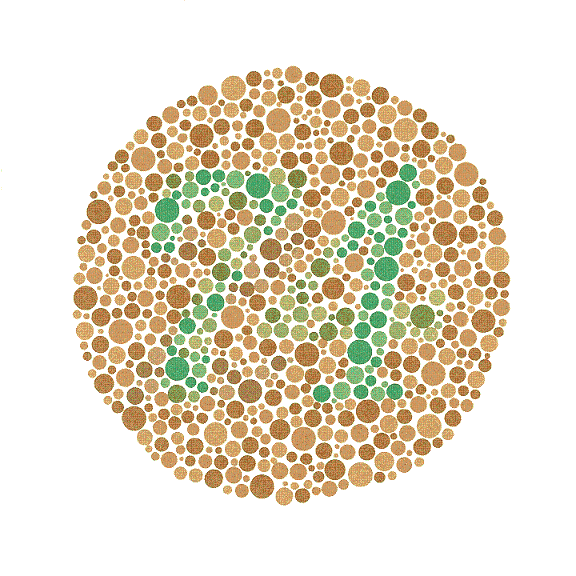
2.  Though it’s rare in females, I’m color-blind.  Well, color “weak” as the eye doctor says every time I fail one of those gol’ damn color  tests.

3.  Although I love animals (I am, after all, a monkey), I am not a pet person. At all. But if I had to align myself with either the infamous Dog People or Cat People in a finger-snapping gang face-off of “West Side Story” proportions, I would probably go Cat.

4.  While not advanced and hardly ever getting the chance anymore, I love playing the piano.

5.  The only physical features that I’m genuinely insecure about are my feet.

6.  I suspect that I have an old soul, but cannot determine its age (though, considering my bunions and the flannel granny cap I wear in bed on winter nights—very much to my husband’s chagrin—I estimate it’s at least 80).

7.  My mind is a reservoir of meaningless pop cultural free-association-of-thought.  For example, on command, I can sing/hum theme songs to old TV shows (with a concentration in ’80s sitcoms). My college roommates discovered this ability in our dorm cafeteria—nothing stumped me, but after something like 2 hours I stopped in frustration that I could only recall ONE of the themes for “Lost in Space” (the later color episodes had a different song than the earlier B&W seasons, you see, but I’m pleased to announce that I eventually did remember the other one and will sing it at your wedding if you book me far enough in advance).

Though not all necessarily “newly discovered,” I will now bestow the honors to 10 of my consistent blogger friends (I’ll split the 2 awards 50/50):

Receiving the Spotlight Award:

The Spotlight Award

1. To extend my thanks further, Here Be Dragons.  This blog is a constant source of empathy and inspiration for me as a writer.

2.  Nicki Elson’s Not-So-Deep Thoughts.  A newly-published author’s witty musings on writing and the 1980s—as her little sister, I couldn’t be prouder!

3. Real Bloggers United.  A diverse new collaboration of bloggers to which I try to contribute on a monthly basis and encourage you all to do the same!

4.  Courage 2 Create.  An insightful writer embodying refreshing humility and kindness.

5.  Aphorism of the Day.  Though he humbly goes by “nothingprofound,” his bite-sized pearls of wisdom give a busy life pause for meaningful thought.

Receiving the You’re Going Places Award:

You're Going Places Award

6. In keeping with the spirit of #1, Milk Fever.  Lisa is a rising newly-published author, and her posts crack me up.

7.  Though she already has heaps of ’em, there’s a reason:  Bowl of Oranges.  Our gal Lua never fails to share spot-on reflections related to the journey of a writer.

8.  Write in Berlin.  I *heart* this gal’s wit and sharp perspectives as a writer and Berliner.  Her advertising eye always makes for an engaging interplay of images and text.

9.  In Media Res.  Filled with humor and honesty, Milo is a lesson in imagination and perseverance in publication.

10.  Lethal Inheritance.  A richly informative guide on writing and the quest for publication by YA fantasy lit author, Tahlia.

*phew*  I’m pooped (in the figurative sense, not the literal with regard to my nasty monkey habits).  I’m off for the evening and hoping to catch up on all of your blogs this weekend, as well as those of newer commenters who I’m very pleased to meet and looking forward to following as well!