Tag Archives: writing prompts

Blindfolded

The Prompt:

Whereas previously we were asked to write about something we can see through our eyes, imagination, instinct, and intuition, today page 28 of Room to Write asks us to write about what we can’t see—this can be something literally out of our sight, or figuratively hidden from our understanding or missing from our lives.  This should be freely written, beginning with the words, “I don’t see…”

Response:

I don’t see what it is that wakes me on time when I’ve forgotten to set my alarm, what prompted me to unlock my door and go back into my flat that one day to check the stove that, sure enough, still had a gas burner on from my morning tea.  I don’t see what it is that holds one person up when another might slam to the pavement under the weight of the world, or what it is that binds people together when the centrifugal force of their spinning lives would otherwise fling them apart.  I don’t see what it is that I sometimes think might brush against my face as it rests on the pillow, or tickle at my toes when they peep out from the kicked-askew bed sheet.  I don’t see what some people don’t need to see because they rest their speculation in faith alone or just don’t see the point, and I don’t see what other people try to detect scientifically as evidence of what they won’t believe in unless they can see it through thermal imaging or sound waves.  I don’t see the energy that humans exude, radiating onto and into others through smiles or kind words or enthusiasm or sucking it away through frowns or insults or indifference.  I don’t see what happens to that energy when a human passes on…that energy that, in all things, can neither be created nor destroyed, so must go somewhere when its host ceases to exist as a body in motion.  I don’t see the momentum of that imprint they made in life or if it continues to survive beyond death, filling the voids that person would have filled or instead dissipating into the atmosphere, joining the energy of yet-living organisms, lifting the wings of a bird, or watering a flower.  I don’t see what is perhaps best left unseen or may be nothing to see at all, yet is somehow something I want to believe in more than what I do see.

Reflection:

I guess the idea of this activity is to understand how what is absent (only because unseen) can serve as a great presence in our writing.  Perhaps it means our characters are missing something in their lives, and their search is what drives our entire plot; perhaps it is what we writers are missing and searching for through our stories—it’s a chance to find understanding.  I’ve indeed had characters explore some of this unknown, speculating through them how something so unseen could in certain ways become overtly present and necessary for them to confront and comprehend to move forward.

Do you find that your writing has/is helping you see what you’ve in some way been blind to?  What about your characters—are they having to confront something they can’t keep avoiding?  Is out of sight out of mind?


The Natural State

“A lake is the landscape’s most beautiful and expressive feature. It is Earth’s eye; looking into which the beholder measures the depth of his own nature.”    – Henry David Thoreau, Walden

The Prompt:

Today I’m skipping to page 26 of Room to Write, which asks us to write about Nature—we can discuss it in terms of either the outdoors or our human nature.  Or, as a third alternative, write about both and connect them together.

Response:

Life finding a way.

Nature peeks in at my window from the flower box, offering a contrasting visual to the street traffic that I hear below.  The roof that I otherwise view out our flat’s front windows is gradually becoming obscured by the tree buds that are cracking open to unfurl their vibrant sources of shade.  While Autumn will always reign as my favorite season, there’s no question that Spring is the one that consistently unleashes the euphoria…in Chicago, it meant the cessation of the bitter cold with no more fear of a surprise snowstorm to dig your car out of as you curse into the winds; here in London, it means more gaps between the oppressive cloud-cover that has given me mole-eyes with extreme sensitivity to this golden, natural light we’re delighting in now.  As opposed to the droning hum of fluorescent lighting that dulls our pallor to that of corpses, the sunshine has slurped up the puddles for the time being and is grinning at all the people glad to scurry about in lighter jackets and exposed toenails.

But I don’t mean to make this about the weather, just the effect that it has on the human psyche, making us feel an urge to interact with it, be a part of it.  Nature expands our lungs, colors our cheeks, infuses us with a sparkle that we risk losing when all we may come into contact with day-to-day is the plastic of pens, kettle handles, or keyboards pushing against our fingertips along with the cool metal of doorknobs and pocket change.  Even the natural grain of our wooden furniture’s once living existence is separated from our skin with a layer of varnish, the embalming fluid of trees.

I once attended a series of debates at St. Paul’s Cathedral during which theologians and scientists discussed the nature of the soul (if interested, you can read the full transcript here).  While they went on to distinguish the soul from the spirit, one panel member (Keith Ward, Emeritus Regius Professor of Divinity, Oxford University) had this to say of both:

“[A]ll living things—all animals, even vegetables, potatoes and tomatoes—have souls.  They all have living principles.  So having a soul, for the Bible, isn’t what makes human beings special.”

“Every living thing has the breath of life, which is the spirit.”

Regardless of anyone’s religious beliefs—that is what made these debates so fascinating after all, as panel members across the series represented Christianity, Judaism, Agnosticism, and Atheism, and found more common ground than disparate, as far as I perceived—I think the above captures a sense that people can share universally.  It is that “living principle,” that “breath of life” that we share with Nature, and this is what binds us together no matter how much we try to distinguish ourselves by our intellect and emotion.  If this is a way that we humans are not special, that means we can commune with Nature as our brethren, giving and receiving energy from one another in much the same way we breath the oxygen plants give off only to expel the carbon dioxide they need to photosynthesize in return.

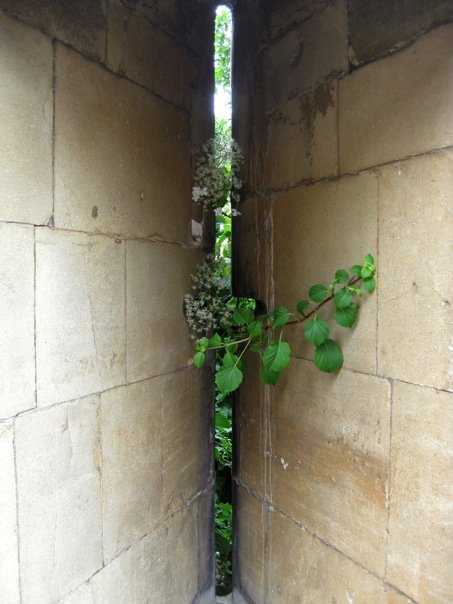
When I stand on a mountain or swim in the sea, there is something so gorgeous about the vision and experience of it that I could cry, for it taps into my own primal nature that remains embedded in my core, nonmalleable to societal influences that may otherwise shape me for better or worse.  Nature vs. Nurture is a whole other tangent on which I could take this topic, but I shall hold off on that other than to say I personally believe both factors are at play when it comes to who we are and who we become.  Our nature, however, is akin to that persistent vine that finds its way through the cracks of a stone wall; aspects of who we are at our roots are likewise things to be nourished so that they can flourish or perhaps be plucked like weeds when we recognize the bad that could come of them (the very duality addressed in my “Mad Me?” post and your comments).  Think about it; we constantly address ourselves in terms of vegetation:  early or late bloomers, budding, blossoming, being planted, rooted/uprooted, fertile, and so on.  This metaphorical language doesn’t come from nowhere; we draw comparisons of ourselves to images we somehow intuitively understand, and, in doing so, better understand ourselves.

Reflection:

On looking back at this entry, I see that I automatically addressed the gentler side of Nature.  This is the hopeful, inspiring aspect of the outdoors that we can embrace for a healthier mind, body, and soul.  Yet I would be remiss not to footnote here that I stand in awe of Nature in a fearful way as well.  It has a tremendous force that humbles us through what we term “natural disaster”:  earthquake, tsunami, hurricane, tornado, and most recently, volcanic eruption.  I literally just jumped out of my chair to look outside at the first sound of an airplane I’ve heard in days—sure enough, I just watched it fly past.  It’s been an experience directly observing the impact of the ash, leaving people stranded in a way that didn’t occur 200 years ago when Iceland’s volcano last erupted (and did so for a year!).  We take our air travel for granted and have felt practically paralyzed at being sent back to an earlier time when such was not an option.  Of course, though, our next escape routes became our trains, cars, and boats.

But envision if we did peel back the layers of technological innovation and retreated to our more basic, natural selves:

“If we assume man has been corrupted by an artificial civilization, what is the natural state?  The state of nature from which he has been removed?  Imagine wandering up and down the forest, without industry, without speech and without home.”    – Jean-Jacques Rousseau, Discourse on the Origin and Basis of Inequality Among Men

What are your thoughts on Nature (in any of its respects), and how do you think such contemplation impacts what and how we write?


Are YOU Talkin’ to ME?

We all have them.  Those heated exchanges (or ones that are on their way to becoming heated) when we bite our tongues rather than spew what we’d really like to say.  Well, I must say I’ve gotten much, much better at speaking my mind over the last decade, so it’s hard to think of any recent times I’ve muzzled myself (quite unfortunate for my husband)…but still, there are times when we’ll do it for whatever reason:  to be tactful, to spare feelings, or maybe just to save time until we can regroup and come back with a better debate strategy.

The Prompt:

Page 24 of Room to Write asks us to think back to an argument when we’ve held back.  Let it all out now, considering what you censored or reworded at the time.  Develop it as a dialogue in which you likewise speculate how the other person may have responded.

Response:

I’m going to cheat on this one.  I’ve been trying to dig up some great conflict from my youth, but it isn’t coming to me right now.  The first hot topic that does come to mind, however, is one that I addressed three years ago by writing a letter that I knew I would never end up sending.  The file name I’d saved it under was, “If I Ever Have the Nerve to Send it,” so I could at least have it at the ready if need be.  The act of writing it out was in itself therapeutic and, as of this year, perhaps financially rewarding.  I’m still waiting to hear the latest update, but as of March I signed a release to have the letter included in an anthology entitled Best of Unsent Letters (I’m doubting the intended recipients would discover it under my pen name). We’ll see.  Maybe publication is delayed.  Maybe they forgot about me.  At any rate, until I know, I can’t share it here, but if it gets posted on their corresponding blog, I’ll retroactively add the link so you can see what spiteful things I have to say when someone crosses my family. “NOBODY puts Baby in the corner!

To make up for lack of creativity this fine, lazy Sunday, I’ll throw this out there.  When I do have a bone to pick but not the commensurate nerve to say it to the applicable person, I have a habit of carrying out the exchange in the mirror.  Of course, this could mean that I’m senile.  Regardless, I ended up incorporating this into one of my character’s list of quirks to rationalize why she (me) does it. Here is the draft excerpt of such a scene:

She really did spend inordinate amounts of time standing [at the bathroom mirror].  Not cleaning it, Heaven forbid, nor was it time reserved for inspecting pores or removing blackheads from her small, upturned nose; most of the time, she spoke in whispers.  Whenever her brain felt the size of a walnut or, conversely, enlarged to the point of bursting with thought, she just vomited out the swirling words and conversations verbally, wishing she [could] deposit them in a physical, external reservoir where they could be left behind and visited when desired, rather than confronted involuntarily and often when unprepared.

Eyes locked on her own, the visual reminded that her identity did lie in something more than just her own awareness.  Her presence meant something.  Her absence meant something.  She was here, in your face, and she mattered.

And so, she resumed—partially whispered, partially mouthed—the conversation she’d recently begun in her mind, a monologue finally telling John how she felt about their relationship and threatening him with how much her absence would absolutely matter to him.

“I’d feed you the ‘It’s not you, it’s me,’ line, but it’s not not you, and it surely isn’t just me.  It’s both of us and our mutual inability to ‘get’ each other.”

The figure opposite her served as an acting coach, giving Margaret feedback on her body language as she fine-tuned the script to perform later.  Satisfied after thirty minutes that she’d thoroughly convinced her reflection with her eloquent articulation, she was too exhausted and bored with the effort to even consider repeating the words to John anytime soon.  Such was the way with all the actual face-offs that never actually happened, especially because she’d lose her nerve without her reflected self as guide.

Reflection:

So…for whatever that was worth.  I’ll try to get my mind back in gear next time to churn out something new.  How about you?  What have you left unsaid?


Only in My Dreams!

I think after yesterday‘s heaviness, we needs must uplift ourselves with some ’80s radness!  Oh, as if you don’t want to…don’t resist the urge to Running-Man or Cabbage-Patch if need be…

Ah…okay, fan yourself off.  The reason I pulled this little nugget from the cyber archives is to set the theme as I backtrack to the writing prompt about dreams.

The Prompt:

Four posts ago, I mentioned that page 22 of Room to Write asks us to recall a dream:  “It can be a recurring dream, one from childhood, a daydream or a nightmare.”  As we write about it, we should be noticing which portions of the dream sequence evade our memory and which become sharper.  We can fill in any gaps, change, or expand on any of it that we wish.  I’d like to relate a few…

Response:

The first dream that leaps to mind is a recurring one that I had as a little kid.  I know exactly where it stemmed from:  a TV ad for a television station that had something to do with the seasons (or “series,” as they say in the UK) of its television programs not yet coming to an end…I don’t know if it was approaching summer re-run time or what, but what I do recall is that my dream was this extended variation of the advert in which I was the woman involved.  I was wearing a peasant dress and being chased by a hunchback all throughout a dark, cobwebby, grey stone castle.  The corridors, evil perils, and my evasive techniques would vary night to night, but every time the dream ended the same way:  the hunchback would corner me at a dead-end.  With my back against the wall and arms outspread, I’d merely repeat the line the woman in the commercial would say (though in my dream, it was probably sheer nonsense coming out of my mouth), and the hunchback would grunt, turn around, and walk away.

A recurring dream I started having later in life involved water.  The situations and story lines were always different, but the water would be there in some form or another.  Sometimes I was on a sinking ship a la Titanic, sometimes I was standing on shore watching a massive tsunami (of Deep Impact proportions) rolling in at me , or water levels for whatever reason would rise gradually inside my home.  In all of them, I had time to stare down my ultimate death and prepare the air to be swept from my lungs.

Adding to the list, I get that typical one in which I lose my teeth.  Whereas the last two dreams recurred within the span of probably one or two years, this particular one with the teeth has resurfaced my entire life.  I don’t always lose my teeth entirely; sometimes they are loose to the point of my knowing it’s only a matter of time.  Again, the story lines of those dreams will vary, but within them my dream-self burns in mortification, as it’s a total blow to my vanity.  I always feel entirely helpless and unable to hold them in place (not to mention terrified what the dental bill is going to come to).

And to conclude the list, yes, when I was a student I would have the dream about having to take an exam I didn’t study for or showing up to class wearing something ridiculous, but the curse of becoming a teacher is that you keep having those dreams!!!  This time, though, it’s that I show up to class without having my lessons planned, or I show up at the wrong classroom on the first day of school, and the students are never very helpful to me in this dilemma.  Since I’m on hiatus from teaching at present, I don’t get these anymore, except that just a few nights ago I actually had one of the more freakishly normal dreams I’ve ever had—nothing bizarre, really…same classroom and students as I really used to have…except that at the end, I broke down sobbing over how much I missed teaching.  (Um, no need to call Freud in to psychoanalyze me on this one…I think Dr. Obvious can take it from here).

Okay, so what would happen if all my recurring dreams decided to recur on me at once?

I’m running through the corridors of the high school…it’s a centuries-old one in the vein of Hogwarts, and I’m late to teach my lesson on Beowulf…today, we are to debate to what degree Grendel’s mother is a sympathetic character, but I haven’t crafted my specific discussion points nor procured enough copies of the text to distribute nor written up or copied the handout nor strategized how to best divide my students up (Individually?  Pairs?  Collaborative learning groups?), and have I differentiated for their multiple intelligences?

I walk into the copy room only to see the photocopier spraying out sheets of study guides as a cluster of frantic teachers scramble to claim and collate their own; there is no solution nor sanctuary here.  Panicked, I pivot on my heel and chase down the hall to an unfamiliar stairwell where I feel and hear the grumbling of a predator:  Grendel!  I trip up on the low hem of my skirts as I jog down the steps, my sweaty palms on the railing exceeding the pace of my slippered feet.  I duck into the dank blackness of a janitor’s closet as I hold my breath to hear ever louder the rattling huffing of another; I will be trapped here if I stay, surely given away by the scent of my perspiration (or dry-erase markers), so my only hope is to dash and pray I do so in enough haste.

With my heart ricocheting off my breastbone like a racquetball in my alarm, I automatically navigate the twists and turns of the school halls, unsure of where to find my classroom and lamenting this loss in last-minute time to prep my lesson—when I arrive at my class, if I live to arrive at my class, alas, I shall have to wing it.  I grind my teeth in anxiety, debating which is the lesser of two evils to occupy my mind away from the putrid, humid breath at my neck, only to find that my top front teeth begin to sway against the bottom ones.  One slips out wetly, grazing my lower lip as it falls and trails bloody saliva down my chin; another tooth three teeth over then gets crunched between my molars before I suck it onto the bed of my tongue to better projectile spit it back at my foe in defense.  By twos and threes, my remaining teeth ease out of my soupy gums, and I try to organize them with my tongue against the roof of my mouth as ready artillery; in rapid-fire, I spray them out, their pale ivory now bloodied pink, and they pelt my pursuer like quail shot.

I’ve bought myself some time.

Up a winding staircase I go, clacking against the polished stone surface, slipping to my knee before recovering quickly and charging onwards toward an upper level corridor open to the air.  Heaving sharply cooler gusts of air through great gasps, I run headlong into the painted cinderblocks of a dead-end.  Hearing the bell sound off, I realize it’s over…First Period has already started, and I’m not there to take attendance in time to send it off to the Main Office.  Truancy slips will be issued, and it will be all my fault.  I press my forehead against the icy surface of the wall and slowly roll my skull around on its pockmarked surface to spin and face my adversary.

And there he is, slightly worser for the tooth-bullets, but still formidable.  He growls in low rumblings with a taloned claw upraised, and I start to tell him something about television reruns when a surge of foaming saltwater blasts through the open windows.  I swallow it along with my words as my body flails for orientation and gives one last spasm in its urgency for oxygen.

As it all bleeds over into black, I think a forever-silenced prayer…that my substitute teacher will not let any of those students side with anyone who would have spawned Grendel.

Reflection:

Um, yup, just as demented as any of my dreams would be.  The spin I’ve taken on this exercise was stupidly fun.  After focusing for as long as I have been on one main, continuous story line for my project, it was rejuvenating to take a random tangent that is not too serious or personal.  I think I’ve dragged this post on long enough, so will bid you good night and crazy, distorted dreams 🙂

If I Could Talk I’d Tell You…

Sometimes what is really worth saying is what is most difficult to say.  Perhaps anyone can tell a story, but it’s the unsayable that charges the tale with compelling if not conflicting emotion.  Writers write because they have something within that is urging to be said; the challenge, though (and the reason why I think not just anyone can tell a good story), is articulating what we feel so strongly when there may be no direct means of doing so.  This is why people use metaphor and simile or play off the sounds of words themselves to recreate an experience that is otherwise unrelatable.

The Prompt:

To help us say the unsayable, page 23 of Room to Write asks us to “choose a feeling, idea, or experience that you haven’t been able to express to anyone no matter how hard or often you have tried.”  In trying to convey this, we are encouraged to use any of the following writing strategies:

1. Comparison – compare the sensation to a similar feeling that it reminds us of;

2. Juxtaposition – describe conflicting aspects of the sensation, side by side; and/or,

3. Rhythm – structure the words/syntax of our sentences to audibly mimic the sensation.

Response:

At times, it felt my eyes would propel from their sockets, or splash out of them with the popping burst of a water balloon breaking against blades of grass…as if I might literally ‘cry my eyes out.’  My heart felt it might split open my chest cavity like a crab leg gripped in the toothed metal of a lobster cracker; holding my heart back from rupture, however, was an opposing anvil of pressure at my sternum, compressing my breast as though I’d plunged into ever deeper waters.  The dulling of other senses was likewise like treading below the water’s surface, looking up to see the pool of light above while deliberately sinking myself toward what was cool and black, obscuring my perception of life as it actually was through the dark and refracting depths and clogging my ears to reason.  At other times, it was like being strained through a sieve, dispersing the atoms of my being into the broader environment, a melding into the background as I soaked into the carpeting or evaporated into the walls, becoming more and more transparent from my own sight.  A water-logged cadaver deadened by apathy alternating with the quick-pulsing, hyperventilating, lurching engine of emotion that, either way, spun me off the road and left me paralyzed in the ditch, tangled within the weeds where no one could see or hear me.  This is what depression felt like.

Reflection:

Yeesh, I feel like gulping for air after trying to re-feel the sensation of a dark, momentary blip in my life.  Thank goodness this experience was temporary, triggered by a few too many life changes that occurred at once—good changes overall, granted, but changes nonetheless that entailed adjustment and sacrifice.  Ah, the bittersweetness of life…but as I learned in Istanbul’s bazaars last autumn, it is good for their elaborately woven Turkish carpets to be trodden on, as it only makes the knots stronger.  And thus we all strengthen into something of more beauty just when we may want to pity ourselves for being stepped on.

In any case, while I don’t have any issues talking about it (I prefer to, actually, as being able to speak of it in the past tense makes me revel in the happiness of my present and optimism for my future), I never feel I can adequately get the experience across.  And I can’t say for certain I’ve done so here, nor really approached it in the way that Bonni Goldberg has asked; all I can say is that I wrote what came to me most readily, and I know I could rewrite it through various other lenses.

I didn’t deliberately attempt rhythm, but if I want to grasp for sound effects, I detect some unintended assonance and alliteration in the penultimate sentence:  the repeated “aw” sound in “water-logged” that draws out the words like the slowed feeling of trying to run under water, the interspersed “a” and “eh” sounds in “cadaver deadened by apathy” that sound listless and whiney, then the “d” sound in “cadaver deadened” that falls with dull thuds.  The action words with strong, snapping consonants and short “i” sounds that follow (“quickpulsing, hyperventilating”) seem to then speed up the sentence a bit.  At least that’s my take on it…or maybe I’m just making this all up as I go along 😉  But seriously, though, although my little analysis here might be stretching because I didn’t try to strategically embed devices like this, I point out these examples just to show how the sound of language could be used for certain effects, and obviously more effectively when done on purpose.  I think this is at least the 2nd time I’ve bypassed rhythm as a writing technique in my responses, so I really need to start challenging myself more in this area.

But enough about me.  How might you say the unsayable?


Dare to Dream

Page 22 of Room to Write speaks of dreams, as what we recall and record of them can provide a source of material for our creative writing.  Twilight fans may recall that Stephenie Meyer’s entire vampire saga stems from a dream she once had of a vampire falling in love with a mortal girl while laying together in a meadow; in fact, on her website she says, “For what is essentially a transcript of my dream, please see Chapter 13 (‘Confessions’) of the book.”  And yes, I suspect that’s where the sparkling came from, too…maybe she could have edited that part out.

In any case, I have also written a scene shortly after a particular dreaming/waking experience and thought this would be an opportune time to share an except (character names have been substituted):

The sound of traffic outdoors rustled Margaret briefly awake, shattering the meadow of yellow in which she had been reclining before she sank again into REM sleep, tugging her awareness of lying on the sofa back with her into the underworld of dreams.

She could see nothing, for her eyes were closed in sleep even in this realm, but, after an immeasurable length of time, she heard someone enter the room and approach her beside the sofa, hovering over her, looking at her closely.  She could sense other presences, smaller, children it seemed, at least two, also standing there, idle, inspecting.  While they did not touch her, Margaret felt the energy of their presence softly press on her in three areas down the length of her body: her arm, her hip, her thigh.

Her awareness of this became so keen, she began to panic over who may have just let themselves into Ron’s flat, when the door should be locked—it did so automatically upon shutting.  She was terrified to be so vulnerable, laying prostrate in nothing but a bathrobe with not so much as a sharp or heavy object within reach for defense, yet willed her eyes to open in order to stop this if it was in fact a dream, or to confront the invaders if it was not.  Her brain signaled to her eyelids to rise, but a paralysis overwhelmed her body’s senses as if in rigor mortis.  The eerie, monotone childhood chant, “Light as a feather, stiff as a board, light as a feather, stiff as a board,” whispered through her ears as she struggled with her mind to usurp command of her physical self.

Open your eyes, open your eyes, open your eyes.

Her desire was singular, all her power channeled to one narrow focus.

Just move, move.

The effort was tremendous, filled with the futility of one confined with locked-in syndrome, desperate to communicate to any degree again.  Margaret fought the dread that would kill her will and urged herself on.

Move, move.

She became aware of her head, aware of her neck.

Move.

Her arms materialized, if only phantom limbs.  She wanted to lift outside of herself, to reach out and grasp the shoulders pinned to the cushion and shake them fervently.

Her chest swelled.  She felt it; it too was still there.  With a breath, she welled with autonomous energy and shook herself.

The lurch of her torso sent a sharp inhale up her nostrils, and the glow of the morning sun ignited her lids.  With a flutter, they opened.

Margaret found herself steaming in sweat, looking at nothing but the blank ceiling, then the wall with its two gaping windows, then her feet still propped on the cognac leather arm.  Slowly, she boosted herself up and pivoted on the sofa to conventional seated position, facing the television on the wall opposite.  To her right was just the empty kitchen, and she craned her neck to view further out into the hall and entryway.  The unit door was closed.  Rotating her skull to loosen the neck muscles, she stared at the empty space between the couch and the table that she had felt so certain was occupied but an infinitesimal fraction of a minute ago.

And in the event that you’re wondering, yes, I do have the uncanny ability to shake myself awake when I’m in the middle of an unpleasant dream that I want to escape.  I don’t know how I do it—I’m sometimes simultaneously dreaming and aware of the fact that I’m dreaming, and I somehow will myself to wake up.  Anyways, that was the exact dream I had as well, which, if didn’t originally inspire my plot, does indeed coincide well with it.  With that, I bid you adieu for today and will follow up with a post freshly addressing page 22’s writing prompt.  In the meantime, sweet dreams 😉


Digging a Rut into a Wishing Well

Meh.  I’m starting to sink into the funk I babbled about previously in “My Inner Critical Beeyotch.”  The dealio is that I’ve approached the point in my project where I really need to start bringing everything to climax and a concise resolution; the mental obstacle that I’m encountering now is not a writing block, but, rather, a plotting block.  In fact, my problem is the opposite of writer’s block, as ideas and words are flowing really naturally now, but I think what’s working against me is that, as far as the books I like to read, I gravitate to the lengthier novels that I lose myself in for a nice chunk of time, the ones with gradual character and plot development, that steep you into some of the minutiae to help you feel more intimate with the characters, like you’re really accompanying them through a personal journey.  I’ve been consequently following a pace that feels natural and necessary to me, knowing full well the word count still wouldn’t come close to some of those beasts I have on my bookshelf.  Unfortunately, the tidbit of advice that keeps coming to my attention through various sources is that word length for first-time authors should not exceed 90,000-100,000 words.  Um, well…I’m already in that vicinity and feel like I have a ways to go.

Here’s what I’m struggling with:  I started this project as something for me, a creative outlet I’ve been wanting to plug into for years and am only first now seizing the opportunity.  At the outset, I told myself it was first and foremost for me, but if I finished it and was pleased enough, it wouldn’t hurt to try to make something more of it by submitting it to agents in pursuit of that pipe dream of getting published.  Why just let it sit there on the computer, right?  But that said, I don’t want to be overly inhibited by keeping my eye on the publishing prize. I want to create, not sell out, but I also want to be realistic.

Should I just keep writing as I have been to get the ideas out, get the conflicts resolved, knowing full well I’ll have to go back and take an ax to a massive amount of it?  I suppose it’s better to have the clay to mold with, as Bonni Goldberg discusses on page 9 of Room to Write (see “More Messiness From the Membrane“), as I can always take away.  I need to remember my workshop guidance:  “Kill your darlings, kill your darlings, kill your darlings…”

All right, then.  Chill, Monkey, and focus on the next writing prompt.

The Prompt:

Page 21 of Room to Write asks us to record our wishes.  As Goldberg says:

“Wishes are voices of the imagination, taking you out of the realm of reality on a daily basis.  For this reason, in creative writing, it is worth paying attention to them.”

We can write our secret wishes, our past or long-time favorites, or the one that is nudging us this very minute.  I will follow this last one, for obvious reasons.

Response:

Today I wish for clarity of mind…that I can sift and sort and structure my swarming ideas into a manageable plot to continue writing…that I will hold fast to my original goals surrounding theme and mood…and that my instinct will guide me through my pacing and revision.  I wish that the end product will be something I am utterly proud of and content to share with those closest to me, with the added bonus of being something marketable, so that I may also share my story with the world. I wish for the patience, inspiration, and discipline to see me through toward this end in the meantime.

Reflection:

Ah, it’s nice to let that out.  No shame in wishing.  What do YOU wish for?


OMG-ing my fool head off

First of all, I’m immensely amused at the fact that my last entry was on “discipline,” and it’s taken me days to get my bum in gear to write another post!

Yeesh…the week got busy on me as I try to wrap things up before heading back to the States (FYI, I’m a Chicago gal currently living in London) for a visit with family and friends, a time during which I expect to be out of commission for writing/working overall.  In any case, the reason I am OMG-ing relates to a previous post in which I expressed my excitement over getting one of my letters published in a book collection.  That, in turn, inspired me to enter a short story contest that so happened to extend its deadline, so I could still give it a go.  The general theme to address was “The Wedding.”  So, folks, the results are already in, and….*drumroll*…I won first place!  Adrenaline surged through my veins, and I thought my heart would leap out of my chest…I’m just gobsmacked and so appreciative of those darling judges who have humored an amateur writer and will be making a dream come true in publishing my work.  It’s my very first time being published for my fiction, and I’m going to continue working hard to ensure it won’t be my last.  I already feel so grateful for this blog, as these little exercises that I might spend 5-10 minutes on here and there have been enough to get my ideas flowing and discipline me to write creatively on a more consistent basis.  This week’s performance, however, not being a stellar example…

In my defense, I’ve had a lot of reading and note-taking to conduct in preparation for a weekend writing conference that I’m departing for tonight.  I honestly learned of it by accident because of this blog–because I follow Bonni Goldberg’s writing prompts in her book Room to Write, I had Googled the title to grab a link for one of my earlier posts weeks ago, and in doing so stumbled upon a UK organization of same namethat holds bi-annual conferences at a country estate-turned-hotel up in Northern England.  This just looks way too up my alley, so I signed on and am getting giddy to hop on that train out of the city.  In any case, this March workshop addresses reading as writers–I think we all know that the more we read, the better we can write by virtue of interacting with examples of good writing or evaluating what we don’t like about what we read.  We were assigned to read three novels of rather disparate styles (The Lovely Bones by Alice Sebold, Blackbird House by Alice Hoffman, and Let it Bleed by Ian Rankin) and take note of three things we learned about writing from each, so I’m looking forward to this sort of book club taken to the next level in analyzing these texts in relation to our own writing projects.  Hoping to obtain some very solid advice on how I might approach concluding the last quarter of my work-in-progress…I will most definitely report back here on any pearls of wisdom shared.

In any case, hopefully it will not be another 20+ years before I enter another writing contest–no, seriously!  I had just talked about my last one (in grade school, mind you) in my blog post, “The Impact of Words.”  Imagine my relief that the outcome this time round was the same 🙂

In closing, I’m going to indulge my relative anonymity here with what I consider to be the first professional review of my written work, taken as an excerpt from the Fact, Fiction, and Folly blog.  Why?  Because I think I still just can’t believe it and am utterly humbled by the kind words shared, and need to remember them to keep my self-expectations high:

The writing is well done, the story keeps you reading and turning pages (on the screen, ha!). It pulled me right in, with super fast pacing, so there’s never one single moment of ‘boring’ or ‘description’ that isn’t necessary. No word is wasted, no emotion spared. We get to shift POVs in an expert way from several different players in the scene of one wedding – and being ‘inside’ their heads, sort of the way a voice-over on television would be while all the guests are watching the wedding. It felt conspiratorial. It felt like we were eavesdropping on their private moments. It was simply fantastic.

The story title is “Four Somethings and a Sixpence,” and will appear in Accentuate Services’ Elements of Love anthology due for release this November.  They have already published two previous anthologies, Elements of the Soul and Elements of Time, and coming out soon are Elements of Dimension and Rendezvous.  All right, then, cheers for now—I’ve got a train to catch!


The Art of Discipline

On page 19 of Room to Write, Bonni Goldberg pauses to reflect on the importance of discipline in writing.  Her personal mantra when the going gets difficult is:

“Writers write, writers write…”

It all goes back to her emphasis on “showing up on the page” and curbing our tendencies to procrastinate or wait for inspiration to hit us.

The Prompt:

In light of the above, Goldberg asks us to write about discipline in one of 3 ways:

1.  Begin a poem or essay on what understanding you’ve reached on what it means to be disciplined, what you accept about it or what you reject;

2.  Track one of your existing characters as he/she copes with some element of discipline; or,

3.  Relate a past event that involved discipline in your life.

Going with Door #1 today…

Response:

Discipline is..

dedication and details

a dreaded dungeon

of dankness that congests my chest and blurs my eyes

resistance

like trying to run along the ocean floor.

But discipline is also

drizzling drops

of decadent delicacy

embedding structure within passion

to convert it to a sugared treat.

Reading the results

the rejuvenating reward;

whereas

idling for inspiration

the idiocy that is

waiting for words to come to you

rather than working to walk amongst them again.

The daily dollop, then,

the routine regimen,

the waking willingness

to expend effort and enjoy the effervescent energy

of Creation.

Reflection:

I can’t say I had any deliberate reason for the particular consonants and vowels I repeated in this other than they were the ones that started a lot of the words that were coming to mind with regard to the topic .  And I actually think I automatically latched onto to alliteration as a device to give me discipline, to set boundaries in which I could creatively explore.

Ironically, I’m not disciplined enough right now to spend more time on this or even take a second pass on what I just dashed off to revise or expand.  Ah well.  In truth, I think even just that brief time reflecting on it was validating, as that’s the point–if we perceive our goals as laborious tasks immense in proportion, of course we’re going to hit a psychological road-block; we’re just setting ourselves up for it.  The approach that seems widely recommended across writers is to chisel bit by bit off that boulder.  It may not feel like much at the time, but the aggregate results over the span of days will be noticeable if we discipline ourselves to set and accomplish reasonable daily goals.  If I’ve learned anything from my professional experience, it’s that goal-setting needs to focus on feasible, measurable results.

For me lately, on days when I’m not writing for my project, I’m making sure I’m at least writing a new blog post to stay warmed up.  And as for when I am working on my extended piece, sometimes I just roll with it, but other times I might set a word count–in yesterday’s case, 2,000.  It started out slow, requiring much discipline, but once I got into it, I tapped into a torrent of new ideas and ways that they could tie back to the old, and before I knew it, I had written almost 2,500 words by the time I reached a good time to stop for a break.  And even if I can at least add a few sentences of maybe a 100 or so words, I can feel the same level of satisfaction, even if I end up deleting it the next day.  Simply because I know I tried.  I worked at it, and I showed up on the page today.


Touch No Evil

The Prompt:

In wrapping up this series of writing exercises on sensory detail, today’s challenge (page 18, Room to Write) is to write through texture.  Again, we have 3 different approaches we can take on this:

1.  List textures;

2.  Describe the textures of a person, place, or thing;

3.  Reflect on how the textures help us find understanding.

I think I’m going to interweave #2 and 3 for this one, at least at the outset and just go wherever that takes me.

Response:

To lull myself to sleep at night, I often rub my fingers along the edges of my pillow case; it’s a habit I’ve had since childhood, one that I developed as a substitute for massage (I was very used to nightly back rubs from my mom).  So when I repeat this ritual as an adult, the tickling sensation of that thin fabric whispers kisses on my fingertips to assure me everything will be okay.  On the occasional night when I’m really sunken into a mode of regression, I’ll lay there in bed snugglng my panda bear, a gift from my parents when I was five.  Holding her close, I’ll run a thumb over the course, pebbly fur, matted down and hardened from decades of hugging.  Now and then I’ll still find a soft spot, a silken smooth patch that was not prone to friction and reminds me of the fluffy fuzz that once went up my nose and tickled my nostril hairs (and sometimes caused that sharp, almost stinging, muscle-constricting anticipation of a sneeze) when I sniffed the bear to find my own scent.  I run a finger over the rugged, scratched surface of its eye wondering when I would’ve let my guard down to have ever let harm come to there.  I feel how flattened and condensed the stuffing has become, the reason why this panda had actually grown an inch once on the family growth chart.  I roll onto my stomach and worry that the weight of my arm is putting the panda into a strangle hold as I feel its unyielding lump beneath, and as I turn my head the opposite way, the slippery straightness of my fine strands of hair slide across my cheek in feathery protection.  I nestle my face into the moon-cooled part of the pillow that I hadn’t yet laid on and sense its soft, suede-like fibers brush against my skin, which, newly cleansed and burning from an invigorating sandy scrub, prickles a bit at the thin fuzziness just skimming its surface, almost velvety after multiple washings.  I feel the thick raised bands of its pattern press into my cheek to stamp its existence into my damp epidermis.  Awareness of the tepid, downy pressure  of my breath upon the back of my hand distracts me from sleep, so I move my arm outwards, outstretched until it bumps dully into the warm life-force emanating from my husband’s back.  In short, vertical sweeps, my hand rubs up and down against his t-shirt, which has become flimsier and less abrasive to the touch after continuous wear has relaxed its threads.  Through the fabric, my fingers feel a twinkling of bristles as tiny needles of hair penetrate through.  Sensing a shift of the mattress below me with a tug of the sheet above me, I realize I’m waking him when not meaning to and so withdraw my hand to the top of the duvet and let it sink into cloudy puffiness as a brief escape of air from between the feathers huffs around either side of my wrist.  I lose concentration of the regulation of my breathing as, limb by limb, my body numbs against these textures and my mind delivers me into anesthetized dreams.

Reflection:

Huh.  So I didn’t really know where I was going when I started out.  At first I thought I might be listing different textures that have come to have meaning in my life and then reflect on that, yet when the pillowcase and panda that both connote safety and reassurance to me (in representing childhood nostalgia) also both coincide with bedtime, I found myself just running with that image in my mind.

I didn’t realize it until the very end how much the sense of touch comes into play at that time of night when it’s quieter and darker, and, therefore, sounds and sights are more subtle.  Touch logically comes to the forefront, then, as we try to situate ourselves in comfort conducive to fading from consciousness.   A challenge was searching for different adjectives to describe what basically boils down to a bunch of different fabrics–the textures within a bed are not all that dynamic, so I kept wanting to describe things as “soft” all the time.  On rereading, I notice how I used a visual word (“twinkling”) to describe a sensation of touch, and while that may be cheating, I don’t know, it works for me because there’s a sort of motion and sound that go with that word that lets me understand how it would touch against my fingers.  I don’t even know if what I just said makes sense, but I am realizing that the boundaries between the categories of sensory words can be crossed time to time, as the different senses so often work together to elicit a shared sensation, so that leaves us open to all the more creativity in how we spin our language into the thread of a story line.