Tag Archives: creative writing

From Sentiments to Sentences – Part I

Sentimentality is both a blessing and a curse.

I’ve demonstrated before to what extent I can cling onto the past in my guest post for Real Bloggers United, “CSI: Chronically Sentimental Individual.”  Now, in the spirit of the recently passed Halloween, let’s just say my memories continue to “haunt” me…

But in good ways (hence, a “blessing”), though sometimes they hurt so good (hence, a “curse”).  I first conceived this topic last week when my parents’ visit came to an end and they returned Stateside.  Though the effect has had a few days to wear off, I remember how I walked home from the tube and almost couldn’t bear how everything I saw reminded me of them because of our recent walks around the neighborhood together.  Forget that I’ve traversed that same route for over two years now and between their two visits they haven’t even been in London a total of two months…the memories with them seemed to replace my collective everyday experience.  Same went for when I returned to the flat and sobbed over little things like the coffee remaining in the French press that we’d shared earlier that morning.  I know, I know…it’s passed now, though tonight I’m jolted with another stroke of sweet sentimentality from home, as I just checked my Facebook messages and saw one from a former student I taught my last year in the States. She was a freshman at the time and is now a grown-up senior about to graduate…simply cannot believe it! My babies! Anyways, she had the sweetest things to say, which made me really pine for those happy teaching years.

In view of such “ghosts” from my past, I find that they appear in some incarnation or another in my writing, perhaps in special homage of these special people and moments.  “Write what you know,” they always say, and I do, knowing full well I am clearly not alone.  I’m constantly reading intros to novels that state how they’re the “most autobiographical” of the author’s works, and, really, isn’t every work of fiction arguably so?  Just ways of telling our truths “slant”?

At the time I started my current manuscript, I was in need of emotional healing to follow leaving home and career, so the tale I began to spin was much more so a “therapy” than an ambition. I didn’t care if it was unoriginal; I let my first chapters draw very much from my own background, which resurrected the spirit of my earlier happiness and allowed it drift and swirl around me in my new atmosphere. The words brought it alive, brought the people and the values back to me and reminded me who I was in an otherwise unfamiliar context that sapped me of purpose. The story certainly evolved from there into a terrain highly unlike anything on which I myself have embarked, but those early chapters gave my protagonist her core, and in doing so assured me of mine.

Among the sentimental inspirations from real life, there are very direct ones that creep up in sentences reflecting the comforting closeness of my family like:

“They weren’t the stuff best-sellers and blockbusters were made of, and prayed they never would emulate what society spent its money on or turned its channel to.”

“Her mom multi-tasked concern for her child with rescuing bacon strips from their spitting inferno.  She wore her short, hairsprayed curls like a helmet ready to combat any threats to her family head-on.”

I’ve also incorporated actual snippets from childhood diaries and adulthood travel journals. Plucked entirely out of their original contexts, though, it’s crazy the way they fit in and communicate something entirely new and different and had inspired new offshoots of sheerly imaginative thought, not that from experience.  It’s been like dismantling a clock and using some of its gears to operate, ooh, maybe something like the Happiness Machine in Ray Bradbury’s Dandelion Wine (which, in keeping with our theme here, is a valentine to Bradbury’s own childhood).

It’s all about our frames of reference.  No one could possibly perceive the world in exactly the same way that we do individually because we occupy separate space and move differently through it. This gives us our own private reality, then, and this is what writers constantly tap into to construct their fictional realities.  And there’s more I’d like to say on this, but am realizing this is getting long, so I’ll break it into two parts.  Fair enough?  Cool.  See you tomorrow.


Monkeys in My Tree

Just a quickie, folks, to notify that the wacky monkeys I descended from (a.k.a., Mom & Dad) have swung from a loooong vine across the Atlantic ocean to visit me.  We’ve just returned from a delightful weekend in the Cotswolds and Stratford-upon-Avon and are recovering from a not-so-delightful extended train ride back to London last night—our train hit someone on the tracks, the poor soul :(…Then tomorrow we’re off to rrrrOMA! for a few days.

Hopefully I’m not wearing the poor Ps out already; we’d had to flee town for this past weekend already because my genius husband and I managed to dumb-ass double-book ourselves, so a couple of our friends flew in from Italy last Wednesday before my parents arrived from Chicago the following morning.  Our wee abode officially bursting beyond capacity, I chose to head for the hills (or the “wolds,” I should say) to give everyone a bit of breathing room.  Since our first guests arrived in March of 2009, this is the 17th round of guests that we’ve hosted in London.  Not counting parental repeats, 30 different people have rested their heads at what we’ve long been calling the B&B.  I should’ve bought a guestbook from the getgo had I any freaking idea how many people would suddenly come out of the woodwork and want to stay with us once we moved somewhere cool.  I think our next home had better be in Nebraska.

Anyways, all whingeing aside, I’m having the best time with my parents, and I’m giddy because my Dear Reader has been emailing back her second round of feedback on my manuscript ending.  I’ve got some work cut out for me on that, but I’m so excited to revisit it and make it the strongest version of itself.  I have a November workshop on manuscript submission as my deadline for getting things as polished and perdy as can be :).

In the meantime, as long as my tree here continues to be occupied and me swinging hither and yon as Hostess with the Mostess, I’ll be out of commission in the blogosphere for several more days.  I shall miss you and your wonderful insights until then—*mwah*!!


The Fear Factor


The Prompt:

I love how Bonni Goldberg relates writing to medicine when it comes to protecting us against our fears:

“You take small doses of your fears in combination with written words and they create a kind of antibody: a cathartic human experience that authenticates your strength and fragility.”

Page 42 of Room to Write, then, asks us to write a list of our fears and describe one in more specific detail.

Response:

Some things I fear:

– geese

– clowns

– confined spaces

– death (mine, but mostly loved ones)

– being in any way “too late” for anything by the time I move back home

– losing my sight or hearing

– the debilitating effects of aging

– having children

– lack of purpose

– never finishing my book

– rejection

– regret

Okay, I think that’ll do.  Now, to pick just one…it’s tempting to go the route of writing-related fears, but I think I devote enough of this blog to that!  How about the “too late” factor, as I feel it’s one needing more explaining:

The fact that my aging parents continue to age in my absence while living abroad positively terrifies me.  I know many will find that irrational and say that I have to live my own life, but I will never, never forgive myself if something happens to either of them while I am an ocean away.  Just writing this right now is bringing me to tears.  It is something I really, truly cannot stand to fathom.  And I don’t want to miss out on my nieces’ and nephews’ milestones, nor do I want the littlest ones to not know their Auntie.  I am not the person who realizes what they have only when it is “too late”; I’m the person who has always known perhaps too clearly, which is why I would have never left in the first place if it were only up to me.  I don’t think of it as something holding me back; being with my family is actually part and parcel of my life’s ambitions, so anyone who thinks I should feel otherwise can suck it 🙂

My own aging has started to frighten me as well.  I don’t consider myself to be old, but my husband and I have agreed to wait until we return home to our support network before starting a family, at which time I will most definitely be at the infamous cut-off age that younger mommies love to throw out there as the danger zone of higher risks and mandatory tests.  Gee, thanks for making me feel geriatric.  Sorry my last decade has been pleasurable and focused on my needs and catering to my own identity before I give it over so fully to a little person of my making.  I genuinely hope I didn’t just offend any mothers reading this—I think parenting is the most noble occupation for one to assume, but it’s not my fault that I didn’t get married until after my friends were already popping out kids and that other life changes have thrown me for a loop such that there’s a lot I need to get sorted before I feel I could do a remotely good job of it myself.  So I’ll put off applying for that particular position a bit longer; yes, I know, at my own risk.  *eyes rolling*

Returning to find that my old job (for which I was only 1 year away from getting tenure) is not remotely available to me anymore is scary.  I moved the very week that the economy tanked, and what I’d considered a recession-proof job has still managed many layoffs since then, and some departments have frozen their hiring.  Barring that, even if I can vie for a position, perhaps I’ll be judged negatively for my time away from teaching; the powers that be may frown upon my rationale, not find value in how I’ve chosen to apply myself since then.  Even worse, what if I fear teaching itself?  After such a long hiatus, I’m no longer riding the momentum of consecutive years ramping up in the profession.  The flexibility (and sleeping in!) of my present days will be lost, and never doubt the intimidation of staring down 125+ teenagers a day and, even worse, their parents who will too quickly point the finger at you for the consequences of their own lack of parenting at home.  Then again, if I end up not having kids of my own, teaching is a great way to play surrogate.

I think what is overall frightening me is the realization that my life at home did not simply freeze once I took off on that plane, preserved in its tableau of near-perfection while I have my fun and then return to reinsert myself seamlessly back into it.  I will not be entirely the same person either, after all; current experiences are carving me from a square to an octagon-shaped peg.  So I fear the transition that will be repatriation, after expatriation was already so difficult.  I fear feeling out of place in my own home and possibly acknowledging a discontent that wouldn’t have otherwise been there.

But, you know, so be it.  Rejoining my family, starting a family, returning to teaching…I cannot think of three things more worth facing that fear.

Reflection:

First of all, allow me to apologize.  Addressing personal fear just automatically lends itself to a whiny rambling of self-pity, so thank you for bearing with me through it if you’ve made it this far 🙂  I don’t think this activity has brought out any special writing, per se…the fears are plain, so embellishment didn’t come naturally—the way I wrote it is not creative or revelatory.  It didn’t make me realize anything new about myself.

Maybe selecting a different fear or writing in another frame of mind would have made all the difference, but the one thing I can take away from this exercise is the fact that Goldberg was right!  When I started writing about this, as I said, it made me cry—it thrust me into my fear and made me tremble in the face of it.  And yet the more I wrote, the easier it was to pull out of this vulnerable state; putting it in writing made it very plain to see that, while my fears may be justified, they really aren’t as big of a deal as I sometimes let them be.  The more I wrote, the more my heart quieted and the more my mind said, “Poor you with the wonderful family and profession and wonderful period of creative flexibility and travel that you have in-between.  To have had it as long as you did is a gift, and you still might get your cake back to eat it too—or even be okay if you don’t.  So in the meantime, buck up.  Deal.”

In short, facing my fears was embracing my blessings.

And you, brave readers of mine?  What are you so afraid of? And how might your fears impact your writing?


Speak and Spell

I’m presently hosting cousins who are in town visiting, and we attended the evensong service at St. Paul’s Cathedral.  I confess that I usually tune out during church readings and sermons—really, when anyone has been talking too long—and it’s that much harder to keep focus when my eye has a massive dome and intricate mosaics, sculptures, and paintings to wander about.  A surreal kind of solitude even in a room filled with people.

In any case, because I’m visual and we had a program containing the readings and songs, I did catch this passage:

“If [the flute or the harp] do not give distinct notes, how will anyone know what is being played?  And if the bugle give an indistinct sound, who will get ready for battle?  So with yourselves; if in a tongue you utter speech that is not intelligible, how will anyone know what is being said?  For you will be speaking into the air.  There are doubtless many different kinds of sounds in the world, and nothing is without sound.  If then I do not know the meaning of a sound, I will be a foreigner to the speaker and the speaker a foreigner to me.”  – from 1 Corinthians 14

Now, the context of this passage regards speaking in “tongues”—i.e., spreading God’s message in different languages that people may not understand without interpretation.  Yet it got me thinking about language in general and the way people communicate with each other even within the same language that they all understand.  This transports me back to the first days of school explaining to students why taking an English class is necessary—not as in learning the language itself, but, rather, learning all the possibilities of how to use that language.  I told them that they could have the most brilliant ideas in the world, but it won’t mean anything if they can’t communicate them clearly.

For students, the technical ways to communicate are the starting point.  [DISCLAIMER:  My criticism is limited to those who butcher their first language only.  My hats off to those who speak another language at any level, as it’s more than I’ve achieved.]

I could go on and on about how many times I caught text-message-ease infiltrating formal essays (yes, “u” instead of “you” appeared countless times) and how proof-reading is a lost art thanks to Spell-Check being taken for granted (need I mention the infamous “there”/”their”/”they’re” problem)?  Maybe I’m just a stickler—after all, I’m not immune to such errors when I’m writing quickly, and naturally leave it to a teenage wisenheimer to bring to my attention the Cambridge study on spelling—but it becomes increasingly alarming to me when I catch more and more typos on menus, signs, and other messages in print.  I don’t know if any of you WordPress users had the same issue, but I couldn’t get into my blog the other day because “Writes to access this site have been disabled.”  Really?

But this isn’t what I mean to harp on (and I don’t want everyone whose stuff I read to fear my teacher’s red pen :)), so I digress…

What I really want to address relates at least in part to Cities of Mind‘s comment on my earlier post:

“I decided that maybe what you do is write the book you want to write, in a way people want to read it.”

This lingered in my mind, and, while the ways in which people want to read a story may encompass several factors (e.g., engaging through suspense or pacing), I thought about how important a story’s overall readability is in the first place—i.e., the ease with which readers can comprehend what is written without having to read through a sentence three times before understanding what it’s getting at.   This ended up echoed in my own sister’s words during her recent local TV interview (which I had to see on her blog before that modest little stinker even showed it to me!).  Starting out in that oh-so soulful world of Finance like myself, when asked how she shifted gears from “boring” financial writing to creative writing, she responded that the former actually helped:

“One thing that was always pounded into me was, ‘This needs to be understandable to the clients,’ so [business writing helped me] for getting the message across and understandable to the reader.  So as far as the passion and the creativity of the story, that part was kind of easy to just have, but to get it written down so that someone else would read it and feel and see the characters the same way that I wanted them to, [I go through a lot of editing] to just think of it from the reader’s point of view.”

I suppose that’s mostly what the “rules” are all about, ensuring that the vivid images and concepts in our minds are translated into words that recreate the thoughts in the reader’s own mind.  This is the fundamental principle of communication, whereby the Sender relays a Message to the Receiver.  If the Receiver does not understand the Message, the Sender has failed to communicate effectively.  And, as Cities of the Mind puts it, we should relay our messages in a way the reader would best welcome them.

The English language is extremely word-rich, so we must take advantage of its possibilities, appreciate the options for syntax and structure, the varying degrees of meaning conveyed by carefully choosing among synonyms like “pretty,” “beautiful,” and “gorgeous,” and not speak into the air in haughtily intellectual or overly abstract ways (mind you, this does not mean dumbing it down either).  A story is meant to be shared, so keep it clear, keep it accessible, and—just as importantly—keep it honest.

“The great enemy of clear language is insincerity” – George Orwell


The FaMo Awards

Gah!  I’m so delinquent in my blog-posting/reading…as I explained this morning on Twitter, “the sloth in the next cage died, so am filling in for it at the last minute. Have been very convincing in my role.”

For what that’s worth.

And shame on me further because I have yet to formally thank the lovely Lisa Reece-Lane and Agatha of the Milk Fever and Here Be Dragons blogs, respectively, for humoring a primate with blog awards!  My very first ones, so I’m screeching and throwing poop around my cage like it’s confetti.

Following my blog post on rules, ironically, here are a few more that I am more than delighted to adhere to in accepting these honors (along with the gown I shall be wearing to the award ceremony):

1. Thank those who loved you enough to bestow this gift.
2. Share seven (7) things about yourself.
3. Bestow this honor onto 10 newly discovered or followed bloggers–in no particular order–who are fantastic in some way. (The You’re Going Places award only obligates me to 5, but I’ll honor the original Spotlight reqs)
4. Drop by and let the 10 chosen friends know you love them.

Okay, so to follow my thank-you above, here are 7 random things about me:

1.  I am the youngest of 4 and the proud auntie of 2 nieces and 6 nephews.  Being 7 to 10 years younger than my siblings, let’s just say I fought my way into this world as an “unexpected” gift from God.

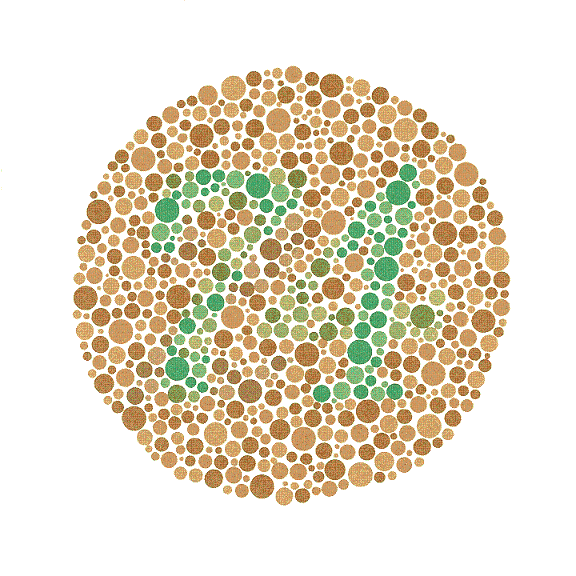
2.  Though it’s rare in females, I’m color-blind.  Well, color “weak” as the eye doctor says every time I fail one of those gol’ damn color  tests.

3.  Although I love animals (I am, after all, a monkey), I am not a pet person. At all. But if I had to align myself with either the infamous Dog People or Cat People in a finger-snapping gang face-off of “West Side Story” proportions, I would probably go Cat.

4.  While not advanced and hardly ever getting the chance anymore, I love playing the piano.

5.  The only physical features that I’m genuinely insecure about are my feet.

6.  I suspect that I have an old soul, but cannot determine its age (though, considering my bunions and the flannel granny cap I wear in bed on winter nights—very much to my husband’s chagrin—I estimate it’s at least 80).

7.  My mind is a reservoir of meaningless pop cultural free-association-of-thought.  For example, on command, I can sing/hum theme songs to old TV shows (with a concentration in ’80s sitcoms). My college roommates discovered this ability in our dorm cafeteria—nothing stumped me, but after something like 2 hours I stopped in frustration that I could only recall ONE of the themes for “Lost in Space” (the later color episodes had a different song than the earlier B&W seasons, you see, but I’m pleased to announce that I eventually did remember the other one and will sing it at your wedding if you book me far enough in advance).

Though not all necessarily “newly discovered,” I will now bestow the honors to 10 of my consistent blogger friends (I’ll split the 2 awards 50/50):

Receiving the Spotlight Award:

The Spotlight Award

1. To extend my thanks further, Here Be Dragons.  This blog is a constant source of empathy and inspiration for me as a writer.

2.  Nicki Elson’s Not-So-Deep Thoughts.  A newly-published author’s witty musings on writing and the 1980s—as her little sister, I couldn’t be prouder!

3. Real Bloggers United.  A diverse new collaboration of bloggers to which I try to contribute on a monthly basis and encourage you all to do the same!

4.  Courage 2 Create.  An insightful writer embodying refreshing humility and kindness.

5.  Aphorism of the Day.  Though he humbly goes by “nothingprofound,” his bite-sized pearls of wisdom give a busy life pause for meaningful thought.

Receiving the You’re Going Places Award:

You're Going Places Award

6. In keeping with the spirit of #1, Milk Fever.  Lisa is a rising newly-published author, and her posts crack me up.

7.  Though she already has heaps of ’em, there’s a reason:  Bowl of Oranges.  Our gal Lua never fails to share spot-on reflections related to the journey of a writer.

8.  Write in Berlin.  I *heart* this gal’s wit and sharp perspectives as a writer and Berliner.  Her advertising eye always makes for an engaging interplay of images and text.

9.  In Media Res.  Filled with humor and honesty, Milo is a lesson in imagination and perseverance in publication.

10.  Lethal Inheritance.  A richly informative guide on writing and the quest for publication by YA fantasy lit author, Tahlia.

*phew*  I’m pooped (in the figurative sense, not the literal with regard to my nasty monkey habits).  I’m off for the evening and hoping to catch up on all of your blogs this weekend, as well as those of newer commenters who I’m very pleased to meet and looking forward to following as well!


On the Borderline

Oh goodie, this is a fun one—a game of sorts for those days when you fear the tap to your creativity has run dry and you just can’t write.  Well, you can.  Given some direction—rules, if you will—you might be surprised when you spring a leak 🙂

The Prompt:

Page 41 of Room to Write asks us to choose one of the following words:  fence, road, boil, or fall.  Then:

1. Write the first words that come to mind when you think of your chosen words.  Write them in a list form until you hit the bottom of the page (or your computer screen…I decided to do 20).

2.  Keeping the list in the exact same order, develop a story in which every line uses one of these words.

Response:

He rode the fence on the issue.

Sure, he realized the importance of establishing boundaries,

but was this something to fall under such restriction?

He was already on the border of sanity as it was.

One thing he was never good about was choices,

options that left him speculating which path to take and leaping to cynical conclusions as to what menaced him ahead on each.

In this way, even the gift of choice wound barbed wire round his psyche

and threatened to strangle his pride with the chain-links of fear he entangled himself within.

He never was a man of conviction, willingly crossing picket lines to not rock the boat with authority

and practically tying their strings onto himself as if he were some wooden puppet,

his thoughts and actions the property of someone else, always.

Facing the crossroads that he was now, he tried to envision vast farmland

dotted with livestock and caressed by the open breezes.

In this vision was also a garden; yes, there must be a garden in the back,

serving as the division of pleasure and labor,

where his legal troubles could be checked at the gate and all he would know of the world was a blooming fortress.

He then frowned at the way even his fancies imposed a natural barrier around him,

and wondered if he wouldn’t constantly need something to hold him back—balancing on the precipice of order and chaos as he was—

yes, something that would keep him penned in for his own protection and the safety of the world below.

He struck a match against the brick ledge, the final demarcation he would draw.

Reflection:

Today is definitely one of my days of feeling groggy and uncreative—there’s so much to take care of on all levels of my life, so my preoccupation with it all is almost paralyzing me into doing none of it.  In light of these kinds of days, I really appreciate an activity like this that confines me within a short set of rules; for as much as I think I’m a creative spirit, I’ve always functioned well within parameters.  Maybe that’s why the word “fence” is the one that leapt out at me 🙂

Anyways, if you ever find  yourself in a writing funk, I can promise you this is a good way to shake up your stagnant creative juices; there’s no pressure to how this sort  of piece will turn out, just that you follow the rules and keep on to the end.  Maybe it’ll go straight to the rubbish bin, maybe you’ll actually pull something from it to recycle in another work.  Who knows, but this took me less than 10 minutes, so surely you can afford that little bit of time to see what results.  It also has potential as a good lesson in working with motifs/extended metaphors in following through on a theme.

So, obviously I use these writing prompts to get me going, but I’m curious about YOU.  What is it that gets your brain-blood flowing and inspired to write again during periods of creative dormancy?


Here’s Mud in Yer Eye!

My first Nanoism is out:  #194


Same Difference

The Prompt:

Page 39 of Room to Write asks us to draw at least 25 comparisons between 2 different things:  something that’s around you right now, and something else that’s either an object, person, or concept.

I’m going to compare the old Victorian church outside my window to marriage 😉

Response:

1.  Soulful, can inspire

2.  Houses both joy and grief

3.  Immense, sometimes imposing

4.  Intricately constructed; always something new to see from a different angle

5.  What appears outside is not always indicative of/relevant to what’s occurring inside

6.  Wears with time

7.  Built one brick at a time

8.  Requires faith and commitment

9.  Can be alive with song and community

10. Is empty when neglected, hollow and echoey

11. Fundamentally the same structure throughout time, yet must adapt the way it operates to change

12.  Needs to be scheduled into a busy life

13.  The lushness surrounding it periodically gets chopped away, but does grow back, and more lushly for it

14.  Is a vessel of new life, on varying levels

15.  You get out of it what you put into it

16.  Can house hypocrisy

17.  Can’t please everyone all of the time

18.  Needs constant maintenance

19.  Provides sanctuary

20.  Provides education

21.  Requires attentiveness—not just hearing, but listening

22.  Requires reciprocal communication

23.  Requires an open heart and mind

24.  Cannot operate without thankless hard work

25.  Comes around collecting, making you pay now and then

Reflection:

These were the first 25 things to come to mind, and I’m sure that some of them are redundant with each other—I found it getting really hard by around 18 or so!  A very fun and brain-flexing activity, though, when trying to assess all that is similar between things otherwise so dissimilar to one another.  Writing involves an abundance of comparisons, after all, as such devices as metaphor and simile help us communicate more vividly and stylistically, drawing parallels within the universe to illustrate the connectedness of all things.


The Kitchen Culprits

"I suspect: Colonel Mustard, in the Kitchen, with the Candlestick."

The Prompt:

On page 38 of Room to Write, Bonni Goldberg describes the kitchen as a “symbolic place” that is “well stocked with associations, memories, and metaphors.  Today, then, we are to write about our kitchens as though we are detectives on the scene, conducting a forensic analysis of sorts as we use visual clues to deduce what may have happened there and how the kitchen reflects who we are.

Response:

With trepidation, I approach the kitchen.  Squinting as I scan the grey and black-splotched stone of the countertops, I pan my head to the kitchen island.  I crouch like a jungle cat to bring my eyes level with its flat surface and frown at the otherwise camouflaged crumbs to be spied at this angle; I straighten and peer over the infected area more closely, pressing a fingertip into the crusty debris and raising it to my tongue:  digestive biscuit…dark chocolate…Marks & Spencer.  And do I detect a hint of sesame, poppy, and pumpkin seed cracker?  Hmm…before I can analyze further, my attention is usurped by a darkened stain a mere inches away.  Blood!  No, it’s not red.  Urine!  Ewwww, no, we may leave crumbs, but we’re not that uncivilized (at least I’m not).  Tea!  Yes.  Dripped when pouring yerba mate from my iron Japanese tea pot.  Phew.  Aside from that, a benign burgundy pasta bowl rests on its wrought iron stand, bearing oranges, apples, and bananas (green-turned-yellow ones, only…the second they start to spot and infuse the room with that banana smell, they’re outta here!), standing squatly beside the coin jar and miscellaneous utility bills.

I redirect my focus, then, on the longer, L-shaped countertop comprising the kitchen corner.  A food-stained cookbook (used at long last!  Hurrah, newly discovered inner Domestic Goddess!) reclines on its wrought iron easel next to the paper towels, obscured only by the blue Brita-filter water pitcher that hangs here due to no space in the wee London-sized fridge as well as my aversion to drinking cold water because it hurts my teeth and throat.  Adding to the clutter on this side of the sink are a couple crystal wine goblets with little puddles of deep crimson collected at the bottom.  The sink is suspiciously empty…yet the anal-retentive way in which the hand soap, lotion, washing-up liquid, and sponge are aligned behind it indicates that exposed dirty dishes are not an option in this space.  Turning my head further right, I see a retro-style chrome toaster tucked into the corner, chillin’ with its buddies the french press, tea pot, and all the tall cooking/serving utensils standing to attention atop tiny silver stones inside a clear vase.  Which brings us to the stove…hmm…more crumbs and stains, and a red tea kettle splattered with grease.  This doesn’t happen on my watch; the husband clearly was the last to cook.  Salt, pepper, knife block, and corkscrew are still present and accounted for on the stove’s other side.

But wait a minute.  Something is amiss.  I turn round in circles and rove my line of sight all about the wooden cabinetry that surrounds me.  Where are all the major appliances?!  Thief!  Whodunit?!  Inhaling and exhaling rapidly, my heart thumping against my breastbone, I slowly sink to a squat as the scene starts to flicker like a film reel, and the words Crouching Tenant, Hidden Dishwasher splay across the silver screen.  I extend my hand toward the sleek metal handle protruding horizontally from one of the cabinet doors; held in my clammy grip, it yields with creaking resistance as I draw it down like a drawbridge.  The dishwasher!  A musty, swampy smell wafts out as I pull out the lower drawer:  dishes are segregated into different quadrants by dish, small plate, large plate, and miscellaneous.  It becomes evident I was the last to load the washer, as they would otherwise be arranged haphazardly in such a way that only a third of the dishes would be able to fit, indeed if they made it into here from the sink or countertop at all…I shudder at the thought and return my gaze to the efficient logic that does, thank goodness, reside in front of me, then close the door.

I stand with fists clenched, resolved to find the rest.  In a flurry, I throw open all the cabinet doors to reveal what lays behind, and it’s as though the kitchen is a life-size Advent calendar when the hidden goodies are revealed:  a fridge, a freezer, a washer-dryer—you heard me.  Remember, it’s London.  Why not do laundry in the kitchen?  Why not risk perishing a painful death in flames when the water from the washing cycle drains out and is automatically replaced with searing heat?  Just as I think it, a vibration unbeknownst to me earlier begins to thrum with more aggression, shaking the tile at my feet.  I look to the washer-dryer and notice a spin cycle in play, remembering that what the spouse lacks in dishwasher-loading-strategy (will be commencing his virtual training soon via the Tetris game) is readily compensated for by his penchant for doing laundry.  I become more cognizant than I’d like to be of all the untoned bits hanging off my body as they shake along with the machine.  The humming rises in volume as my breasts and biceps begin to blur, and I dive to the carpeting in the adjoining living room with hands clasping my head as the drum propels our terrified clothing about like a jet engine about to send our flat airborne.

A minute later, all is calm.  Quiet.  I crack an eye open to scan the perimeter before making another move.  Turning myself about, I army-crawl back to the washer and wait for the click to signal I can open the door.  As I do so, hot steam rudely breathes in my face, and my husband’s boxer shorts look to me hopefully as they cling to the edges of the drum and leave my panties to fend for themselves when they peel off and fall to the bottom.  With a pissy sigh, I climb to my knees, then feet.  My inner Domestic Goddess has long since fallen and rolled down Mount Olympus, so she mutters under her breath as she trudges out of the kitchen to retrieve the drying racks and thinks about tending to that damn dirty countertop.  At any rate, case closed.

Reflection:

If anything, this exercise has reminded me I need to clean my kitchen 🙂

I think it would have been interesting to have tried this activity a couple years ago when I was still single and living alone to compare/contrast with how I approached it here.  It seems clear that many of my present kitchen’s connotations relate to my adjustment to cohabitation and those little domestic idiosyncrasies that occur between couples.  The dynamic of the setting is also influenced by virtue of being in a different city and country; there’s a cultural impact on physical features and layout that differs from what I had in the States.

Overall, I enjoy this sort of “investigation” based on visual clues and have used it overtly already in my current manuscript—there’s a scene I included for comic relief in which my protagonist wakes up after a night of heavy wine-drinking and follows the trail of evidence she herself left behind to figure out what she did before passing out.  Based on a true story, of course… 🙂


M.I.A. (Monkey in Absence)

Just dropping the MIA FYI…I’m presently back in the U.S. of A. visiting with dear family and friends to celebrate birthdays, meet newborn babies, attend weddings, sort out my condo’s new tenancy, and all that good schtuff that always makes these visits brim over with joyful obligation.

As a result, the Monkey screeches (i.e., my blog-posting and reciprocal blog-reading/commenting) may be quieted for the bulk of the week—not assisted by the fact that the Internet speed of my parents’ computer is presumably generated by two hamsters running in a wheel.  If I want to spare them the expense of a shattered window and broken PC (when thrown out of said window), it is best that this dial-up connection and I keep our distance from each other.  “It’s not you, AOL, it’s me.  Well…maybe it is you, but I hope we can still be friends.”

I shall miss you, fine writers of the blogosphere!  But I look forward to reuniting on my return from holiday and catching up on your pearls of wisdom 🙂