Category Archives: Novel

The Levity of Brevity

[Time to kick it old school…yeeeah boyee!] Just found out my first attempt at writing a Nanoism is scheduled to publish in July.  A Nanoism is microfiction based on Twitter-length stories—that’s right, up to 140 characters.  Microfiction is a trend relatively new to me, but one that writer Milo James Fowler (In Media Res blog), utilizes as a means of keeping his creativity flowing during and between writing stories—one of his submissions (75-words only) was recently published at Paragraph Planet.  And now I’m appreciating it as a tool for practicing how to pare down.

I can dash off a 10-20 page essay with relative ease, but it was back in grad school when I was asked to write only 2-3 pages comparing/contrasting 3 works of fiction that I suffered my first true writer’s block.  The notes I’d taken in preparation weren’t even that succinct, so just when I felt my extensive planning would make the writing a cinch, trying to pull it all together within that parameter had me seriously contemplating just dropping out of a $1,500 class (non-refundable by that time, of course. Ouch.).

“Brevity is a great charm of eloquence.”  – Cicero

Conciseness is an art.  Truly.  Go figure that it was probably my first career in business that ultimately saw me through that essay—though it sucked the creative soul out of writing, it taught me a thing or two about keeping it brief and direct, and…well…any of you who read my stuff here will see that that particular skill has by now gone to the wayside…gah, I recently sent off a guest post weighing in at just under 2,000 words (scheduled for Real Bloggers United on July 17th), which has me contemplating the value of getting to the point faster.

“Let thy speech be short, comprehending much in few words.”
–  Bible, Ecclesiasticus

“The most valuable of all talents is that of never using two words when one will do.”
– Thomas Jefferson

Admittedly, one of the factors that initially delayed me in writing my manuscript’s ending was word count.  At 90,000, I’d estimated I was about three-quarters through when a concerned author told me that’s the length my entire work should be as a newbie.  So thinking about both the tremendous hacking I was going to have to do in addition to still writing said ending sent me into panic, which I’ve only just recently released.  Basically, I’ve adopted the mindset that I need to just let myself carry the story out freely and deal with the editing afterwards, which has helped, though the inevitable still hovers over my head like the guillotine blade I’ll need to use on my text, the executioner of my own words 😦

This all being said, what I have trimmed out so far has clearly strengthened the story, just as my sage advisers always said it would, so I do trust in that.  And as I look at bits I’ve scribbled along the way and always assumed would have a place in my book, I understand now that if they didn’t meld in naturally by this point, to attempt to include them now would be about as thrilling to me as gouging a funnel down a duck’s neck to make myself foie gras.  I think instead I’ll measure out those grains for a less fatty entree or side dish in future meals…

So.  I’ve lapsed on updating this blog until today because I have indeed been cranking on my ending as well as going back to the beginning to ensure there’s balance—and, in doing so, I can see how my writing has evolved over the course of this long project…how my sentences were much longer and more complex, my descriptions more frequent…it seems I’ve since learned a wee bit more about the art of condensing, so may need to retroactively apply that to those opening chapters so the overall work can shed that fat and really flex its muscles.

“It is with words as with sunbeams. The more they are condensed, the deeper they burn.”  – Robert Southey

Huh.  I thought I’d be brief with this post.  Oh, the irony.

Fraying at the End

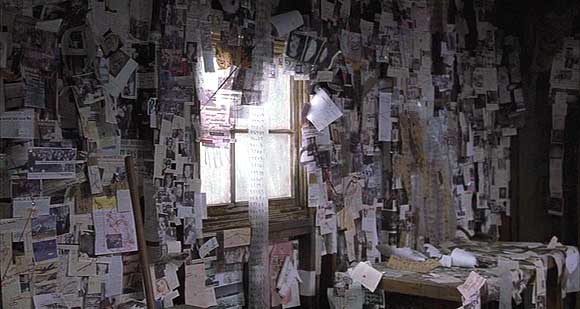
Ah, yes, that Family Guy clip makes me laugh and want to cry at the same time…little Stewie may as well be prodding me over how it’s been over a year and a half since I started my manuscript.  And that’s when I actually started writing it; the idea had come to me a couple years before that, in the form of random scribblings on the pages of my journal or Starbucks napkins and envelopes…and the more I read about other writers’ processes, the more universal that mode of transcription appears to be—I see us all just dwelling in these rooms with Post-Its and index cards and newspaper scraps thumb-tacked to the wall and strung together with yarn, the map room in the midst of a warzone where our batty, “Beautiful Minds” strategize…

That digression aside, I’m seriously having issues pulling it all together right now.  I haven’t even been able to follow the advice I shared in “The Beginning of the End,” back in March…yeesh.  And why, when the journey has already been so long and is so close to its end destination?

Because there is very good reason for that initial voyage to require some time.  Unlike what many tend to perceive, writing is a lot of work, not merely something one just dashes off in a burst of inspiration as one’s Muse sings softly in one ear as Her sister strokes a harp into the other, with the brooding writer sequestered in a candlelit garret, feverishly scribbling with ink-stained fingers—films like Becoming Jane or Shakespeare in Love would have you believe even a masterpiece can be penned overnight.  Not that I’m remotely considering myself in the ranks of Jane Austen or William Shakespeare simply by virtue of taking a stab at this writing thang, but I can’t keep psyching myself out with how much I’m not them either, or I’ll utterly paralyze myself.

You know what helps with that, though?  Empathy.  Lua Fowles, for instance, shares her experience grappling with “The Fear of the First Draft” in her Like a Bowl of Oranges blog.  And if it isn’t the fear that can slow you down, it’s the procrastination—Eva, author of the Write in Berlin blog, shares a few surefire tips on how to do so in “The Art of Avoiding to Write.”  Even when you do find your groove, there is a process to it, a method underlying all that madness that ensures the narrative is structured and worded effectively—I love author Wendy Robertson’s take on her own process in “The Joys of Cranking the Engine of a Novel” in her A Life Twice Tasted Blog (she’s one of the gracious and encouraging facilitators of the Room to Write workshop I attended in Spring).

And even when a writer does finish that first draft, the pilgrimage is far from over.  Never mind the elusive quest of getting published, the revision alone is going to be another prolonging factor.  Some revise as they go along, others leave the bulk of it for the end; regardless, it’s yet more process to undertake, and that requires some time, people.  Again, empathy to the rescue!—see Lua once more in “Editing 1 (oh no) 1” and Agatha’s appropriate analogy in “Digging in the Dirt” from her Here Be Dragons blog.  I personally am one of those who revises along the way, so my constant backtracking is another reason for delay.

Whatever excuses I can arguably throw out there to defend why it’s taking me so long to finish writing this book, the brutally honest truth about it is that the story has gone quiet in my head.  I’ve sat, and I’ve written.  But whereas before I was satisfied and moved forward, now I only go back and delete and rewrite and delete and think and re-envision and write and delete…never seeming to get it right.  What I write these days feels artificially imposed on my characters, you see, because I don’t seem to see them or hear them anymore.  No kidding, I almost feel abandoned…and melancholy, as I didn’t get the proper chance to say goodbye.  So what sort of cerebral seance could I conduct to summon their spirits back to my consciousness?  How can I get them back?

Maybe it’s because the story really is ready to end, and this is its way of telling me.

Or, egad!  Maybe the story already ended within its alternative universe, and I failed to write it down in time!

Maybe it’s only because I’ve been tending to it lately in fits and starts and need to more fully immerse myself back into its world.

Maybe it’s because after stringing those varying colors of yarn all around the walls, I now sincerely have no idea where to take those loose ends, which to tie up neatly in bows and which to continue on out the window and into the sunset on their own happy trails unbenownst to any of us.  Seriously, maybe I’ve over-thought myself into a rut and simply don’t know how to end it.

Maybe the Muses have stopped singing for me.

Or maybe, just maybe, I’m not ready for it to end…

?????????????????????????????????????????????????????????????????????????????????????

“I’m a novelist; I’m never going to finish the book.”  – James, Sliding Doors


If The Shoe Fits

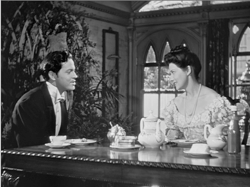
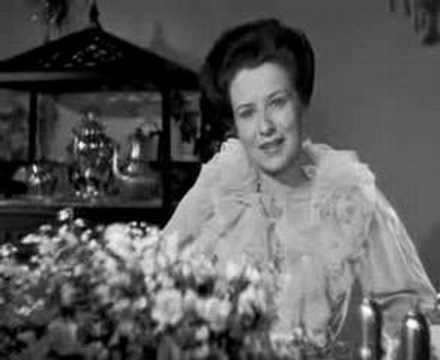
Ever see the movie Citizen Kane?  Well, there’s a montage relatively early in the film following the marriage of Charles Foster Kane.  The photos above do not capture the complete sequence (please click on any photo or here to view the full scene), but what we see from left to right is the progression of Charles and Emily’s marriage.  There are a few cinematic devices at work to show us in less than 3 minutes’ time that this couple gradually grows apart from one another emotionally:  mise-en-scene (setting/props), music, dialogueacting (body language, tone, proximity), and costume.  To focus on this last element in particular, we see the neckline of Emily’s garments climb ever higher as the cut and fabric of her gowns likewise shed their romance to become increasingly structured and rigid.  In this way, what a person wears can speak volumes for who they are and how they feel at a given moment in time.

The Prompt:

Page 35 of Room to Write asks us to write about clothes today.  We can “take a character shopping,” describe clothing we like, dislike, or has otherwise made a strong impression on us, or simply free-write beginning with the words “clothes” or “clothing.”

Response:

Oh goodie.  I’m going to take my character “Margaret” shopping, or at least raid her closet to determine what it says about her.

During Part I of her tale, I would take her shopping at a vintage shop for accessories as well as a contemporary store selling vintage-inspired clothing such as Anthropologie.  After that, it’s shoe-shopping!

– In the first chapters, she’s seen wearing “eggshell white kid leather driving gloves,” a “cameo choker” and “kitschy rhinestone cocktail ring.”

– In the later half of Part I when she has temporarily moved, thus only packs what she would need for a few months:

“The separation from her stored goods had been achingly painful—her weakest moment being when she cradled a pair of claret suede leather stilletos before lovingly packing them away with assurances they would be okay, that Momma would be back, as though tucking children in bed and promising no monsters would prey on them in the night.”

– And though impractical, you can still at this point hear her “high heels echoing off the walls as they clacked on the wood and cobbles.”

Towards the end of Part I, however, we already see how a shift in Margaret’s lifestyle results in a shift of her wardrobe as well.  At this point, I’d probably still be taking her to vintage shops, but, instead of jewelry, it would be for clothing more in the vein of Urban Outfitters.  These shopping excursions would be infrequent, though…probably just the one time.

– Getting pensive in the shower one morning, she finds herself wondering:

“What if she fell out of the habit of nine-to-five, of suiting up in business casual and charging at the world in proactive high-heeled fury?  She had been gravitating quite naturally to the irregularity of her schedule and informality of denim and limp old cardigans thrown over graphic tees, of every-other-day unwashed hair thrown into a man’s tweed cap.”

– Though she doesn’t wear jewelry anymore, she still accessorizes her t-shirts with linen scarves (that’s an effort, anyway), yet after she compliments her friend’s appearance and doesn’t receive one in return, she “shuffle[s] one now glaringly plain denim leg over the other.”

– We frequently see her in “her cardigan—that worn, pilled one of charcoal grey that had been her uniform for some time.”

– When our dear protagonist eventually seeks counseling for an issue you’ll better understand when you read the book ;), we do see a brief return to her previous style at the first two sessions:

“Margaret sat up and, knocking over one of her classic black pumps (she’d made a decided effort to dress up to par for this professional appointment, and had only removed the shoes to protect the couch cushions), reached for her handbag.”

“Margaret self-consciously fingered the vertical ruffles and cloth-covered buttons that extended to just below her chin.  Her cap sleeves were trimmed in a dainty band of lace.”

In doing this, she admits to her psychologist:  “It’s like I’m acting the role of myself…I’d forgotten, though, how much faking enthusiasm can actually generate the real thing.  It’s like if I make myself smile long enough, I can convince myself I’m happy.”

– By the third session, however:

“Margaret whimpered as she picked at the pills on her grey cardigan.”

“She tapped her Converse All-Stars around with her striped cotton toes.”

Aside from that, Margaret really only window-browses now when we go shopping.  She’s got her comfortable, casual staples and has no qualms repeating their wear often.  This isn’t to say, though, that she doesn’t still know how to turn up the Attractive Factor in her new lower-maintenance way:

– “Before he had left, however, she did not catch directly at his sleeve just as he opened the unit door so much as produce an identical effect by the way she stood at her bedroom doorway in just an over-sized t-shirt.”

Reflection:

Now that I’m almost finished with Margaret’s story line, I can look back and reflect that I’ve certainly been making deliberate clothing choices for her to mirror her life stages and emotional states.  However, I don’t describe much more than what I have above, as I personally feel that too much physical description of a character makes me as a reader too conscious of the writer behind the story, and it inhibits my own imagination.  I want my readers to be able to flesh out characters with their own brushtrokes, guided only by occasional suggestion. Hopefully, the descriptions that are there seem appropriate and are not too cliche for what they represent.

What do you think about characterizing through clothing?  What does it reveal or conceal?  Are appearances always as they “seam”? (pun fully intended—you ought to know how corny I am by now)


Kiss-and-Tell


The Prompt:

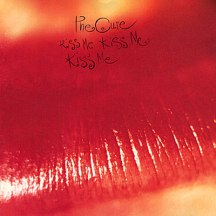
* blush * Today Room to Write, that saucy minx, is asking us to write about kissing (p.34).  As Bonni Goldberg says, “Besides being fun, it is an especially good practice for writing scenes between two people.”

All right then, I suppose I can share a snippet from a scene that I previously wrote while under the influence of wine (when I feel my most floozy) and the very next day yanked from the story.  It really wasn’t the suitable direction for the characters, but I’ve kept it within reach under the file name, “The Gratuitous.”  At any rate, this picks up from when a couple of friends have fallen asleep on the sofa together.

Response:

A couple stirrings later, she felt within a tighter squeeze and then a light brushing of lips atop her hair.  She thought she’d been mistaken, but no; the puckering sound of a fully carried-out kiss had sounded against her scalp, then her forehead, and was now moving in slow succession down the bridge of her nose until—

Their lips met.  Both of their eyes closed.  Soft at first, then hardening and spreading with each contact, more slippery each time.  Their tongues met, and together they began to swell and ebb with one another, pressing and pulling away only to heave again toward each other once more as their tongues now spiraled and lunged against their mutual provocation.

Reflection:

Oh, there was more involved, but I’ve restricted it to only the kissing part.  I have no desire (“desire” being the operative word) to become the next Danielle Steel, though kudos to her for, you know, targeting a market well.  Granted, I cut the scene because I felt it wasn’t right for these two characters to hook up, but I do tend to be prudish on stuff like this and wonder why.  I have no qualms thinking it or feeling it or even writing it down, but when it comes to my finished product, I censor.  Is it because there is so much of the gratuitous out there when, by definition, it’s unnecessary in furthering plot or character?  This point makes me recall the film, The Player, with Tim Robbins, who plays the character Griffin Mill:

Griffin Mill:  It lacked certain elements that we need to market a film successfully.
June:  What elements?
Griffin Mill:  Suspense, laughter, violence. Hope, heart, nudity, sex. Happy endings…
June:  What about reality?

The film itself includes the formulaic “hope, heart, nudity, sex” elements, just not where you’d conventionally expect them to be, thereby turning the formula on its head as a means of satire.

That being said, there must be a reason why the formula does exist.  Human passions prevail for the masses.  And what about the story line that has a real message to put forth that necessarily requires a bit of physical relations?  My sister, who writes under the pen name Nicki Elson, addresses this in her blog post, “Should I Have Faded to Black?” with regard to her recently published debut novel, Three Daves.  Set during the 1980’s on a central Illinois college campus, its protagonist (Jennifer) is one of the last American virgins  who seeks compromise between coming of age sexually while still holding out for the elusive “one.”  Jen’s solution to this moral predicament is both a practical and hilarious journey for her as she navigates through three boyfriends who share the same name but entirely different personalities—namely, David, Dave, and Big “D.”  To tell a tale like this, it is appropriate for the details to be explicit:

“She tentatively licked at his lips with the tip of her tongue to try and coax him in.  He teasingly flicked his tongue at hers but refused to take the plunge.  Jen whimpered in frustration, and he ended his torture, finally pushing his way into her mouth.  Jen sucked him in gratefully and clutched his head to hers to make sure he didn’t get away.” (p.67)

Whatever other sexual techniques we might learn during such scenes, it’s in the simple kiss when Jennifer genuinely loses herself in emotion.  The kiss, though only “first base,” can truly be the most sensual, intimate, and affectionate act.  And let’s not forget that kisses can also merely be pecks on the cheek or an innocent idea blown off the palm of a hand.

I’ve spun the bottle and now it’s pointing at YOU.  How about parting your lips and saying what you think on this topic?  What are your thoughts on kissing as an expressive act between people and its role in literature?  Have you ever read/written an effective portrayal of two characters kissing that you’d care to share?


Marveling over the Macabre

The Monkey is feeling the author-love today…

…first of all, through the recent shout-outs on newly-published novelist Josh Hanagarne’s The World’s Strongest Librarian blog and published authors Wendy Robertson, Avril Joy, and Gillian Wales’s Room to Write website (they’re hosting another Durham conference in November!).

…second of all, as I sit cradling my copies of Her Fearful Symmetry and Falling Angels freshly signed by their respective authors, Audrey Niffenegger and Tracy Chevalier!!  Imagine my delight during a dull workday afternoon when I received the phone call that my wait-listed arse had scored a last-minute opening for last night’s lecture.  Located in the 19th-century chapel of London’s Highgate Cemetery, the event began with a cocktail-half-hour of wine and milling about the gateway to Highgate’s West Cemetery (where poet Christina Rossetti and her brother, Pre-Raphaelite painter Dante Gabriel Rossetti are buried, among other notable deceased–Karl Marx is buried in the East counterpart).  Filing into the intimate confines of the chapel, we were treated to readings from each author’s novel as well as explanations as to how they came to chance upon Highgate Cemetery and become inspired to build their literary projects around its historic, overgrown, and elegantly morose splendor.

Both American women had merely visited as tourists that first time, but the impression upon both was immediate, and they subsequently became volunteer tour guides as a means of interacting with this enchanting garden of flora and headstones as well as unearthing more of its history than any texts could reveal (Niffenegger continues to conduct tours here, and Chevalier lives just down the hill from the site).  Following their brief “lectures” (which were structured as interviews between the two authors themselves), the floor was opened to a Q&A session with the audience.

Chevalier had originally written a manuscript divided between modern-day and a period backdrop, yet ultimately felt the graveyard and its history lent itself best to historical fiction, so her novel, Falling Angels, takes place during Edwardian England.  She was most interested in how this once pristinely trimmed and pruned site came to fall into such decay and neglect following the Victorian Era, yet wanted to capture the local culture prior to the changes wrought by World War I, when many had lost their faith in God.  The tale depicts two feuding families that ironically share neighboring burial plots in Highgate Cemetery.

Niffenegger had likewise begun her novel along a different path than the one ultimately taken, centering on a different character and a different graveyard (Chicago’s Graceland Cemetery—woo-hoo to my sweet home, Chicago!).  She had realized that if a cemetery was to play such an integral role in her book, she would need to ensure that it was one of the ultimate ones.  Just like Chevalier had visited the cemetery several years before actually writing about it, Niffenegger cited memories of a 1990s visit to Highgate Cemetery during which she spent half the time looking at it through a camera lens and fiddling with said contraption (her words to the wise are to visit the cemetery without your camera on your first visit, which I gratefully did just two weeks ago…I wrestle with the ethics of graveyard photo-opping anyway).  She, however, essentially said her mind does not wrap around historical fiction naturally, so she maintained her novel, Her Fearful Symmetry, during the present day and incorporates an American element, given that her two main characters are American twins who come to inherit their aunt’s London flat that overlooks the cemetery.

I was captivated by everything each woman said in its entirety, yet my pea-brain is unable to reproduce an accurate transcript of everything wonderful and insightful about it.  A couple other comments that do linger in my mind, though, were their reflections on after a novel is written.  Chevalier said that she continues to “collect” ideas from the places that inspire her, whereas Audrey felt that her characters and their story lines eventually go “quiet” in her mind, and thus she moves on.

I wonder which will ultimately happen to me…Ironically, I found great inspiration to write at another Victorian cemetery just a block from my flat and which I’ve been visiting ever since the day after I moved here two years ago, so I had more affinity for this particular lecture than merely the fact that I did love reading the authors’ other books, The Time Traveler’s Wife and Girl With a Pearl Earring.  And, like Niffenegger, I do sense my protagonist’s voice and immediacy fading from my consciousness lately, which signals to me that it’s time to bring her story to rest.  May it requiescat in pace for her, then, yet stay alive in my imagination and those who will humor me and read it some day 🙂

*** For more coverage of this event, please do also see author/illustrator Sarah McIntyre‘s blog post, audrey niffenegger & tracy chevalier at highgate cemetery” —this is a comprehensive trove of observations, sketches, photos, and video! ***


Are YOU Talkin’ to ME?

We all have them.  Those heated exchanges (or ones that are on their way to becoming heated) when we bite our tongues rather than spew what we’d really like to say.  Well, I must say I’ve gotten much, much better at speaking my mind over the last decade, so it’s hard to think of any recent times I’ve muzzled myself (quite unfortunate for my husband)…but still, there are times when we’ll do it for whatever reason:  to be tactful, to spare feelings, or maybe just to save time until we can regroup and come back with a better debate strategy.

The Prompt:

Page 24 of Room to Write asks us to think back to an argument when we’ve held back.  Let it all out now, considering what you censored or reworded at the time.  Develop it as a dialogue in which you likewise speculate how the other person may have responded.

Response:

I’m going to cheat on this one.  I’ve been trying to dig up some great conflict from my youth, but it isn’t coming to me right now.  The first hot topic that does come to mind, however, is one that I addressed three years ago by writing a letter that I knew I would never end up sending.  The file name I’d saved it under was, “If I Ever Have the Nerve to Send it,” so I could at least have it at the ready if need be.  The act of writing it out was in itself therapeutic and, as of this year, perhaps financially rewarding.  I’m still waiting to hear the latest update, but as of March I signed a release to have the letter included in an anthology entitled Best of Unsent Letters (I’m doubting the intended recipients would discover it under my pen name). We’ll see.  Maybe publication is delayed.  Maybe they forgot about me.  At any rate, until I know, I can’t share it here, but if it gets posted on their corresponding blog, I’ll retroactively add the link so you can see what spiteful things I have to say when someone crosses my family. “NOBODY puts Baby in the corner!

To make up for lack of creativity this fine, lazy Sunday, I’ll throw this out there.  When I do have a bone to pick but not the commensurate nerve to say it to the applicable person, I have a habit of carrying out the exchange in the mirror.  Of course, this could mean that I’m senile.  Regardless, I ended up incorporating this into one of my character’s list of quirks to rationalize why she (me) does it. Here is the draft excerpt of such a scene:

She really did spend inordinate amounts of time standing [at the bathroom mirror].  Not cleaning it, Heaven forbid, nor was it time reserved for inspecting pores or removing blackheads from her small, upturned nose; most of the time, she spoke in whispers.  Whenever her brain felt the size of a walnut or, conversely, enlarged to the point of bursting with thought, she just vomited out the swirling words and conversations verbally, wishing she [could] deposit them in a physical, external reservoir where they could be left behind and visited when desired, rather than confronted involuntarily and often when unprepared.

Eyes locked on her own, the visual reminded that her identity did lie in something more than just her own awareness.  Her presence meant something.  Her absence meant something.  She was here, in your face, and she mattered.

And so, she resumed—partially whispered, partially mouthed—the conversation she’d recently begun in her mind, a monologue finally telling John how she felt about their relationship and threatening him with how much her absence would absolutely matter to him.

“I’d feed you the ‘It’s not you, it’s me,’ line, but it’s not not you, and it surely isn’t just me.  It’s both of us and our mutual inability to ‘get’ each other.”

The figure opposite her served as an acting coach, giving Margaret feedback on her body language as she fine-tuned the script to perform later.  Satisfied after thirty minutes that she’d thoroughly convinced her reflection with her eloquent articulation, she was too exhausted and bored with the effort to even consider repeating the words to John anytime soon.  Such was the way with all the actual face-offs that never actually happened, especially because she’d lose her nerve without her reflected self as guide.

Reflection:

So…for whatever that was worth.  I’ll try to get my mind back in gear next time to churn out something new.  How about you?  What have you left unsaid?


On Imagination

[I see that YouTube has removed this video for whatever reason, so please refer to this post’s comment sections for a transcript of Will Smith’s monologue in the film Six Degrees of Separation.]

It only took me about 15 years to finally view the film Six Degrees of Separation for the first time last night.  What an evening of captivation that made for…you could say it quite captured my imagination.  As far as what “imagination” itself is, the film (an adaptation of John Guare’s stage play of same name) is frank in its perspectives on the concept in the above scene, which gives me pause to reflect on how this can apply to one’s writing.

“The imagination has been so debased that the imagination…being imaginative, rather than being the linchpin of our existence, now stands as a synonym for something outside ourselves.”

To many, “fiction” and “creative writing” may connote creating new, original worlds comprised of new, original creatures that lift us out of our reality.  Admittedly, I often characterize my choice of reading fiction over nonfiction as my “escape” from my everyday.  Yet, to be fair, my disbelief can only be suspended so far—at some point, I need to be able to see something recognizable within the text if I am to relate to it and learn from it and thereby stay engaged with it.

I remember making a pop-up book for a grad school assignment (yes, grad as in graduate school, not grade school!) that asked us to create a visual representation of our “reading life.”  I fashioned my book such that, with every turn of the page, a different symbol would pop up (that’s no easy feat to engineer, by the way…it took ages) that depicted one particular function reading serves in my life.  Among other things, I had an airplane to represent that idea of escape, a telescope for seeing beyond my immediate frame of reference, and a staff of music notes for the musicality or harmony books can provide through their themes or lyrical style.  And yet…

“Why has imagination become a synonym for style?  I believe the imagination is the passport that we create to help take us into the real world.  I believe the imagination is merely another phrase for what is most uniquely us.”

One symbol I also distinctly recall inserting into the pages of my pop-up book was a mirror.  As I explained to my peers during my presentation, reading is a way of holding a mirror in front of myself because it may either convey or conflict with my perspectives, and in that confrontation, there is reflection, be it validating my beliefs or modifying them through the acquisition of new knowledge or ways of thinking.  It tells me something about myself, and I in turn form my interpretations of plot, character, etc. in terms of what I know from my own life experience and attitudes.  And while I’m certainly infusing certain personal meaning into what I write, I do hope that it strikes a chord with other readers’ lives such that they derive their own meaning.

I’ve felt the sting of insecurity before over incorporating aspects that are true to my life in my stories, as though that meant I was being unoriginal—after all, if I am truly creative, shouldn’t it all stem purely out of my imagination?  Consolingly, I have since reached understanding that it’s actually the moment we stop seeing ourselves in our writing that we’ve stopped being imaginative.

This brings to mind something I just read today by Josh Hanagarne (a newly published author) on his World’s Strongest Librarian blog.  With regard to his new novel, The Knot, Josh says:

“I am this book.  This book means everything to me.  It is pure me, […] easily the most personal thing I am able to share with you.”

I think when it’s all said and done, whether we get published or not, we should all be able to feel this way about what we’ve written.  So, in closing, I offer you this line from the film:

“To face ourselves – that’s the hard thing.  The imagination…that’s God’s gift to make the act of self-examination bearable.”

As writers, to what extent are our stories a means of self-examination?  Where do you see yourself in your characters, your truths in their “fictitious” circumstances and dialogue?  Do you find that the writing process is therapeutic in making your analysis of self “bearable”?  Might it do the same for your readers?


Dare to Dream

Page 22 of Room to Write speaks of dreams, as what we recall and record of them can provide a source of material for our creative writing.  Twilight fans may recall that Stephenie Meyer’s entire vampire saga stems from a dream she once had of a vampire falling in love with a mortal girl while laying together in a meadow; in fact, on her website she says, “For what is essentially a transcript of my dream, please see Chapter 13 (‘Confessions’) of the book.”  And yes, I suspect that’s where the sparkling came from, too…maybe she could have edited that part out.

In any case, I have also written a scene shortly after a particular dreaming/waking experience and thought this would be an opportune time to share an except (character names have been substituted):

The sound of traffic outdoors rustled Margaret briefly awake, shattering the meadow of yellow in which she had been reclining before she sank again into REM sleep, tugging her awareness of lying on the sofa back with her into the underworld of dreams.

She could see nothing, for her eyes were closed in sleep even in this realm, but, after an immeasurable length of time, she heard someone enter the room and approach her beside the sofa, hovering over her, looking at her closely.  She could sense other presences, smaller, children it seemed, at least two, also standing there, idle, inspecting.  While they did not touch her, Margaret felt the energy of their presence softly press on her in three areas down the length of her body: her arm, her hip, her thigh.

Her awareness of this became so keen, she began to panic over who may have just let themselves into Ron’s flat, when the door should be locked—it did so automatically upon shutting.  She was terrified to be so vulnerable, laying prostrate in nothing but a bathrobe with not so much as a sharp or heavy object within reach for defense, yet willed her eyes to open in order to stop this if it was in fact a dream, or to confront the invaders if it was not.  Her brain signaled to her eyelids to rise, but a paralysis overwhelmed her body’s senses as if in rigor mortis.  The eerie, monotone childhood chant, “Light as a feather, stiff as a board, light as a feather, stiff as a board,” whispered through her ears as she struggled with her mind to usurp command of her physical self.

Open your eyes, open your eyes, open your eyes.

Her desire was singular, all her power channeled to one narrow focus.

Just move, move.

The effort was tremendous, filled with the futility of one confined with locked-in syndrome, desperate to communicate to any degree again.  Margaret fought the dread that would kill her will and urged herself on.

Move, move.

She became aware of her head, aware of her neck.

Move.

Her arms materialized, if only phantom limbs.  She wanted to lift outside of herself, to reach out and grasp the shoulders pinned to the cushion and shake them fervently.

Her chest swelled.  She felt it; it too was still there.  With a breath, she welled with autonomous energy and shook herself.

The lurch of her torso sent a sharp inhale up her nostrils, and the glow of the morning sun ignited her lids.  With a flutter, they opened.

Margaret found herself steaming in sweat, looking at nothing but the blank ceiling, then the wall with its two gaping windows, then her feet still propped on the cognac leather arm.  Slowly, she boosted herself up and pivoted on the sofa to conventional seated position, facing the television on the wall opposite.  To her right was just the empty kitchen, and she craned her neck to view further out into the hall and entryway.  The unit door was closed.  Rotating her skull to loosen the neck muscles, she stared at the empty space between the couch and the table that she had felt so certain was occupied but an infinitesimal fraction of a minute ago.

And in the event that you’re wondering, yes, I do have the uncanny ability to shake myself awake when I’m in the middle of an unpleasant dream that I want to escape.  I don’t know how I do it—I’m sometimes simultaneously dreaming and aware of the fact that I’m dreaming, and I somehow will myself to wake up.  Anyways, that was the exact dream I had as well, which, if didn’t originally inspire my plot, does indeed coincide well with it.  With that, I bid you adieu for today and will follow up with a post freshly addressing page 22’s writing prompt.  In the meantime, sweet dreams 😉


Digging a Rut into a Wishing Well

Meh.  I’m starting to sink into the funk I babbled about previously in “My Inner Critical Beeyotch.”  The dealio is that I’ve approached the point in my project where I really need to start bringing everything to climax and a concise resolution; the mental obstacle that I’m encountering now is not a writing block, but, rather, a plotting block.  In fact, my problem is the opposite of writer’s block, as ideas and words are flowing really naturally now, but I think what’s working against me is that, as far as the books I like to read, I gravitate to the lengthier novels that I lose myself in for a nice chunk of time, the ones with gradual character and plot development, that steep you into some of the minutiae to help you feel more intimate with the characters, like you’re really accompanying them through a personal journey.  I’ve been consequently following a pace that feels natural and necessary to me, knowing full well the word count still wouldn’t come close to some of those beasts I have on my bookshelf.  Unfortunately, the tidbit of advice that keeps coming to my attention through various sources is that word length for first-time authors should not exceed 90,000-100,000 words.  Um, well…I’m already in that vicinity and feel like I have a ways to go.

Here’s what I’m struggling with:  I started this project as something for me, a creative outlet I’ve been wanting to plug into for years and am only first now seizing the opportunity.  At the outset, I told myself it was first and foremost for me, but if I finished it and was pleased enough, it wouldn’t hurt to try to make something more of it by submitting it to agents in pursuit of that pipe dream of getting published.  Why just let it sit there on the computer, right?  But that said, I don’t want to be overly inhibited by keeping my eye on the publishing prize. I want to create, not sell out, but I also want to be realistic.

Should I just keep writing as I have been to get the ideas out, get the conflicts resolved, knowing full well I’ll have to go back and take an ax to a massive amount of it?  I suppose it’s better to have the clay to mold with, as Bonni Goldberg discusses on page 9 of Room to Write (see “More Messiness From the Membrane“), as I can always take away.  I need to remember my workshop guidance:  “Kill your darlings, kill your darlings, kill your darlings…”

All right, then.  Chill, Monkey, and focus on the next writing prompt.

The Prompt:

Page 21 of Room to Write asks us to record our wishes.  As Goldberg says:

“Wishes are voices of the imagination, taking you out of the realm of reality on a daily basis.  For this reason, in creative writing, it is worth paying attention to them.”

We can write our secret wishes, our past or long-time favorites, or the one that is nudging us this very minute.  I will follow this last one, for obvious reasons.

Response:

Today I wish for clarity of mind…that I can sift and sort and structure my swarming ideas into a manageable plot to continue writing…that I will hold fast to my original goals surrounding theme and mood…and that my instinct will guide me through my pacing and revision.  I wish that the end product will be something I am utterly proud of and content to share with those closest to me, with the added bonus of being something marketable, so that I may also share my story with the world. I wish for the patience, inspiration, and discipline to see me through toward this end in the meantime.

Reflection:

Ah, it’s nice to let that out.  No shame in wishing.  What do YOU wish for?


The Beginning of the End

To conclude my brief series of posts relating back to valuable lessons reinforced by last weekend’s Room to Write writing conference, how fitting will it be to end with endings.

I shall be brief.

Basically, a couple things were emphasized:

First, not all loose ends need to be tied up in a pretty, perfect bow; for the central conflict, yes, but other conclusions might be better left to the reader’s imagination—think Rhett Butler walking out on Scarlett O’Hara.  Do they  eventually get back together?  Your romantic optimism/pessimism will determine that, but Margaret Mitchell didn’t need to in order to effectively give her epic saga adequate closure.

Second, the ending of a story/novel should connect back to everything significant about the beginning.  The successful novels that we reviewed all shared in this aspect—they related back to character, setting, and conflict in creative ways, providing a sense of balance and resolution to our story’s main conflict.

In this way, the beginning and end stand together as “book ends” with all that good stuff in between, and as our climax tops out and falls toward denouement, we should keep that falling action brief—end it with a “flick,” as author Wendy Robertson put it succinctly with a visual flick of her wrist.  And as author Avril Joy stressed to me during some one-to-one consultation time, if I’m rising toward the climax of my novel (which I presently am), I should resolve it in a matter of a few pages or a chapter and not drag the ending out further than that.

I’m going to execute that advice in not dragging the ending to this post out…on that note, cheers, and keep writing!