Tag Archives: writing blog

In the Year 2030

So, folks, this week we’ve found ourselves the victims of an Internet hoax that claimed yesterday, 6 July 2010, was the very day that Marty McFly and Doc flew into the future from 1985 in Back to the Future‘s sequel.  The evidence of this was compelling:  a photograph of the time-traveling DeLorean’s dashboard (above).  Uh, well…see here’s the thing about living in the “futuristic” society that we do today:  computer technology has brought us a little something called “Photoshop.”  The actual date?  21 October 2015.

Do you realize what this means???!!! We still have five more years to invent the hoverboard.  Wicked.

In any case, I found this “news” of transcending time and space to be quite timely with regard to the next writing prompt…

The Prompt:

On page 36, Room to Write asks us to choose a fantasy of what our lives will be like in 20 years.  We’re supposed to “develop a reasonable plot that would make the fantasy work out.”  Otherwise, we can try the same exercise using a beloved character from either our own writing or a treasured story.

Response:

Well, I don’t know how “reasonable” this is, but in my fantasy future life, I’ll have published a few novels, earning not enough for a sustainable living on my own, but enough to supplement our travel budget—or, wait a minute, if this is my fantasy, I’ll up it and say that it’s also making the mortgage payments on that stone cottage in the English countryside that we’ll maintain so we can still get our UK fix after having returned to the States (eighteen years earlier) to start a family.

[okay, I’m grabbing the DeLorean’s stick and shifting this into present tense—it’ll be cooler, like I’m speaking to you from the future]

For we do have a family—Fate decided it for us before we managed to overcome selfishness and laziness on our own 🙂  Three children, two in high school, one in middle school.  Ever since the offspring have been old enough to poop and wipe by themselves, we’ve been travelling with them abroad as well as domestically (so they know how to appreciate their own country as well), taking them to London to show them where Maw-n-Paw started their married life together, pointing up to the very window out which Mumsy would stare and formulate her fictional storylines in penning her first novel.

Not much has changed with the old neighborhood, essentially as little as had changed in the century-and-a-half prior to then.  Well, the doors are painted different colors, and the streets need some paving—we have those hoverboards as well as hovercars by then, so they are no longer a priority!

“Roads?  Where we’re going, we won’t need roads.” – Dr. Emmett Brown, Back to the Future

[…oh, c’mon, I’m spotting the envisioners of Back to the Future an extra fifteen years here]

Wellll…no, okay, even twenty years out, I think we’ll be lucky if we’ve even converted to 100% alternative fuel automobiles, so I really don’t see the hover-anything happening.  Rather, every petrol station has outlets where we can plug in our electric cars, or hoses for those autos that run solely on baby shampoo.

I still sit at a desk tap-tappin’ my stories, even though computer keyboards are now archaic—replaced with laser light sensors that project from a paper-thin pad.  I decide to still play it old-school, vowing to use my last-generation Mac keyboard until it goes kaput, just as I had with my Jetta, dearly departed about thirteen years ago…(resto en paz, my little German car manufactured in Mexico).  I listen to my same old alternative rock 80s tunes, but not on the computer—I now upload my iTunes (just like the rest of my apps) by scanning the chip embedded in my wrist against my monitor whenever I order new music; the music then pipes into my inner ears through my veins, so no headphones necessary.  If there’s a video, it projects inside my eyes.  There is now an app for dreams.

My parents are still alive, and they are defying science with their amazing health and sharp minds.  There is no question they will be able to see our children off to university (not the one where I teach literature and film studies, though, having earned my PhD a decade ago), just as they did for my nieces and nephews.  Our Illinois home is a warm and velvety, pristinely preserved 19th-century house with a floor-to-ceiling bookshelved library with REAL BOOKS (they’re not obsolete yet) and a hidden door, an attic bedroom with a dusty sock monkey resting in a box, and an echoey phonograph reproduction playing my Artie Shaw—and, okay, my John Hughes movie soundtracks thanks to the vinyl records a friend gave me for my birthday way back in 2008.  My siblings still live near us and make me laugh as hard as they did twenty years ago, and the twenty years before that.  Some things never do change.

Otherwise, when it’s life at the English cottage with its durable thatched roof, it’s Wellies and soil beneath fingernails, raking the earth to make a garden bloom and feed us.  It is quiet.  The few cars along the narrow roads no longer make noise.  The iTune chip in my arm is muted.  It is only the insect-leg violins and fluting birds that orchestrate the score of a life of expectation now fulfilled.

Reflection:

Well, I had to stop it somewhere.  I look back on this and notice all the aspects of my life I inevitably left out—What job will my husband have?  What about friends?  In-laws?  Relatives?  What about the negatives?  The illness?  The loss?  What’s going on in the world?  Politics?  Other technologies?  Pop culture?  And on and on and on…it makes me ponder why I did describe what I did, what I chose to idealize and stretch as far as fantasy would allow me…and still feeling that I didn’t play with it quite enough or feel comfortable with what extent I could.  There was the temptation to write science fiction, yet the reality is that 20 years isn’t really that far out.  Though technology has made tremendous strides in the last couple decades (ah, to recall a time before email and mobiles), I don’t believe the same goes for people and lifestyles in general—so this is more a study in how an individual might evolve over time, the outcomes of choosing certain paths over others.

But if I did want to tinker with creative futuristic imaginings, I’d definitely have to leap waaaay farther out than 20 years…further than Back to the Future II‘s 30 years…something more like…the Year 3000:

So consult the crystal ball and do tell—what does the future hold for YOU or your characters?

The Levity of Brevity

[Time to kick it old school…yeeeah boyee!] Just found out my first attempt at writing a Nanoism is scheduled to publish in July.  A Nanoism is microfiction based on Twitter-length stories—that’s right, up to 140 characters.  Microfiction is a trend relatively new to me, but one that writer Milo James Fowler (In Media Res blog), utilizes as a means of keeping his creativity flowing during and between writing stories—one of his submissions (75-words only) was recently published at Paragraph Planet.  And now I’m appreciating it as a tool for practicing how to pare down.

I can dash off a 10-20 page essay with relative ease, but it was back in grad school when I was asked to write only 2-3 pages comparing/contrasting 3 works of fiction that I suffered my first true writer’s block.  The notes I’d taken in preparation weren’t even that succinct, so just when I felt my extensive planning would make the writing a cinch, trying to pull it all together within that parameter had me seriously contemplating just dropping out of a $1,500 class (non-refundable by that time, of course. Ouch.).

“Brevity is a great charm of eloquence.”  – Cicero

Conciseness is an art.  Truly.  Go figure that it was probably my first career in business that ultimately saw me through that essay—though it sucked the creative soul out of writing, it taught me a thing or two about keeping it brief and direct, and…well…any of you who read my stuff here will see that that particular skill has by now gone to the wayside…gah, I recently sent off a guest post weighing in at just under 2,000 words (scheduled for Real Bloggers United on July 17th), which has me contemplating the value of getting to the point faster.

“Let thy speech be short, comprehending much in few words.”
–  Bible, Ecclesiasticus

“The most valuable of all talents is that of never using two words when one will do.”
– Thomas Jefferson

Admittedly, one of the factors that initially delayed me in writing my manuscript’s ending was word count.  At 90,000, I’d estimated I was about three-quarters through when a concerned author told me that’s the length my entire work should be as a newbie.  So thinking about both the tremendous hacking I was going to have to do in addition to still writing said ending sent me into panic, which I’ve only just recently released.  Basically, I’ve adopted the mindset that I need to just let myself carry the story out freely and deal with the editing afterwards, which has helped, though the inevitable still hovers over my head like the guillotine blade I’ll need to use on my text, the executioner of my own words 😦

This all being said, what I have trimmed out so far has clearly strengthened the story, just as my sage advisers always said it would, so I do trust in that.  And as I look at bits I’ve scribbled along the way and always assumed would have a place in my book, I understand now that if they didn’t meld in naturally by this point, to attempt to include them now would be about as thrilling to me as gouging a funnel down a duck’s neck to make myself foie gras.  I think instead I’ll measure out those grains for a less fatty entree or side dish in future meals…

So.  I’ve lapsed on updating this blog until today because I have indeed been cranking on my ending as well as going back to the beginning to ensure there’s balance—and, in doing so, I can see how my writing has evolved over the course of this long project…how my sentences were much longer and more complex, my descriptions more frequent…it seems I’ve since learned a wee bit more about the art of condensing, so may need to retroactively apply that to those opening chapters so the overall work can shed that fat and really flex its muscles.

“It is with words as with sunbeams. The more they are condensed, the deeper they burn.”  – Robert Southey

Huh.  I thought I’d be brief with this post.  Oh, the irony.


Fraying at the End

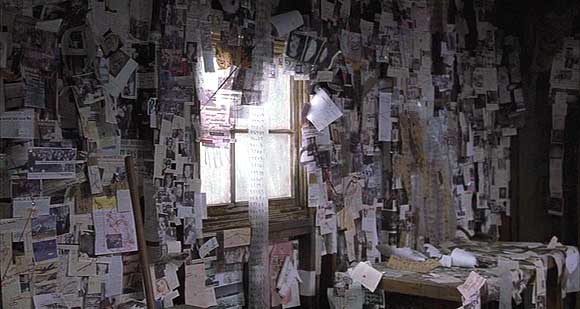
Ah, yes, that Family Guy clip makes me laugh and want to cry at the same time…little Stewie may as well be prodding me over how it’s been over a year and a half since I started my manuscript.  And that’s when I actually started writing it; the idea had come to me a couple years before that, in the form of random scribblings on the pages of my journal or Starbucks napkins and envelopes…and the more I read about other writers’ processes, the more universal that mode of transcription appears to be—I see us all just dwelling in these rooms with Post-Its and index cards and newspaper scraps thumb-tacked to the wall and strung together with yarn, the map room in the midst of a warzone where our batty, “Beautiful Minds” strategize…

That digression aside, I’m seriously having issues pulling it all together right now.  I haven’t even been able to follow the advice I shared in “The Beginning of the End,” back in March…yeesh.  And why, when the journey has already been so long and is so close to its end destination?

Because there is very good reason for that initial voyage to require some time.  Unlike what many tend to perceive, writing is a lot of work, not merely something one just dashes off in a burst of inspiration as one’s Muse sings softly in one ear as Her sister strokes a harp into the other, with the brooding writer sequestered in a candlelit garret, feverishly scribbling with ink-stained fingers—films like Becoming Jane or Shakespeare in Love would have you believe even a masterpiece can be penned overnight.  Not that I’m remotely considering myself in the ranks of Jane Austen or William Shakespeare simply by virtue of taking a stab at this writing thang, but I can’t keep psyching myself out with how much I’m not them either, or I’ll utterly paralyze myself.

You know what helps with that, though?  Empathy.  Lua Fowles, for instance, shares her experience grappling with “The Fear of the First Draft” in her Like a Bowl of Oranges blog.  And if it isn’t the fear that can slow you down, it’s the procrastination—Eva, author of the Write in Berlin blog, shares a few surefire tips on how to do so in “The Art of Avoiding to Write.”  Even when you do find your groove, there is a process to it, a method underlying all that madness that ensures the narrative is structured and worded effectively—I love author Wendy Robertson’s take on her own process in “The Joys of Cranking the Engine of a Novel” in her A Life Twice Tasted Blog (she’s one of the gracious and encouraging facilitators of the Room to Write workshop I attended in Spring).

And even when a writer does finish that first draft, the pilgrimage is far from over.  Never mind the elusive quest of getting published, the revision alone is going to be another prolonging factor.  Some revise as they go along, others leave the bulk of it for the end; regardless, it’s yet more process to undertake, and that requires some time, people.  Again, empathy to the rescue!—see Lua once more in “Editing 1 (oh no) 1” and Agatha’s appropriate analogy in “Digging in the Dirt” from her Here Be Dragons blog.  I personally am one of those who revises along the way, so my constant backtracking is another reason for delay.

Whatever excuses I can arguably throw out there to defend why it’s taking me so long to finish writing this book, the brutally honest truth about it is that the story has gone quiet in my head.  I’ve sat, and I’ve written.  But whereas before I was satisfied and moved forward, now I only go back and delete and rewrite and delete and think and re-envision and write and delete…never seeming to get it right.  What I write these days feels artificially imposed on my characters, you see, because I don’t seem to see them or hear them anymore.  No kidding, I almost feel abandoned…and melancholy, as I didn’t get the proper chance to say goodbye.  So what sort of cerebral seance could I conduct to summon their spirits back to my consciousness?  How can I get them back?

Maybe it’s because the story really is ready to end, and this is its way of telling me.

Or, egad!  Maybe the story already ended within its alternative universe, and I failed to write it down in time!

Maybe it’s only because I’ve been tending to it lately in fits and starts and need to more fully immerse myself back into its world.

Maybe it’s because after stringing those varying colors of yarn all around the walls, I now sincerely have no idea where to take those loose ends, which to tie up neatly in bows and which to continue on out the window and into the sunset on their own happy trails unbenownst to any of us.  Seriously, maybe I’ve over-thought myself into a rut and simply don’t know how to end it.

Maybe the Muses have stopped singing for me.

Or maybe, just maybe, I’m not ready for it to end…

?????????????????????????????????????????????????????????????????????????????????????

“I’m a novelist; I’m never going to finish the book.”  – James, Sliding Doors


If The Shoe Fits

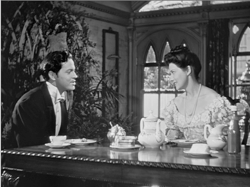
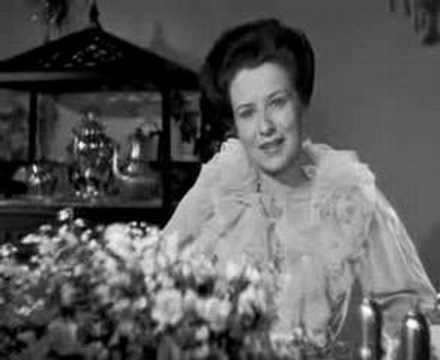
Ever see the movie Citizen Kane?  Well, there’s a montage relatively early in the film following the marriage of Charles Foster Kane.  The photos above do not capture the complete sequence (please click on any photo or here to view the full scene), but what we see from left to right is the progression of Charles and Emily’s marriage.  There are a few cinematic devices at work to show us in less than 3 minutes’ time that this couple gradually grows apart from one another emotionally:  mise-en-scene (setting/props), music, dialogueacting (body language, tone, proximity), and costume.  To focus on this last element in particular, we see the neckline of Emily’s garments climb ever higher as the cut and fabric of her gowns likewise shed their romance to become increasingly structured and rigid.  In this way, what a person wears can speak volumes for who they are and how they feel at a given moment in time.

The Prompt:

Page 35 of Room to Write asks us to write about clothes today.  We can “take a character shopping,” describe clothing we like, dislike, or has otherwise made a strong impression on us, or simply free-write beginning with the words “clothes” or “clothing.”

Response:

Oh goodie.  I’m going to take my character “Margaret” shopping, or at least raid her closet to determine what it says about her.

During Part I of her tale, I would take her shopping at a vintage shop for accessories as well as a contemporary store selling vintage-inspired clothing such as Anthropologie.  After that, it’s shoe-shopping!

– In the first chapters, she’s seen wearing “eggshell white kid leather driving gloves,” a “cameo choker” and “kitschy rhinestone cocktail ring.”

– In the later half of Part I when she has temporarily moved, thus only packs what she would need for a few months:

“The separation from her stored goods had been achingly painful—her weakest moment being when she cradled a pair of claret suede leather stilletos before lovingly packing them away with assurances they would be okay, that Momma would be back, as though tucking children in bed and promising no monsters would prey on them in the night.”

– And though impractical, you can still at this point hear her “high heels echoing off the walls as they clacked on the wood and cobbles.”

Towards the end of Part I, however, we already see how a shift in Margaret’s lifestyle results in a shift of her wardrobe as well.  At this point, I’d probably still be taking her to vintage shops, but, instead of jewelry, it would be for clothing more in the vein of Urban Outfitters.  These shopping excursions would be infrequent, though…probably just the one time.

– Getting pensive in the shower one morning, she finds herself wondering:

“What if she fell out of the habit of nine-to-five, of suiting up in business casual and charging at the world in proactive high-heeled fury?  She had been gravitating quite naturally to the irregularity of her schedule and informality of denim and limp old cardigans thrown over graphic tees, of every-other-day unwashed hair thrown into a man’s tweed cap.”

– Though she doesn’t wear jewelry anymore, she still accessorizes her t-shirts with linen scarves (that’s an effort, anyway), yet after she compliments her friend’s appearance and doesn’t receive one in return, she “shuffle[s] one now glaringly plain denim leg over the other.”

– We frequently see her in “her cardigan—that worn, pilled one of charcoal grey that had been her uniform for some time.”

– When our dear protagonist eventually seeks counseling for an issue you’ll better understand when you read the book ;), we do see a brief return to her previous style at the first two sessions:

“Margaret sat up and, knocking over one of her classic black pumps (she’d made a decided effort to dress up to par for this professional appointment, and had only removed the shoes to protect the couch cushions), reached for her handbag.”

“Margaret self-consciously fingered the vertical ruffles and cloth-covered buttons that extended to just below her chin.  Her cap sleeves were trimmed in a dainty band of lace.”

In doing this, she admits to her psychologist:  “It’s like I’m acting the role of myself…I’d forgotten, though, how much faking enthusiasm can actually generate the real thing.  It’s like if I make myself smile long enough, I can convince myself I’m happy.”

– By the third session, however:

“Margaret whimpered as she picked at the pills on her grey cardigan.”

“She tapped her Converse All-Stars around with her striped cotton toes.”

Aside from that, Margaret really only window-browses now when we go shopping.  She’s got her comfortable, casual staples and has no qualms repeating their wear often.  This isn’t to say, though, that she doesn’t still know how to turn up the Attractive Factor in her new lower-maintenance way:

– “Before he had left, however, she did not catch directly at his sleeve just as he opened the unit door so much as produce an identical effect by the way she stood at her bedroom doorway in just an over-sized t-shirt.”

Reflection:

Now that I’m almost finished with Margaret’s story line, I can look back and reflect that I’ve certainly been making deliberate clothing choices for her to mirror her life stages and emotional states.  However, I don’t describe much more than what I have above, as I personally feel that too much physical description of a character makes me as a reader too conscious of the writer behind the story, and it inhibits my own imagination.  I want my readers to be able to flesh out characters with their own brushtrokes, guided only by occasional suggestion. Hopefully, the descriptions that are there seem appropriate and are not too cliche for what they represent.

What do you think about characterizing through clothing?  What does it reveal or conceal?  Are appearances always as they “seam”? (pun fully intended—you ought to know how corny I am by now)


Mood Music Musings…

It is an eerie thing—underlying the cries of children in the garden square, a sinister melody booming from an organ is seeping out of the Victorian church beyond my window.  The only music I ever hear from there is new age Christian rock on Sundays, never an organ, never on Tuesday, never of that magnitude and fervor.  Huh.  It’s creating an odd atmosphere for me inside my old Victorian terraced home, I must say…the computer desk and bed are disintegrating from sight, along with a century and a half of paint as I start to envision the dressing table and hip bath that might have once stood in here, this room that I believe was once used as a dressing room.  The unit we live in was once only the bedrooms of an entire four-story house, you see, which makes it quite laughable for me to think that what we now occupy as both our kitchen and reception room space was only the master bedroom.  It is a place in which every petal in the ceiling’s floral moulding sends down whispers to me of all they have seen through the decades.  Trees have grown tall around brick and stone that was once exposed, new, though sooty now and crumbling and left for fanciful folk like me to point to and sigh for a bygone era.  But, my, how my feet would have pinched, my organs been crowded and lungs bereft of a deep breath of air…the dust kicked up on my hems and the humid sweat on a sunny day bleeding into the tight-woven fibers of my sleeves to cake in my dead skin and bake my scent.  No, though I used to lose myself in imagination of how much simpler, more romantic a life back then would have been, I peer through the wormhole to see it as it was and feel quite thankful I won’t be lugging tins of water up and down all those flights of stairs, past the pretty banisters, thank you very much.  Burgundy velvets, trembling fringes, clinking china, flickering flames…all these and the incantations of a seance fade to ivory.  My computer materializes back into my field of vision.  The organ music is muffled beneath the waterfall sound of speeding autos. It diminishes into a pleasant tune or subtle nuisance, depending on which I will choose it to be.


Kiss-and-Tell


The Prompt:

* blush * Today Room to Write, that saucy minx, is asking us to write about kissing (p.34).  As Bonni Goldberg says, “Besides being fun, it is an especially good practice for writing scenes between two people.”

All right then, I suppose I can share a snippet from a scene that I previously wrote while under the influence of wine (when I feel my most floozy) and the very next day yanked from the story.  It really wasn’t the suitable direction for the characters, but I’ve kept it within reach under the file name, “The Gratuitous.”  At any rate, this picks up from when a couple of friends have fallen asleep on the sofa together.

Response:

A couple stirrings later, she felt within a tighter squeeze and then a light brushing of lips atop her hair.  She thought she’d been mistaken, but no; the puckering sound of a fully carried-out kiss had sounded against her scalp, then her forehead, and was now moving in slow succession down the bridge of her nose until—

Their lips met.  Both of their eyes closed.  Soft at first, then hardening and spreading with each contact, more slippery each time.  Their tongues met, and together they began to swell and ebb with one another, pressing and pulling away only to heave again toward each other once more as their tongues now spiraled and lunged against their mutual provocation.

Reflection:

Oh, there was more involved, but I’ve restricted it to only the kissing part.  I have no desire (“desire” being the operative word) to become the next Danielle Steel, though kudos to her for, you know, targeting a market well.  Granted, I cut the scene because I felt it wasn’t right for these two characters to hook up, but I do tend to be prudish on stuff like this and wonder why.  I have no qualms thinking it or feeling it or even writing it down, but when it comes to my finished product, I censor.  Is it because there is so much of the gratuitous out there when, by definition, it’s unnecessary in furthering plot or character?  This point makes me recall the film, The Player, with Tim Robbins, who plays the character Griffin Mill:

Griffin Mill:  It lacked certain elements that we need to market a film successfully.
June:  What elements?
Griffin Mill:  Suspense, laughter, violence. Hope, heart, nudity, sex. Happy endings…
June:  What about reality?

The film itself includes the formulaic “hope, heart, nudity, sex” elements, just not where you’d conventionally expect them to be, thereby turning the formula on its head as a means of satire.

That being said, there must be a reason why the formula does exist.  Human passions prevail for the masses.  And what about the story line that has a real message to put forth that necessarily requires a bit of physical relations?  My sister, who writes under the pen name Nicki Elson, addresses this in her blog post, “Should I Have Faded to Black?” with regard to her recently published debut novel, Three Daves.  Set during the 1980’s on a central Illinois college campus, its protagonist (Jennifer) is one of the last American virgins  who seeks compromise between coming of age sexually while still holding out for the elusive “one.”  Jen’s solution to this moral predicament is both a practical and hilarious journey for her as she navigates through three boyfriends who share the same name but entirely different personalities—namely, David, Dave, and Big “D.”  To tell a tale like this, it is appropriate for the details to be explicit:

“She tentatively licked at his lips with the tip of her tongue to try and coax him in.  He teasingly flicked his tongue at hers but refused to take the plunge.  Jen whimpered in frustration, and he ended his torture, finally pushing his way into her mouth.  Jen sucked him in gratefully and clutched his head to hers to make sure he didn’t get away.” (p.67)

Whatever other sexual techniques we might learn during such scenes, it’s in the simple kiss when Jennifer genuinely loses herself in emotion.  The kiss, though only “first base,” can truly be the most sensual, intimate, and affectionate act.  And let’s not forget that kisses can also merely be pecks on the cheek or an innocent idea blown off the palm of a hand.

I’ve spun the bottle and now it’s pointing at YOU.  How about parting your lips and saying what you think on this topic?  What are your thoughts on kissing as an expressive act between people and its role in literature?  Have you ever read/written an effective portrayal of two characters kissing that you’d care to share?


Stomach Growls…


The Prompt:

Today, page 32 of Room to Write asks us to write about what we hunger for, be it literal or figurative.  Something to consider as well are the experiences that either satisfy or intensify that hunger.

Response:

Physically, I hunger for cheese, bread, and chocolate in all their incarnations, yet emotionally

…I hunger for purpose...for the sense that I am doing everything I could be doing to put my abilities to best use…for exerting the effort to live for others and not just myself…for finding the words that could possibly express the shades of meaning and atmosphere and convictions that I feel…for inspiration that will fill my pen and get my fingers tapping on the keyboard with direction again…for knowledge…for the deliciousness of knowing that I could never know everything—so learning will be lifelong—and yet always striving to attain the satisfaction of expertise…for the teachings and imaginations of others that set my mind free and move my heart to feel…I hunger to bring myself into focus against a background of others willing to fade into each other…for an equilibrium that will slow the clocks and speed my steps…for peace of mind that expectations are being met, including my own…for a synergy of intentions and actions…for simplicity and streamlining, a clearing of the clutter in my eyes and ears…for passion in everything I do yet the ability to know when to not care and put it to rest and for others to do the same…for recollection and holding close the memories that are dear or transforming…I hunger for family, for bedtime stories, for a front porch at dawn and dusk.

Reflection:

Primary factors that satisfy my hunger these days are writing, reading, and travel, as they constantly challenge me to reflect on who I am, what purpose I serve in light of what I ought to be, how my life/world-view might be reaffirmed or modified, and how I can continually work to improve myself intellectually and emotionally.

I find that these are also the factors that intensify my hunger, as I’m always left with an incomplete feeling of it never being enough, and I crave for more—more story line, better description, more countryside, better immersion into authentic culture…and where my travels home are concerned, one taste of hugging my parents, siblings, nieces, and nephews and kibitzing as usual with old friends is enough to turn me into an addict, leaving the pain of withdrawal ever looming on the horizon in the form of a return flight.  Home is where I always felt full, so given everything I purged in moving abroad, my stomach and heart are left a bit emptier…there is a lot of fun to be had that suffices for a snack, but I’ve had to forage for alternative forms of true nourishment while feeling in a transitory state.

I don’t expect that what I hunger for is the same as anyone else, nor should it be.  That’s why life offers us a menu of assorted cuisine to taste or send back to the chef as we please, a culinary cornucopia of needs and wants to digest, some of us stuffing our faces, some of us grazing, some of us piling it on, some of us liking it on the side…all of us hoping that the bill isn’t too high…and, of course, we all tip differently 😉

Are YOU hungry?  Well then, welcome to McBlogComments; may I take your order?


Slippery When Wet

Just returned from a long bank holiday weekend camping in Devon with some pleasant drives and strolls through Somerset and the Cotswolds as well.  The English countryside with its rolling patchwork of greens and yellows and occasional puffs of white sheep and dairy cows—all accessorized in dense hedges or stony walls and cottages—is certainly an isle of inspiration for a writer.  Be they grasses or cobbles underfoot, the paths one treads here are a return to the natural state and the fundamentals on which we build our lives and stories.

The last writing prompt I followed involved fire; today’s regards that other element that seemed to so dominate my camping trip, whether it surged onto the coastal sands or pattered against our tent in the night.  I speak, of course, of water.

The Prompt:

Page 31 of Room to Write asks us to “write about water: tap water, ocean water, rain water, any water or experience or dream of water that has both wet and whetted [our] imagination.”   Well, I’ve written about my water dreams already, so I’ll try not to be too redundant here…

Response:

WATER.  It multiplies the Mogwai or signals an approaching T-Rex, melts the Wicked Witch or freezes Leonardo to Kate Winslet.  It helps kids slip-n-slide and makes T-shirt contests more interesting.  It conforms to the shape of its container and yields both its clarity and taste to the color and flavor of what enters it; yet I would not call it submissive.  No, it fills the container’s inner space to empty it of air and weigh it down, and it dilutes the efficacy of what it absorbs, dissipating it in its solvency whenever it can play this advantage.  It carves canyons and fjords in its liquid and solid states, eroding away in its slow, subtle way of feigning innocence.  Water cleanses away the toxins, rinses the filth; it quenches our thirst and hydrates our cells.  It cools or it scalds, it cleans or it floods; it can keep us afloat with its density or yank us down with its current, hold us up on a wave or crush us under a whitecap.  It ebbs, it flows, it dips, it swells.  It can flush out mortal life or baptize into one everlasting.  In its glassy calm, its surface can reflect our being and the wonder of the skies as it refracts the perceptions that penetrate deeper.  Water contains mystery in its depths, holding it beyond the reach of light, and yet what it sprays forth to glitter in the sun can somehow reveal all the answers.

Reflection:

Water has always fascinated me…as a little girl, I wanted to be a mermaid, and as an adult, I found a new way of communing with it when I learned to sail (the capsizing drill in 50-degree Fahrenheit Lake Michigan being one bonding session I could have done without…it was less fun the second time around when the main sail came down on top of me and trapped me underwater—not to fear!  I was an apt pupil and remembered my survival strategy :)).

Anyways, I find I often allude to water in my writing as analogous to emotions and circumstances, playing on the ways it can be a subduing or overwhelming force, an annoyance like a leaking faucet, or perhaps a current that sweeps my characters along the tributaries that lead into their destinies.  It’s a recurring motif, for example, from the very first to the very last sentence of a short story I once wrote in which the narrator is literally unable to drink from a water fountain, which parallels her deeper “thirst” as she comes of age:

“Here she had the smartest guy in my physics club falling all over himself to impress her, saturating her ego with his deluge of compliments, but she gets all haughty and tense, as though struggling to ignore the persistent drip of water torture.

Girls like her just rinse and spit. They’ll spit out a mouthful and have the nerve to complain that they’re thirsty.”

I also can’t help but think of this element at the pen-tips of the pros, such as the way Stephen Crane wields water in his short story, “The Open Boat”:

“None of them knew the color of the sky. Their eyes glanced level, and were fastened upon the waves that swept toward them. These waves were of the hue of slate, save for the tops, which were of foaming white, and all of the men knew the colors of the sea. The horizon narrowed and widened, and dipped and rose, and at all times its edge was jagged with waves that seemed thrust up in points like rocks. Many a man ought to have a bath-tub larger than the boat which here rode upon the sea. These waves were most wrongfully and barbarously abrupt and tall, and each froth-top was a problem in small-boat navigation.”

No matter how light or heavy the content of a story, there seems to be an abyss of options for describing water or using it metaphorically, especially as it shares the complex dualities of fire that I’ve discussed previously.  In this way, it is a tap that could never run dry, so to speak.

So I’m curious—what are examples of water imagery that you have found effective, either in your own or others’ writing?


Remote Control

Today’s post comes to you via my new netbook, my new key to freedom!  Or is it… 


When my first iBook laptop went kaput after 5 years in 2007, I have since been desk-bound with my newer  iMac.  Yes, I am on Team Mac, but unfortunately don’t wish to shell out the quid on another iBook.  But this is beside the point…

My new lil’ Sony netbook is liberating me from my hybrid home office/guest bedroom.  So far, I’ve made it all the way to the living room.  Baby steps, baby steps.  What I’m getting psyched about is the ability to work on my writing project remotely in London cafes, pubs, parks, and even cemeteries, such that I can still get out and about and explore this city in the newly-turned gorgeous weather without the eternal guilt over neglecting my writing.

The guilt…oh, the guilt.  I am wondering if other writers out there will gasp at what I’m about to confess or own up that they sometimes feel the same way.  When I speak of liberation, this applies to writing as well, as, along with reading, it is the ultimate way to escape into the free life of the mind at any given moment, taking me into other locations and minds and hearts. 

Yet as of recently, I’ve been more conscious of the limiting effects of indulging this pasttime.  Rather than free, I can feel trapped…for one thing, there is the guilt I mentioned above when I heaven forbid do something else with my free time after work or on the weekend and have not planted my bum in my desk chair to crank out at least a couple more pages or revise what has already been written. 

Adding to this, I once thought it freeing that I could work through my plots and characters even away from my computer and pen and paper, as ideas and revelations will come to me in the shower or during my commute. 

“The best time to plan a book is while you’re doing the dishes.”   –Agatha Christie

“What no wife of a writer can ever understand is that a writer is working when he’s staring out of the window.”  –Burton Rascoe

This has had the effect, however, of overwhelming my thoughts, exhausting me noggin when it’s set in hyperdrive and I find myself trying to figure out how to get a character into or out of a situation while I simultaneously need to get my work done…my brain needs to be in on that, too, after all, and my high levels of distractibility ever since I took on writing as a primary and ongoing endeavor are leading me into some embarassing situations. The other week, I was working through a plot line in my head as I was exiting the Notting Hill Gate Tube station, and, realizing I should probably top-up my Oyster card—my prepaid public transport pass—I walked up to a kiosk touch-screen and cancelled a stranger’s transaction, not realizing he’d been standing there and about to finish adding £50 to his card!  I’d never felt so foolish and kept apologizing profusely from the adjacent kiosk as I saw him restarting his transaction all over again in my peripheral vision. 

“Writing is a socially acceptable form of schizophrenia.”  –E.L. Doctorow

Even when I try to escape into reading to calm my overworking mind, I find I’m not enjoying it in the way that I used to—reading as a writer, there is the tendency to analyze the character and plot development, the descriptive detail and overall style and construction, not in analysis of the text itself (which is perfectly okay and necessary to truly engaging with it), but in comparison with my own style and approach, which is maddening.  Yes, reading can inform our writing, but what if I just want to read for reading’s sake?  Can I recover this ability at some point, or in taking on writing have I forever altered the relationship I have with other people’s stories?  And most importantly, should I feel bad to be feeling this way, or is it natural?  Writers of the world, please advise 🙂

In the meantime, I’m hoping that I haven’t just substituted a ball and chain with a house-arrest bracelet that permits me more mobility, but still holds me prisoner to obligation and guilt. I think instead my wee netbook and I will have many happy travels together as we get back out there to resume control of my everyday and observe life for it’s own sake—and, sure, if it provides good material for a story, that’s not too shabby either even if it does serve to feed my aforementioned neuroses.

“How vain it is to sit down to write when you have not stood up to live.”   –Henry David Thoreau, Journal, 19 August 1851


Swingin’ Over to the RBU Tree

Real Bloggers United

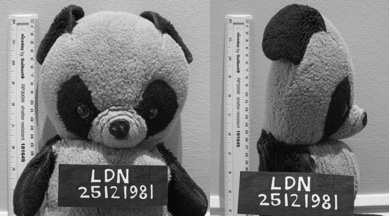
For what, pray tell, could this poor little panda have been incarcerated?

The Monkey likes to stretch its limbs in other cyber-trees sometimes, so you could formerly read my guest post over at Real Bloggers United (“RBU”) for all the sordid details of this particular case. RBU was once a lovely forum of diverse bloggers who devote quality time and writing to their blogs and readers—it wasn’t about ads and revenue but collaborating toward blogging with substance.  I was proud to be a part of this initiative while it lasted, but alas, all good things come to an end, so now I’m reposting my RBU contribution here.

Every month, RBU’s guest bloggers followed a specific theme, and this May was “Treasures.”

CSI: Chronically Sentimental Individual

Confession: I am a sentimental schmuck by nature.
Exhibit A: Bag of wallpaper shavings that has resided in my parents’ garage for well over two decades.
Motive: My change-fearing child-self cried so hard when my mom hung new wallpaper in our kitchen.
Defense Plea:
I do not recall how old I was at that time, but I assert that I was too young to know better. And if that defense is ineffectual, I’d like to call in a medical witness who can diagnose me with terminal sentimentality, as I continue to be prone to such attacks to this day (it’s genetic—my parents will testify on my behalf if subpoenaed). Regardless, I did not act alone. I believe that hanging from my arm at the scene of the crime were undoubtedly one of the two usual suspects.

Accomplice #1: Yammy Pie
Alias: Yammy
Species: Lamb
Present Location: Chicago, IL
Identifying Characteristics: Orange fur. Missing one ear and outright chunks of matted fur, leaving behind distinctive threadbare markings.

Profile:
The intent was to call her “Lamby,” but for some unknown reason I would not pronounce the “L” sound at the age of three. Once, my grandma attempted speech therapy in trying to get me to repeat after her, “Luh-Luh-Lamby.” For every failed attempt, I responded, “Luh-Luh-Yammy.”

Another time I overheard my dad and older brothers yelling at a game on TV, “Go Miami!” I looked at them with brows furrowed territorially and insisted, “No, MY Yammy.” (My inner selfish bitch blossomed at an early age, as you can see, but that is irrelevant to the case and should be struck from the record.)

Yammy was a friend and confidante for two blissful years until Accomplice #2 arrived on the scene to usurp my affections.

Accomplice #2: Amanda the Panda
Alias: Mander (pronounced ‘mahn-der’)
Species: Panda Bear
Present Location: London, UK
Identifying Characteristics: Course, pebbly fur, matted down and hardened from decades of hugging. Scratched eye surface (resembles cataracts). Pronounced indentation around the waistline caused by wearing a doll’s skirt that was too small for six months. [Note: Amanda grew one inch taller on our family growth chart during the early 1980s due to compression of aforementioned hugging. Therefore, be advised that she may now appear even taller.]

Profile:
Amanda the Panda was a Christmas gift from my parents when I was five. She has an “official” birth certificate that I scribed by hand with a blue ballpoint pen on a sheet of notebook paper. The document can presently be found in my photo album archives in Chicago.

Two years ago, I transported Amanda over the Atlantic in my carry-on so she could reside with me in London. On the occasional night when I’m sunken into a mode of regression, I will fall asleep hugging her, much to my husband’s dismay when he ends up having to spoon us both. I have been known to still sniff the bear now and then to find the comfort of my own scent like I did as a kid.

Amanda has survived soakings, hangings, and kidnappings. There was one occasion when my father took her and me to a Teddy Bear clinic so her arm could be stitched and wrapped in gauze.

No injury was sustained during one said kidnapping, however. Indeed, my older siblings had only staged her murder when they shoved her in the microwave. After I ran away wailing to the sound of them setting the timer, they replaced her with a pile of black and white soil from a potted plant and brought me back to see what I believed were her charred ashes. No charges were pressed against the offenders; however, this is why Amanda has remained in my sole custody after all these years.

Closing Statement:
As much as I try not to rely on material objects for meaning, I think it is only natural that those of us who suffer from terminal sentimentality will assign immense intangible value to the tangible things we can physically carry with us as time fleets away. With their appeal to the visual and tactile senses, our personal treasures are perhaps the closest we will ever come to a time machine for the speed with which they transport us back to our cherished past and integrate it into our ongoing existence. Is it the fur, stuffing, and curling shards of wallpaper that bear intrinsic value for me? Of course not. But the value I attach to them could never be appraised nor ever depreciate, and for that reason, I hold on.

I rest my case.