Author Archives: thefallenmonkey

About thefallenmonkey

Unknown's avatar
Primate that dapples in writing when not picking others' fleas or flinging its own poop.

From Graphic Leftovers to Graphic Tees

After all my woe-is-me-ing in my last post, I SWEAR I’m accomplishing all that I’d set out to here in the rolling hills and seaside cliffs of Cornwall. I am writing, and I am hiking. Lots of both.

But excuuuse me that my B&B happens to have WiFi, so I happen to be hopping on the internet occasionally to check email and look things up for writing research. Well, the random cyber-navigation of said “research” has just now led me via Urban Dictionary to a novelty T-shirt site, where I’ve enjoyed a little bit of earned procrastination.

I’m thus compelled to pop in here and share with you in quasi-realtime that I have just read and enjoyed this:

And that this next one has me almost reaching for my credit card:

That is all. Back to writing.


A Cage of One’s Own

Ya know, I usually play up the whole monkey thing because I think I’m so terribly clever and no one will ever get sick of it (shyeah right, you’re thinking), but, honestly, my flat really is starting to feel like a zoo right now.

Within one week of returning from two weeks in Singapore with my husband and in-laws, I already hosted two separate visitors and received news that another was scheduled to arrive, well, as of yesterday and staying for two weeks. Apparently so much poop flies around in here that my husband’s ears must’ve gotten clogged, because for the second time we have a scheduling conflict thanks to our stellar communication with each other. The first time was last fall when we double-booked my parents and a couple friends of ours—six adults in a wee flat of one bathroom + two beds + one punctured aerobed screamed nightmare to me, so I took my parents to the Cotswolds for most of the overlap while my husband hosted our friends. Problem solved.

Well, it turns out that I’m fleeing to the countryside yet again during my father-in-law’s present visit. Something about telling my husband, “If your father hasn’t decided on his dates yet, late August is out because I’m going on a writer’s retreat in the wake of our insane spring and summer,” got lost in translation, so he’d emailed his dad that late August still worked great. Great.

So here he is, and here I am packing up to leave on Sunday for five nights in Cornwall.

Could I have canceled? Sure.
Was there a chance in hell I was going to? No sir.
Do I feel a little bad about that? Of course!

But maybe this is a good time to mention that we’ve hosted over thirty (30) different people in less than three years since moving to London. And hosting is particularly problematic for those like me who work from home. And whose office is also the guest bedroom. In all fairness, though, this guest is super easy and independent, and we’ve given him the master bedroom so I can access my computer.

Nonetheless, after doing a little more basic math for this year alone, I estimate 30% of 2011 will have been spent hosting, traveling, and visiting home. Which leaves a lot of everyday life to be crammed into that remaining 70%. Which leaves not a lot of time for a reclusive writing life. (And I don’t even have kids!! How do you writers with children do it all??!!)

So I’m going, to a cage aaall to myself. No work, no hosting, undoubtedly a little hiking, but primarily writing. Selfishness has never tasted so delicious. See you in a week or so.

And how about you? How have you made a point to prioritize your writing, to give yourself some space to think, imagine, and create?


Oh, Okay Fine. May as Well.

It seems inevitable that part of the aspiring author’s procrastination from writing consists of farting around with mocking up potential cover art. I suppose I might have sort of maybe done this myself before…in which case, oh, okay fine. May as well share with ya.

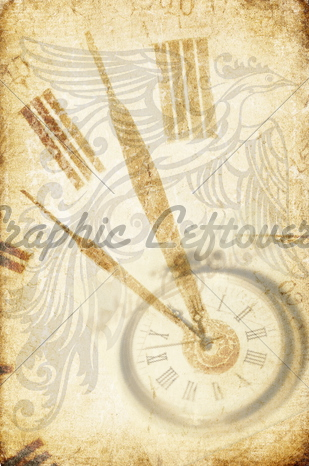
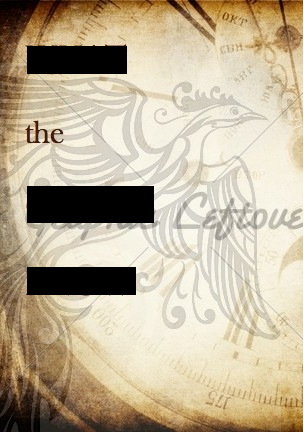
I came up with two possibilities for my first ms. No, I’m not sharing my title yet (too irrationally afraid to), and, yes, I’ve used stock images with watermarks still on them (too cheap to pay for them). Whatever. Do you like them or not? Sorry, that came out more antagonistic than I’d intended. And I’m also sorry that I for whatever reason didn’t keep a file that would’ve allowed me to just delete (versus hideously black out) the title in the 2nd image. So just to be clear, my title is not “Graphic Leftovers.” 😉

  – OR –  

Have you ever done this, too? I’d love to see ’em!


Is the Baby Still in the Bathtub?

I heard once at a writing seminar that every time we read, it’s an investment in our writing. So in light of that, we shouldn’t feel guilty when we spend our time reading someone else’s writing instead of working on our own.

When I do read someone else’s story, on one level of consciousness I’m processing how they’ve approached its construction and shaped its language, which helps me likewise reflect on my own projects. I still lose myself in the experience of the book, yet today was one of those when I did snap out of someone else’s story-world to reenter my own—because it had just smacked me upside the head, somewhere in the middle of the book I was reading, that I needed to work more on the beginning of the book I am writing. Seemingly out of nowhere, but I think my subconscious has known all along and something I read must have finally dislodged that. Not merely the revelation of what I probably need to do, but my acceptance of it. I think I’ve known for a long while what I should do but have been nurturing my precious poopsies, running the warm water over them and adding more bubble bath.

I’ve only done some cursory restructuring so far, but looks like my manuscript needs to be run like a conveyor belt in reverse again, backing it up another couple chapters to start at even later one. If I do this, I must be mindful of what had happened last time and ensure the babies of characterization and exposition don’t get thrown out with the bath water in the interest of moving plot forward a bit faster. And it really isn’t so much that I’m trying to get a move-on with the story line; the more I look at those opening chapters, the more I realize that I was still finding my way into the story with them; it doesn’t all have to be scratched, but it needs to be tightened through rearranging. So as I try to look at the story elements in those chapters more strategically right now—isolating the “need to haves” from the “nice to haves”—it’s like they’re all lined up before me, beads of sweat glistening at their brows and sweaty palms wringing behind their backs as they try to stand tall, stand proud with chins up but lips quivering, and some surely wetting their pants.

I shall place the little dears in the foster care of my archives and keep faith they’ll find a good home in a short story or other novel some day. Until that time of weaning, I’m letting them push their little rubber duckies through the suds, scrubbing them extra clean behind the ears before tucking them into bed for the night all clean and sweet-smelling and raisin-fingered…who knows, perhaps after I sleep on it, too, I’ll change my mind.

I’m curious to hear about YOUR babies—it’s inevitable that some of them get chucked out the window, but have you actually had success reusing them elsewhere? How so?


What Characters Looove to Do…


Characters love to—

* sigh *
and take deep breaths
when they’re not
catching their breath at the back of their throats
or gasping!
They like taking sidelong glances as they
look out the corner of their eyes,
and they’re fond of
muttering,
mumbling,
murmuring,
and growling
through clenched teeth.
They’ll pinch the bridge of their noses
or roll their eyes in frustration
or furrow/cock their brows in confusion.
And their mouths drop open in shock.
In good moods, they’re wild about
smirking
and
winking
and
blushing
as they
chuckle or snicker or giggle
with smug grins.
In tender moments, they’ll
whisper
and do everything
softly and gently.
And they absolutely get off on
beginning to do some things
while starting to do others.

These are just some of the things I see characters loving to do all over the place when I edit manuscripts. (I catch ’em with the naked eye, but a tool like “Wordle” might also help authors divide and conquer those tendencies)

What penchants do YOUR characters have?

*


Editing Out the Editor

This shit editing is bananas, B-A-N-A-N-A-S.

Hey, Editors, are ya there? Editors? Editors? Bueller? Bueller?…

I recently saw this editorial, “The Price of Typos,” which comments on how “typos are everywhere” now—in large part because publishers are employing less editorial staff and rushing to publish books ever faster. And modern authors are playing their part in it, too:

“Use of the word processor has resulted in a substantial decline in author discipline and attention. Manuscripts are much longer than they were 25 years ago, much more casually assembled, and beyond spell check (and not even then; and of course it will miss typos if the word is a word) it is amazing how little review seems to have occurred before the text is sent to the editor. Seriously, you have no idea how sloppy some of these things are.”

Though editors arguably have more work cut out for them in light of the above (man, don’t I know it firsthand!), when I read traditionally published books I’ve wondered the same: where are the editors? How did that typo get through? I’ve always said that I’ve never read a book without a typo, which is fine—annoying but fine, as I understand how that can happen maybe once or twice—but lately I see several mistakes, and it’s not just typos anymore.

Back when I read the Twilight series (disclaimer: my Freshman Year students were squealing about it incessantly and kept begging to write book reports on it, so I felt it my duty to understand what they were talking about…and obsessively read all four books, and joined Team Edward, and watched all the movies so far, and…), and, I’m sorry, where was I? Oh, so when I read Stephanie Meyer’s decent storytelling but crappy writing, her overuse of words like “guffaw” and “mutter” bored a hole in my head as they plunk, plunk, plunked against my skull like water torture. Where was the editor to chuck a thesaurus at her and make her vary word choice? [See Also: “Sloppy YA Editing: Tic Words]  And when each book got longer than the previous (and not in a good JK Rowling way), when plot didn’t thicken so much as stretch like taffy and read like a fanfiction of her own work, I asked myself, where was the editor to hack out those paragraphs and pages of redundancy and filler?

So maybe Twilight is an unsurprising example, but I was in a bit of despair when I read the most recent book of one of my new favorite authors: The Distant Hours by Kate Morton. I loved her first two books in a way I hadn’t anything that I’d read in such a long time, and while I still enjoyed this third one, it needed a good, solid edit. The thread of an interesting story was there for me, which did keep me reading, but I found myself in a frustrated “get on with it” mode—and this from someone who can totally nurture the slow-going and character-based. I don’t need action and rapid pace, really I don’t, but I also don’t need constant dancing around with dazzling wordsmithing and every detail about yet another thunderstorm raging outside while, go figure, conflict between characters is on the rise, too. That’s my two cents, but here’s a sample of what I saw at Amazon as well:

“What on earth went wrong with this book? Was there no editor involved?”

“[T]oo long and too repetitive. A great deal of the fault lies with the editors.”

“What did this book lack? An editor!”

“This seems to be a problem with modern publishing…some way down the line in an author’s output either the editors stop thinking they need to edit or they believe it OK to drop an earlier piece of work on an unsuspecting readership who naively expect new books to be better books.”

Hear, hear! to that last one; I really do think publishers think we’re chumps when it comes to best-selling authors. I don’t read much Philippa Gregory, so maybe she’s been doing this all along in her historical novel series, but I recently read her The White Queen and, while her writing style otherwise does keep a good pace (especially considering the mammoth amount of factual history she manages to distill), I felt little explosions in my head every time I chanced on passages like this:

“More importantly, I think, but I do not say, not even to Elizabeth, that once we are living in a private house quietly, my boy Richard might be able to join us. As we are stripped of our royalty my son might be with me again. When he is no longer a prince, I might get him back. He has been Peter, a boy living with a poor family in Tournai. He could be Peter, a visitor to my house at Grafton, my favorite page boy, my constant companion, my heart, my joy.”

Listen, I know there’s merit to lyrically using repetition for emphasis, but it loses its efficacy when this sort of thing is done over and over and over again for the length of a novel. I mean, seriously, this reads like she wrote the same thing a handful of different ways in brainstorming which she wanted to use and just forgot to scratch out the losing options.

And by this point, you’re probably all wishing I had an editor to keep this post concise. 🙂 But before I go, I leave you with this: eliminating redundancies might be a subjective task, but spelling and grammar are not. An editing colleague recently emailed this sentence:

“A woman without her man is nothing”

Evidently, an English professor wrote this for students to then punctuate. Most of the boys wrote:

“A woman, without her man, is nothing.”

Most of the girls wrote:

“A woman: without her, man is nothing.”

The power of punctuation! Never underestimate the importance of attention to detail—the importance of EDITING!



15 Hours in the Sky…

…with a connection in Helsinki delivered my husband and me to Singapore a few weeks ago, then onward to Bali. At the request of my esteemed blogging colleague Milo James Fowler, I’ll share a few pix here:

Starting with Singapore, as a city-state, it’s very contemporary with endless shopping malls…

…yet was not without some colonial or cultural architecture:

Fortunately, I wasn’t trafficking any illegal substances so wasn’t put to death (as threatened on my departure card at Immigration) and could live to see Ubud, Bali, where I wish we’d had more time. I’ll let the pictures explain why:

(that first photo above was at our rented villa—inSANE serenity. I would love to just sit there for months and write.)

Whereas Singapore didn’t really make us feel we’d traveled that far or to anything exotic (and charged a hell of a lot for booze, valuing cost of living over cost of indulgence), Bali compensated with its cultural richness…

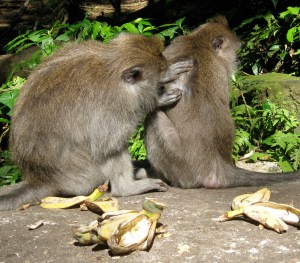
…and MONKEYS!!! Here I am greeting one of my brethren (wearing my most challenging human costume to date—my cover was almost blown when a little monkey leapt onto my back and nearly pulled my dress down); the others consult with their critique group:

*sigh* How I envy their freedom in the Monkey Forest as I’m caged back up.

But I’ve missed my blog buddies, so I’m glad to be back and catching up with all y’all. More of my yammerings to follow soon…


Blog Neglect

It’s happening again. Right now. As I type.

Well, not as badly right now as I’m technically tending to my blog by typing in it, but pretty badly nonetheless considering the worthless content I’m proceeding to dump here…

…just to say…

…that I’m traveling again so probably not going to give my blog nor any of yours proper attention until August. My sincerest apologies.

As penance, while I could do without a caning here in Singapore, how about next week I let the monkeys in Bali pelt me with their poop. Fair enough?


The Red Pen: Top 3 Errors in Grammar

Following up on my previous post, below are the three most-recurring grammatical corrections I make in my editing assignments.

1. Tense consistency:

All manuscripts I’ve edited so far have been narrated in past tense. While it’s still okay (and necessary) for their dialogue to use present tense, sometimes there are incorrect lapses into it in the narrative. More often, though, I’m correcting the times when past tense is used instead of past perfect.

Past perfect is basically the past tense of past tense. If the main action of your narrative is already in past tense, events described as having occurred prior to that are denoted as even further in the past by using past perfect tense. e.g.:

  • I called him. (past)
  • I had called him. (past perfect)
  • I was upset. (past)
  • I had been upset. (past perfect)
  • Why didn’t he tell me this before? (past)
  • Why hadn’t he told me this before? (past perfect)

[Brief flashbacks can be easily handled this way. If ever writing a lengthy flashback, though, in which you think using past-perfect for paragraphs or pages on end might be awkward / distracting / lacking immediacy, you can alternatively offset the scene in italics and/or as its own section.]

2. Commas for coordinating conjunctions:

Unless denoting a pause for particular emphasis, a comma is only needed before and, but, or, for, so, nor, yet if the clause following one of those conjunctions could stand alone as its own sentence. e.g.:

  • I called him, but I hung up before he could answer.
  • I called him but hung up before he could answer.
  • I called him, and I asked about tonight.
  • I called him and asked about tonight.

3. Semicolons:

A semicolon is basically the same thing as adding a comma + conjunction (and, but, or, etc…). It separates what are otherwise two complete sentences that could stand independently from each other. e.g.:

  • I called him; I hung up before he could answer.

The easiest test for when it’s appropriate to use a semicolon or comma+conjunction is to ask yourself if you could use a period in place of either. And the point of not just always using a period in that case is to vary your simple sentences with complex ones.

This goes right back to what I was saying last time about varying sentence structure. Unless repeating a certain structure for emphasis, it’s good to change it up. Of course, sentence fragments can also be used for an effect, but you’ll use those only to a limited extent. As long as I’m totally dorking out here, I’ll take this opportunity to share the basic sentence formulas for evaluating structural soundness.

The cheat-sheet of basic sentence structure & punctuation:

I = Independent clause (it can stand alone as its own sentence)
D = Dependent clause  (it can’t stand on its own, unless for stylistic emphasis)
c = coordinating conjunction

Starting with the simple sentence below, the subsequent compound sentences can be formed a few different ways:

I .           The monkey screeched.
I , c I .    The monkey screeched, and it fell out of the tree.
I ; I .      The monkey screeched; it fell out of the tree.
I D .      The monkey screeched when it fell out of the tree.
D , I .    When it fell out of the tree, the monkey screeched.

So there you have the basic building blocks for any sentence you could come up with, like the compound-complex ones below that combine the above in different ways for all sorts of crazy fun ;):

ID,cI.
The monkey screeched when it fell out of the tree, and it grabbed for a vine.
D,I,cI.
When it fell out of the tree, the monkey screeched, and it grabbed for a vine.
D,I;I.
When it fell out of the tree, the monkey screeched; it grabbed for a vine.

I,cID.
The monkey fell out of the tree, and it screeched as it grabbed for a vine.

I;D,I.
The monkey fell out of the tree; as it grabbed for a vine, it screeched.
I;ID.
The monkey fell out of the tree; it screeched as it grabbed for a vine.

And blah-blah-blah, blah-blah. I think you get the idea. How we phrase our sentences usually comes from a more innate, magically creative place, but the basic formulas above remind us of the options and, at the very least, are a great way to check commas and semicolons. Even if you want to play with this punctuation, too, for stylistic reasons, you still have to know the writing rules in order to break them.

I’d better leave it at that before the red pen editing section of my brain lights your brains on fire, too…


The Red Pen: Stylistic Variation, Story Arc, and Other Manuscript Concerns

Hey there! I haven’t shared any editing anecdotes in a while. To date, my first assignment has been published, the second has been passed on to the managing editor, and I’m getting started on my third. I’d never commented on the second one, so thought I’d retroactively share the issues addressed.

To start is advice I gave the author on stylistic variation:

Where sentence structure is concerned, you describe a lot of consecutive or simultaneous character actions, and, to convey that, “as he” and “as she” are very frequent (as are –ing verbs following a comma—these are called present participial phrases). While not technically incorrect, it’s when repetitions of this structure become noticeable that they can be an issue, so just keep an eye out and consider ways to vary the syntax of your sentences to mix it up. Reading aloud is an awesome way to work through sentence/paragraph flow and catch where words/rhythms might repeat!

Examples:

“As she turned on her heel, she smiled and took his hand to lead him through the forest.”
“She smiled and turned on her heel as she took his hand to lead him through the forest.”
“She smiled and turned on her heel, taking his hand to lead him through the forest.”
“She smiled while she turned on her heel, took his hand, and led him through the forest.”

Etc., etc.

Story arc also needed work. This happens to be a rather sexy romance, so:

A key element to pacing is varying the functions each chapter serves. Too much of the same “function” served by too many consecutive chapters risks flattening the story arc. In this case, the recurring function I see is sex, either with purpose or gratuitous. The sex is of course what readers will love about it, but from a story development standpoint (not a prude one :)), I’m concerned that the frequency of sex scenes is making the middle/third quarter of your story fall flat, with the underlying plot getting a bit lost. There can be too much of a good thing, and too much of anything can make reader attention wane no matter how exciting or saucy the action. And the function that sex serves in a romance novel is not only entertainment, but a vehicle for moving the central relationships forward, so it really ought to only appear when it does move the story forward, rather than be there for its own sake.

Don’t worry, if you ever read it, there’s still a-plenty left in it to warrant hosing yourself down afterward (hot damn!). Other issues addressed:

  • more than one dialogue tag used in a paragraph of the same character’s dialogue (not technically wrong, but judge when it’s superfluous)
  • dialogue tags used for almost every line of dialogue in a conversation – starts to sound overly “he said/she said” when it’s otherwise easy enough to tell who’s talking. Sometimes a corresponding character action suffices in place of tag; e.g.:
    • “Wait a minute,” she said as she held up her hand.
    • “Wait a minute.” She held up her hand.
  • redundancies in description / tendency to over-describe using lists of adjectives when one or two suffice
  • overly repeated (verbatim) words and phrases
  • use of “began to”/”started to” for actions that are followed through, not interrupted.
  • keeping each section within only one character’s POV (in keeping with 3rd person limited, multiple perspectives)
  • time continuity – matching the time-frame of an intermittent subplot to the main plot.
And regardless of how polished the new manuscript I’m editing is, I’m still encountering pretty common grammatical errors—I’ll pop back later this week to share these. Good luck with your own writing/editing!